

21st August 2017
 The Chesterfield Canal Trust organised an archaeological dig on the site of the old Bellhouse Basin in Staveley during the middle two weeks in August.
The brainchild of long time Trust member Andy Robinson, the primary aim was to find the remains of a Cuckoo boat, unique to the Chesterfield Canal, that was believed to have been buried when the basin was bulldozed in 1972.
Staveley is on the western section of the canal that had been cut off after the collapse of the Norwood Tunnel in 1907, so any boats would have been well over 100 years old.
Andy had researched the project for many years and had lots of testimony from local people that there had been at least one boat, possibly two or even three, left rotting as the basin silted up in the 1950s and 60s, before being buried when the whole site was bulldozed in 1972.
 In the autumn of last year, he applied to the Aviva Community Fund and, after gaining 9,500 votes in a public vote, he won £10,000.
Andy was determined that this would not be a closed activity for a small number of the usual Trust volunteers. He wanted to involve the local community, especially children.
There followed months of planning, aided by Mark Walker, which included an online system for members of the public to book places to join in with the dig. The response was astonishing with over 500 places being snapped up. Recording equipment was bought in order for to make an audio archive of the recollections of local people about the canal in general, but especially Bellhouse Basin. Richard Fearn looked after of this part of the project, which will continue for several months.
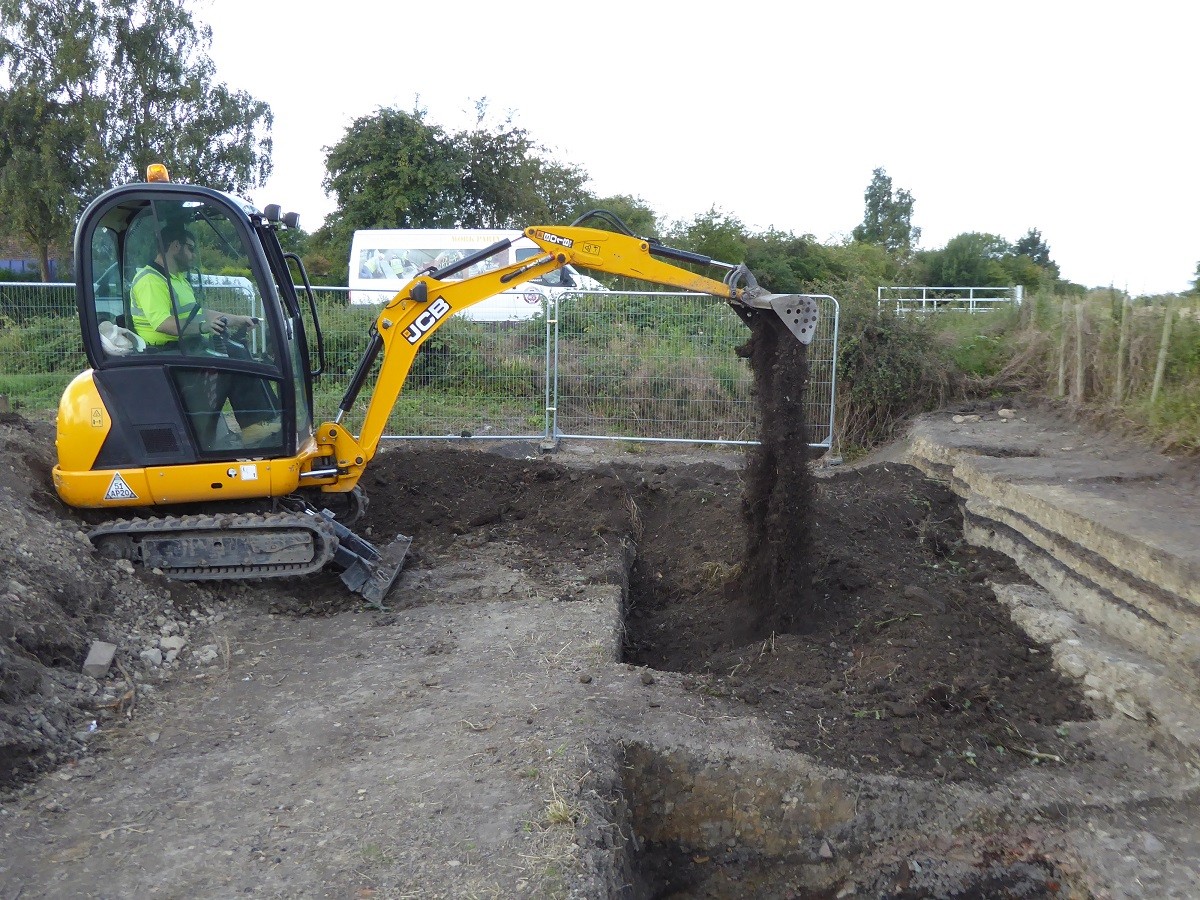
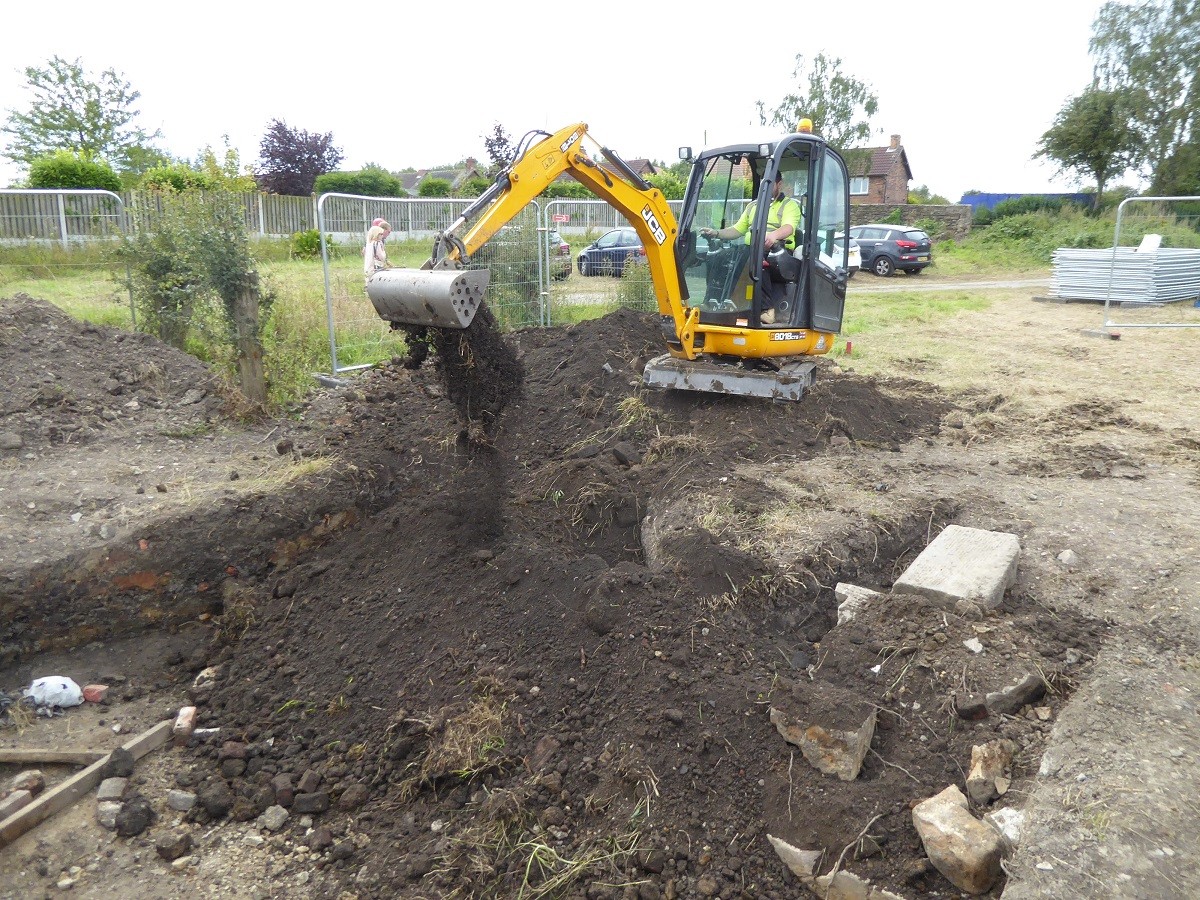
 The professional archaeologists were from Elmet Archaeological Services, led by Christine Rawson, who has vast experience of community archaeology. T.C. Harrison/JCB lent the Trust a mini-digger for the whole fortnight. It was put to very good use, including recovering lots of stone from the site of an adjacent railway bridge that had been broken up and dumped into the canal.
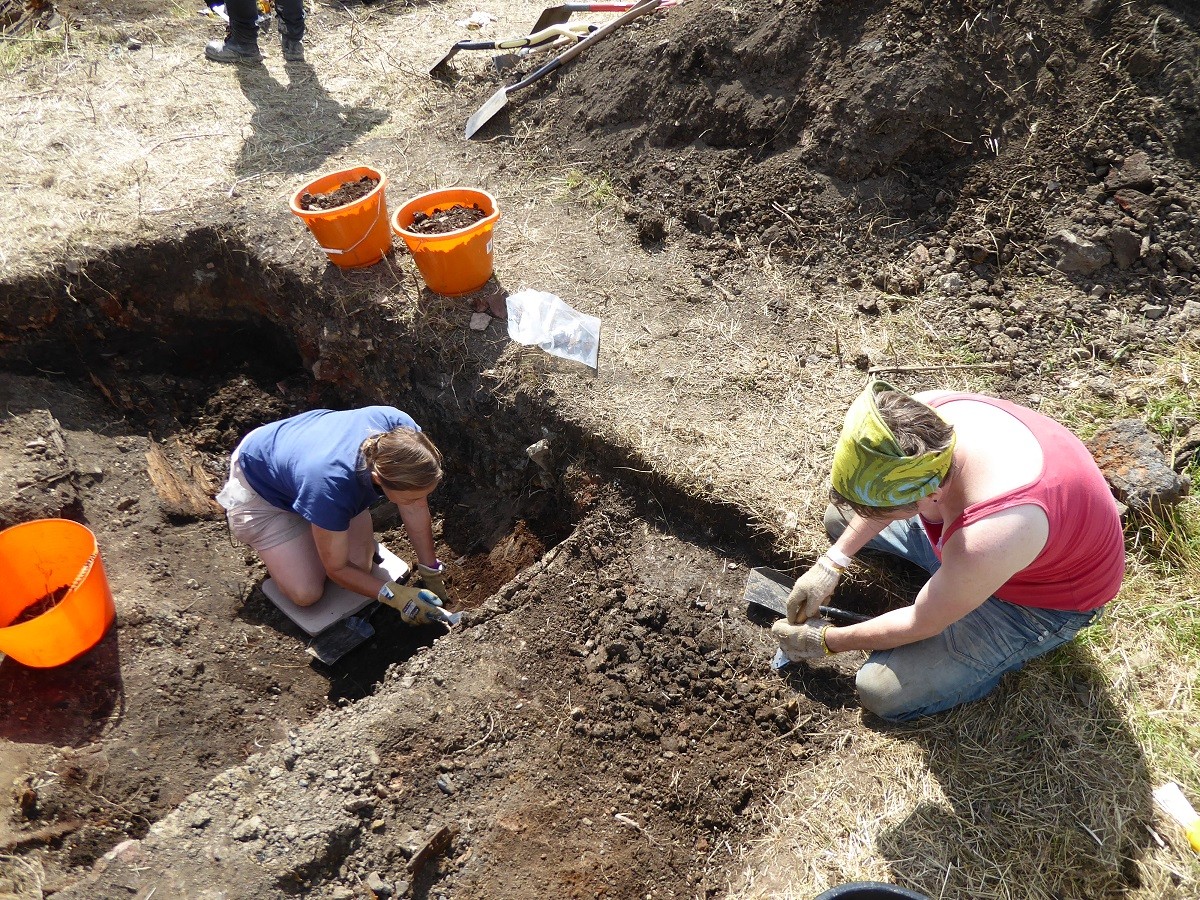
On the very first day of preparations, some likely looking timbers were uncovered. Over the course of the following days, the slow process of digging with small trowels through the infill of ash, clay and muck gradually revealed two boats. One was almost certainly a Cuckoo, but it had been badly smashed up by the bulldozer.
The other craft was a maintenance boat in incredibly good condition. Many features of this exactly matched the only known photo of such a boat, taken at Killamarsh.
In the last few days, another trench was dug. This revealed the point where the first two boats met and, intriguingly, the end of a third boat, believed to be a workboat or pompey boat. Unfortunately there was not time to excavate this further.
 Word of the dig soon spread by the usual electronic means and every day members of the public came to view the goings on. Tom Ingall came to film a piece for BBC Look North.
The finds included lots of pottery and bottles, and many pieces of metal and oddly shaped wood that will take some time to be identified.
Of particular interest to canal buffs was a very short arm that came off the basin to serve a nearby gas works. This was only extant for a few years before being infilled. A map of 1880 showed narrows at the start of this arm, so the spot was identified and dug up. Sure enough, masonry abutments were revealed complete with stop plank slots. It is hoped that this feature will be retained when the canal is restored.
 The dig finished on a Friday, followed by an Open Day on the Saturday. This was astonishingly well attended, with well over 300 people having guided tours of the trenches.
Many people asked where the boats were going to be stored, but this was not a Mary Rose project. There was never any possibility of lifting an incredibly fragile 70’ boat, then storing and preserving it, so everything was reburied at the end of the dig. However, when the restoration reaches this point, they will again be dug up because there will be moorings on the site.
After the physical work was over, there remained lots of work to be done such as recording, evaluating finds etc. Part of the grant has been reserved to create an information board on the site, so that the whole event will be remembered.
The Trust wishes to pay particular thanks to Henry and Lorraine Day who allowed the use of their field for camping, car parking and accommodation facilities.
To find more about the background to the dig, click here .
To see the piece on Look North, click here.
To see Richard Knisely-Marpole’s photos, which include some polecam shots, click here.
This is our photo diary:
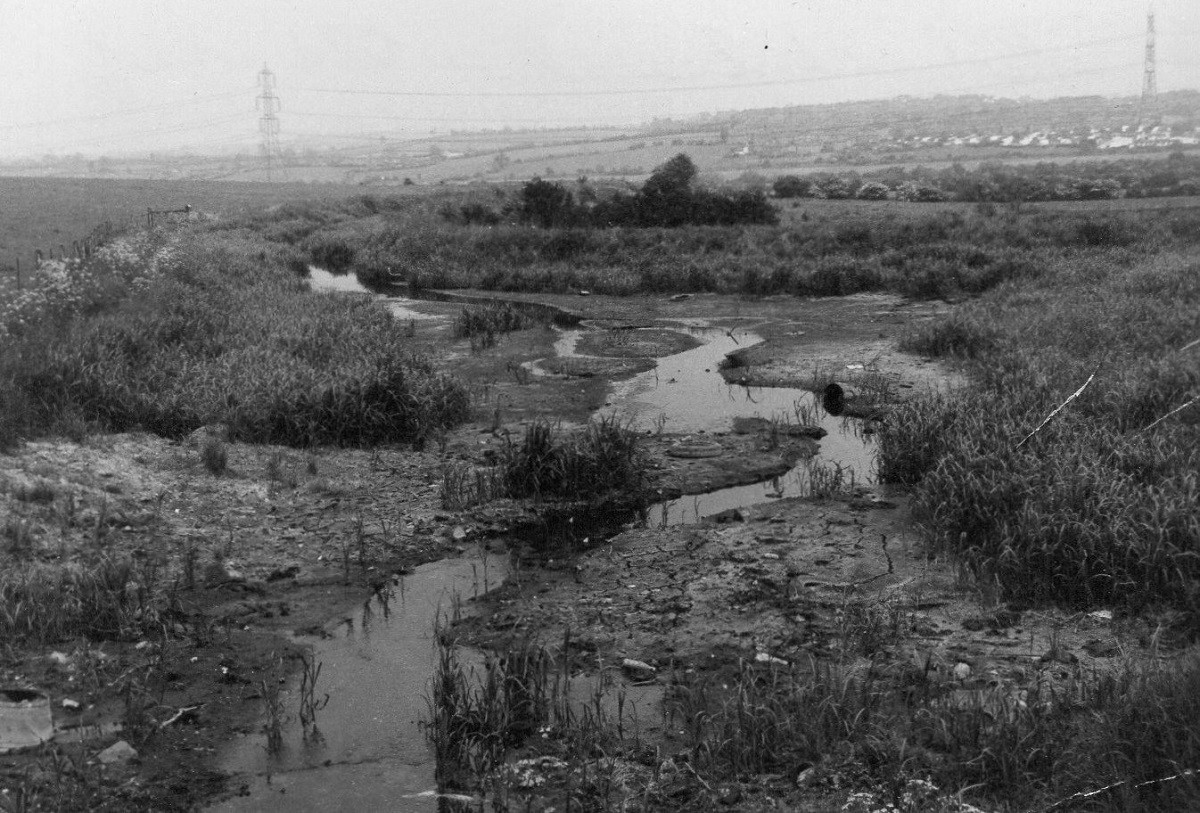
4th August. This was the basin site in May 1970.
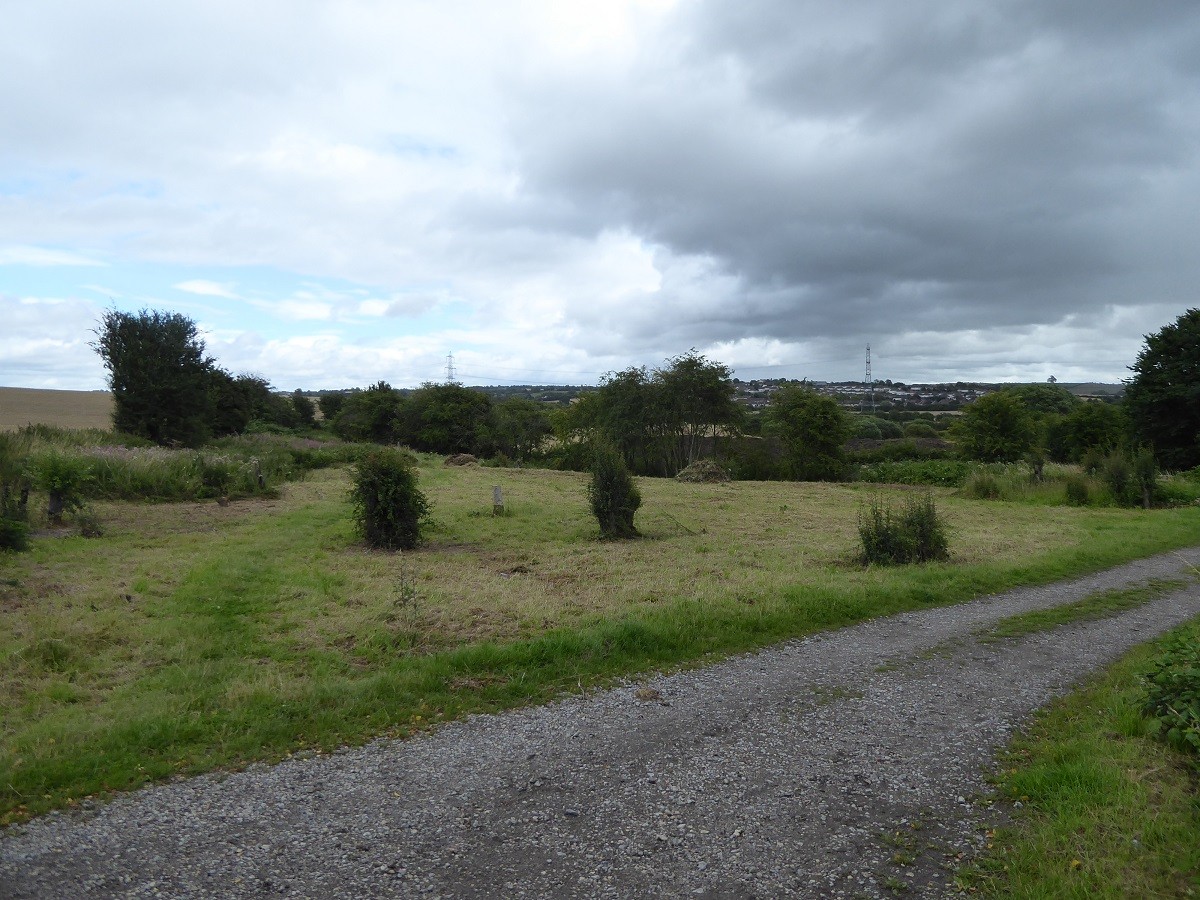
This was yesterday (3rd August).
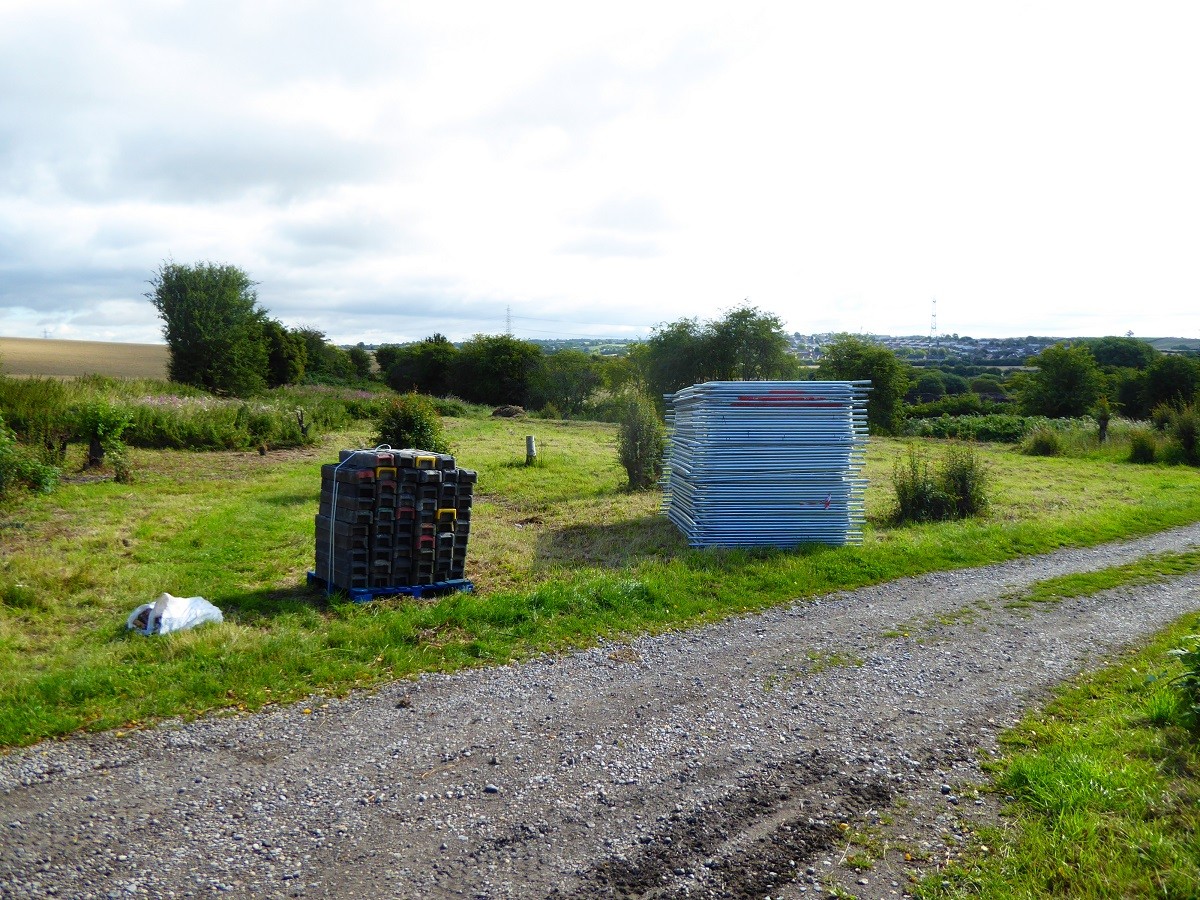
10 a.m. today.
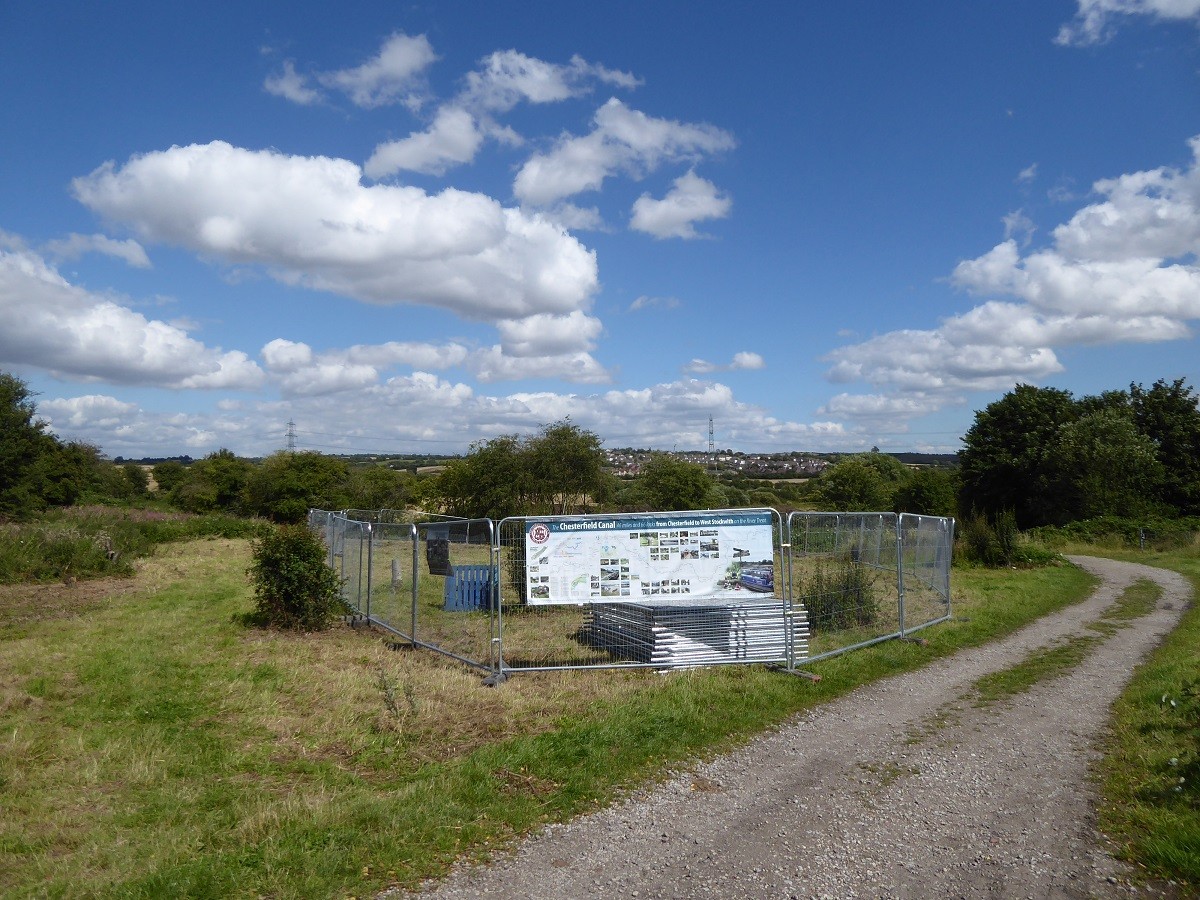
1 p.m. today.
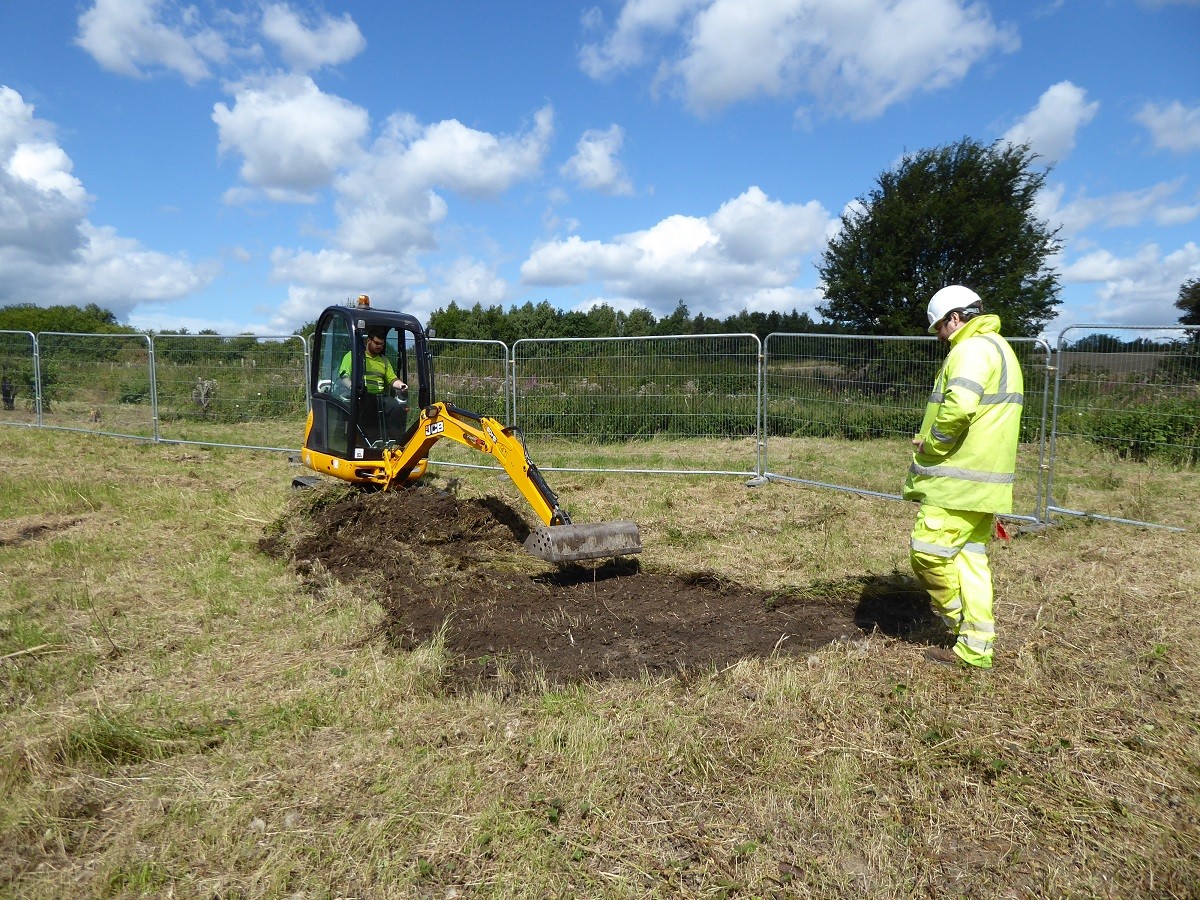
5th August. Phil started digging the first trench.
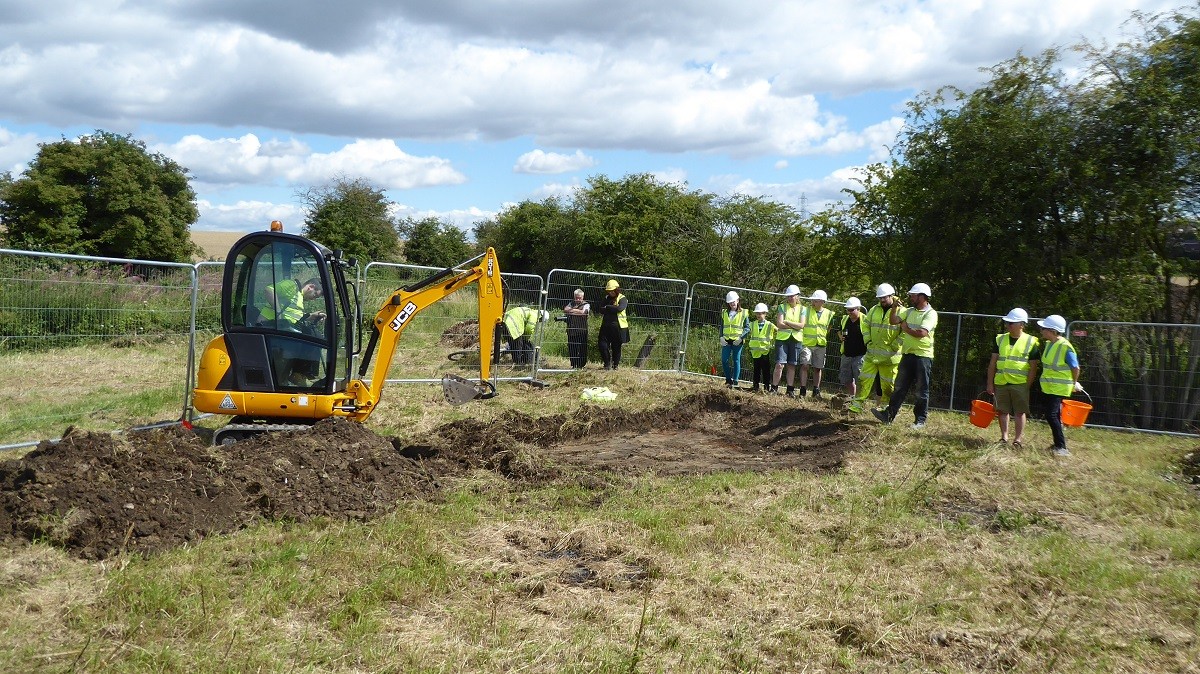
Before too long a crowd had gathered.
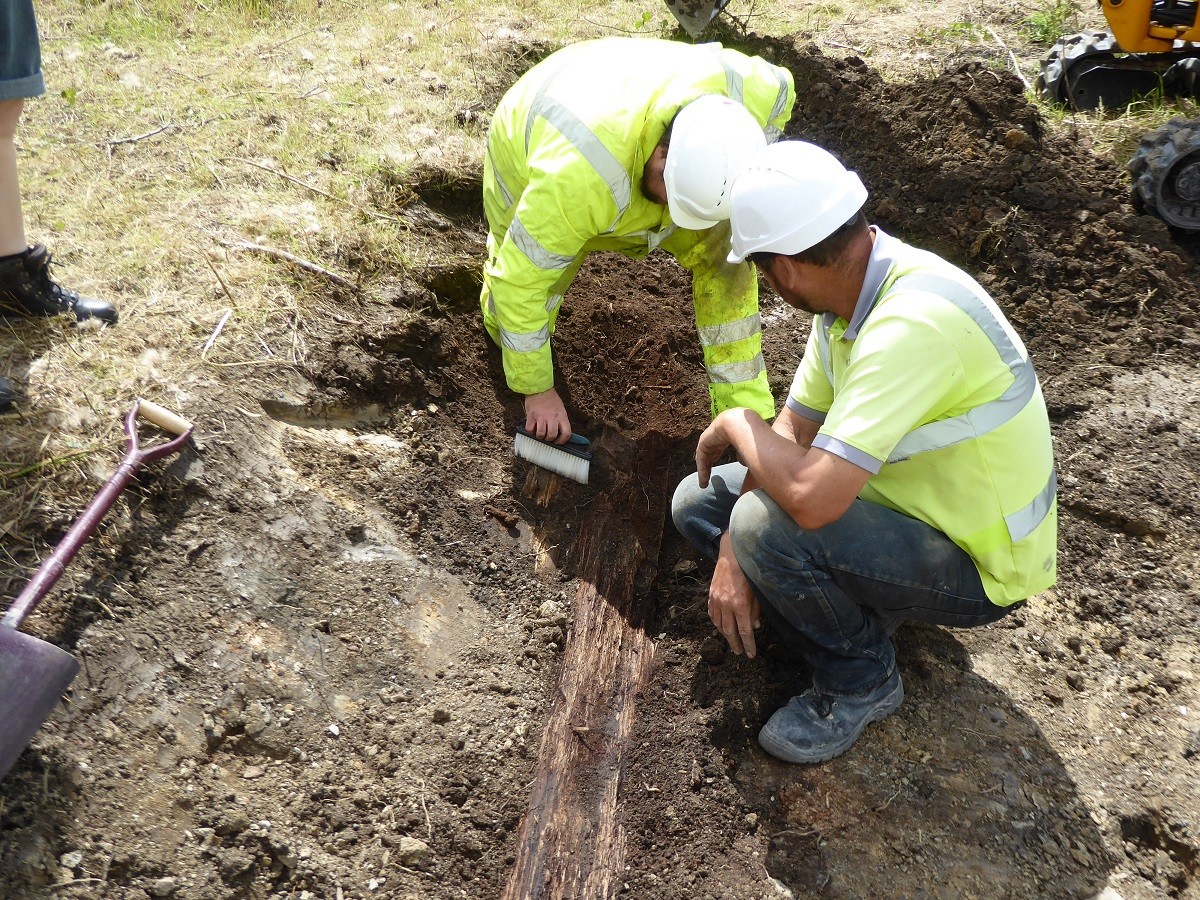
Gradually wood was exposed – this was definitely a boat.
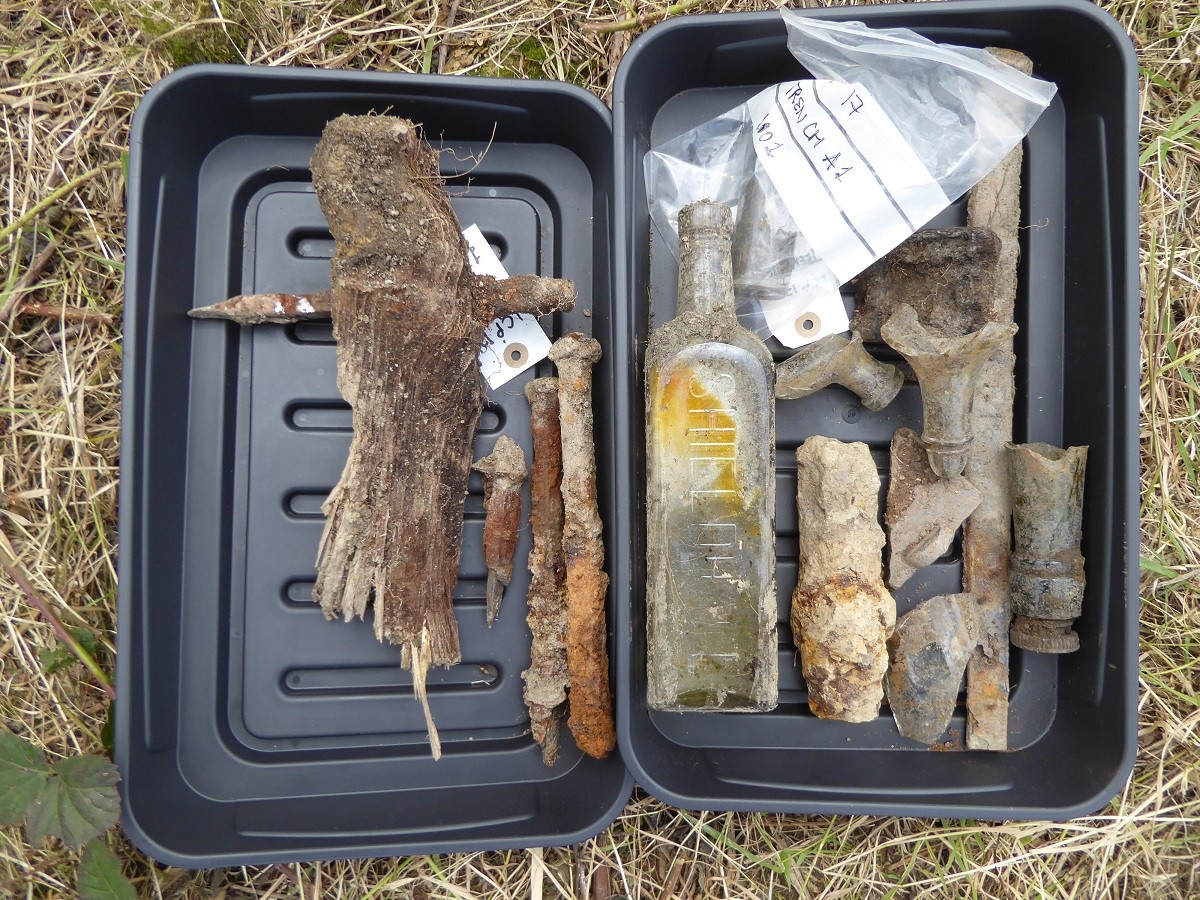
We already had some stuff in the finds box.
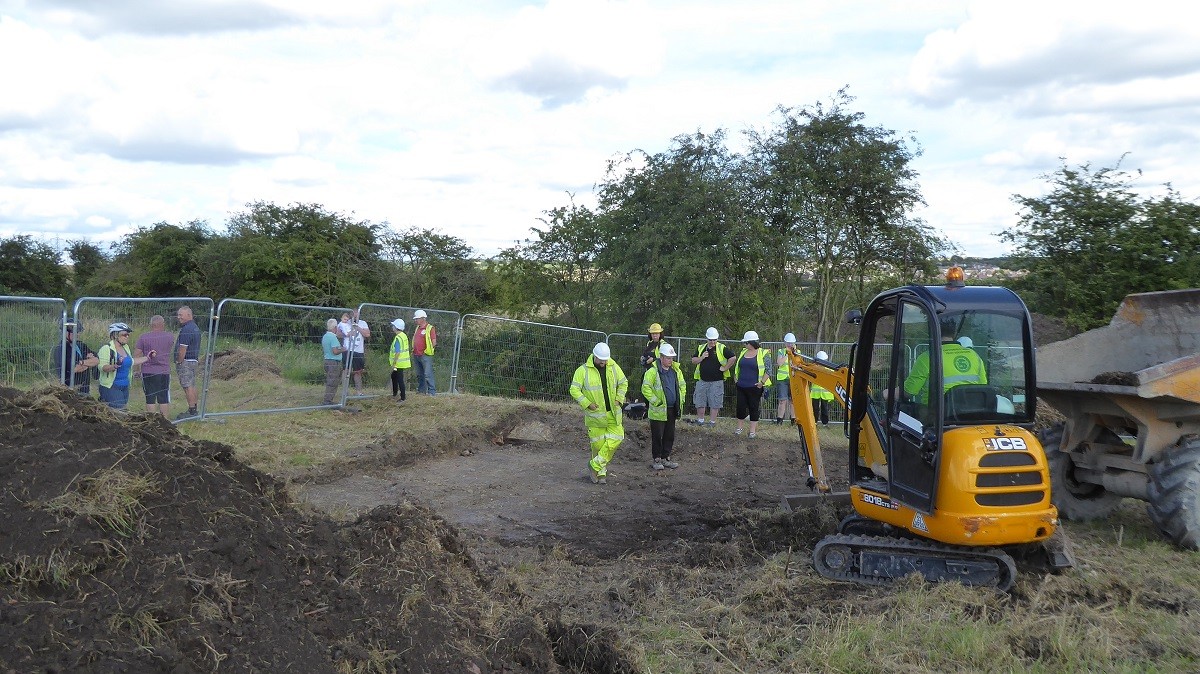
By now, people were gathering along the fences.
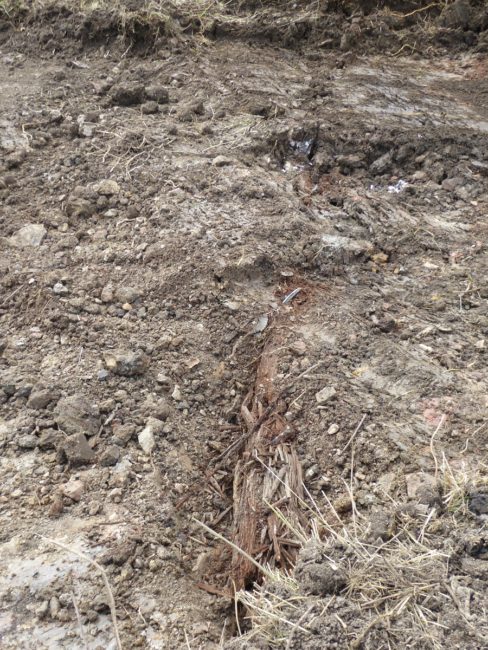
The remains of another boat were also exposed.
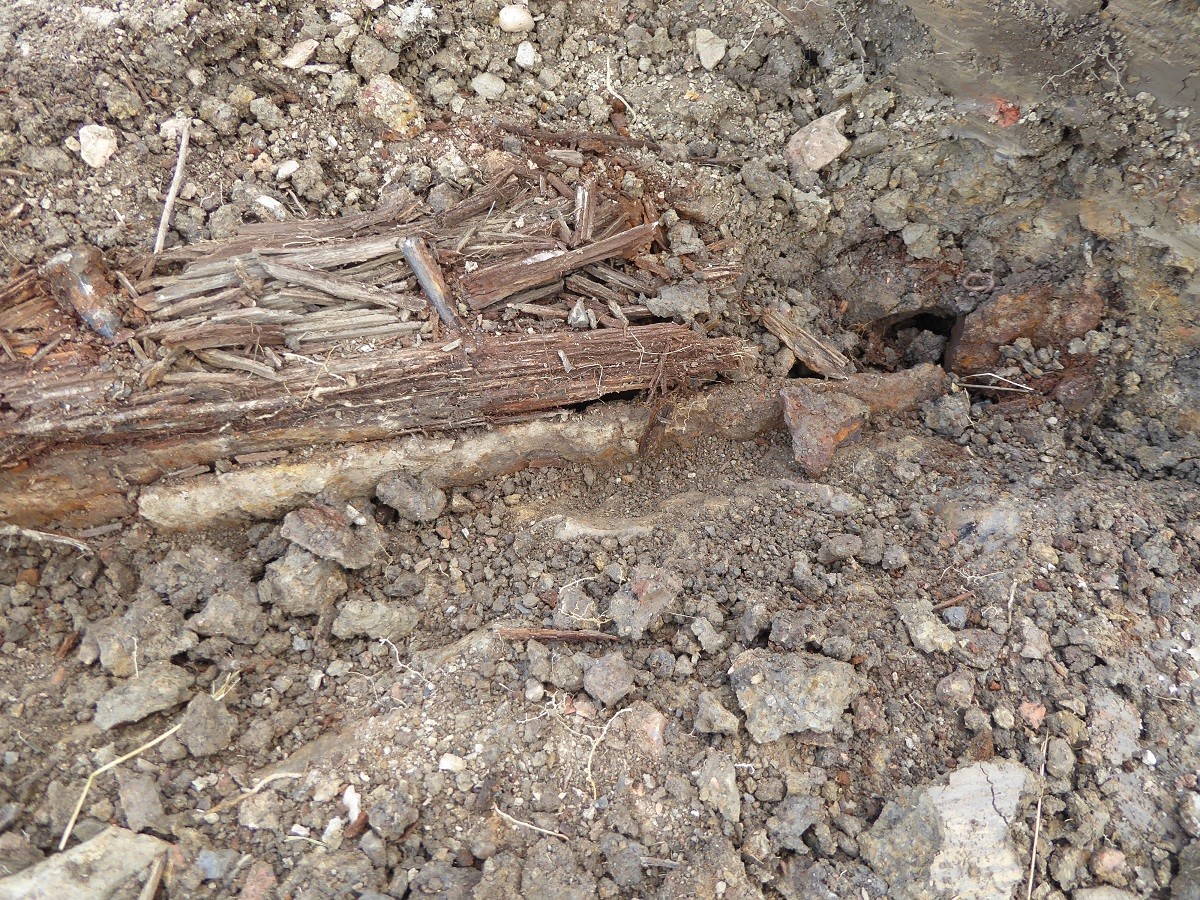
We didn’t know whether this was part of a Cuckoo or one of the pans used as working boats for maintenance. Note the nail on the left and the metal strip.
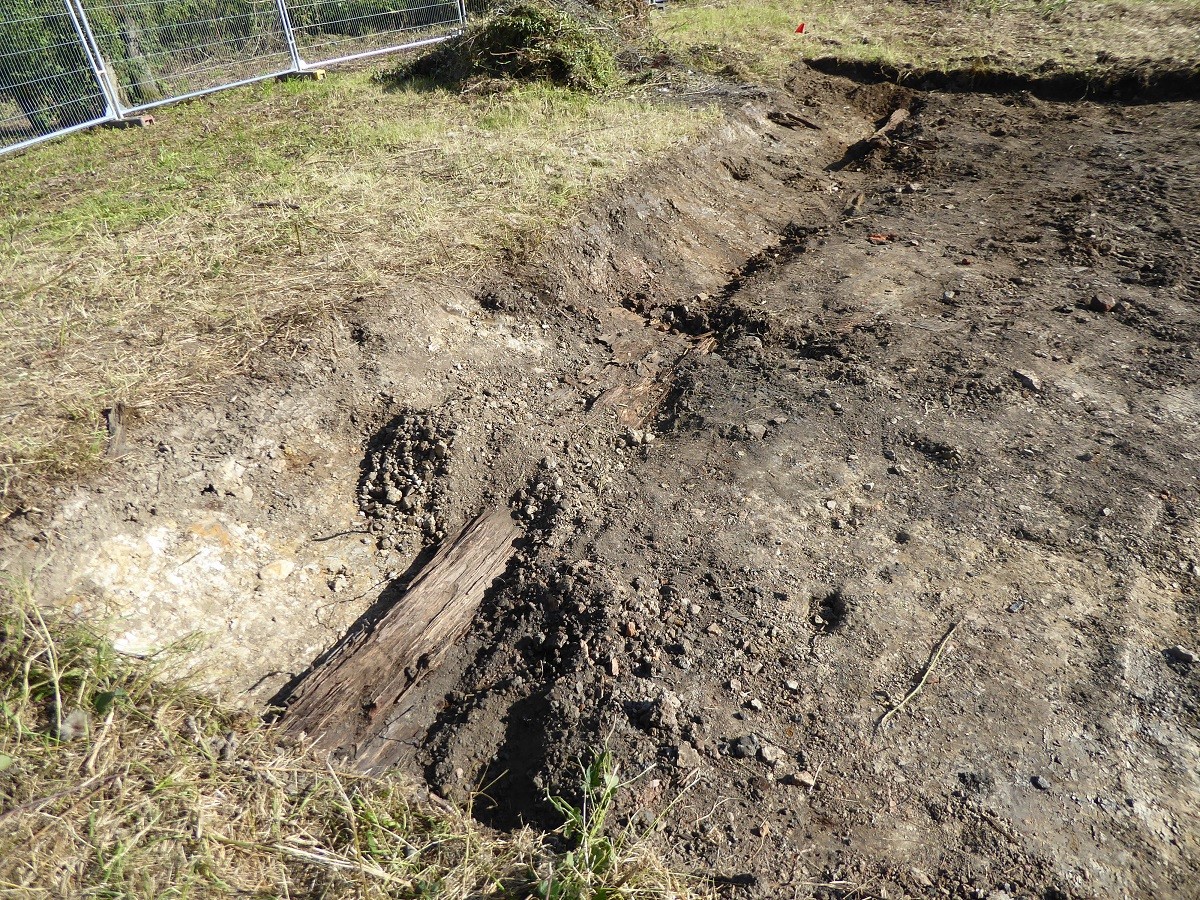
By the end of the day you could see clearly what had been exposed.
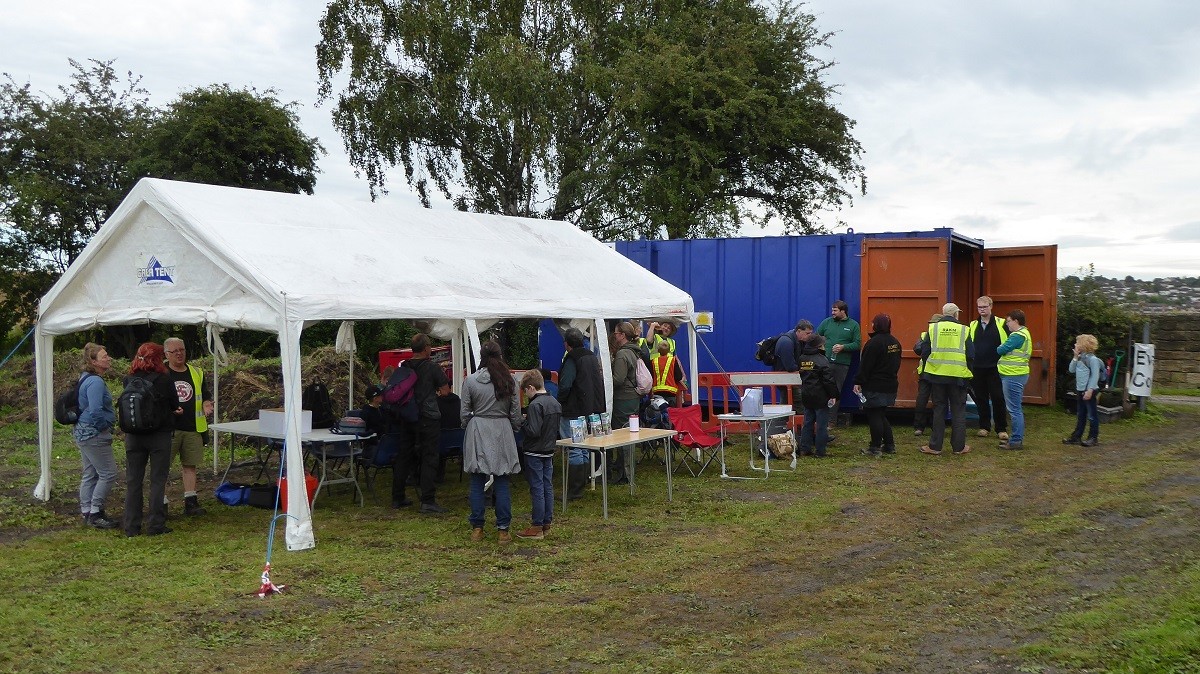
7th August. The first day of public digging and the lucky folk who had booked were signing in.
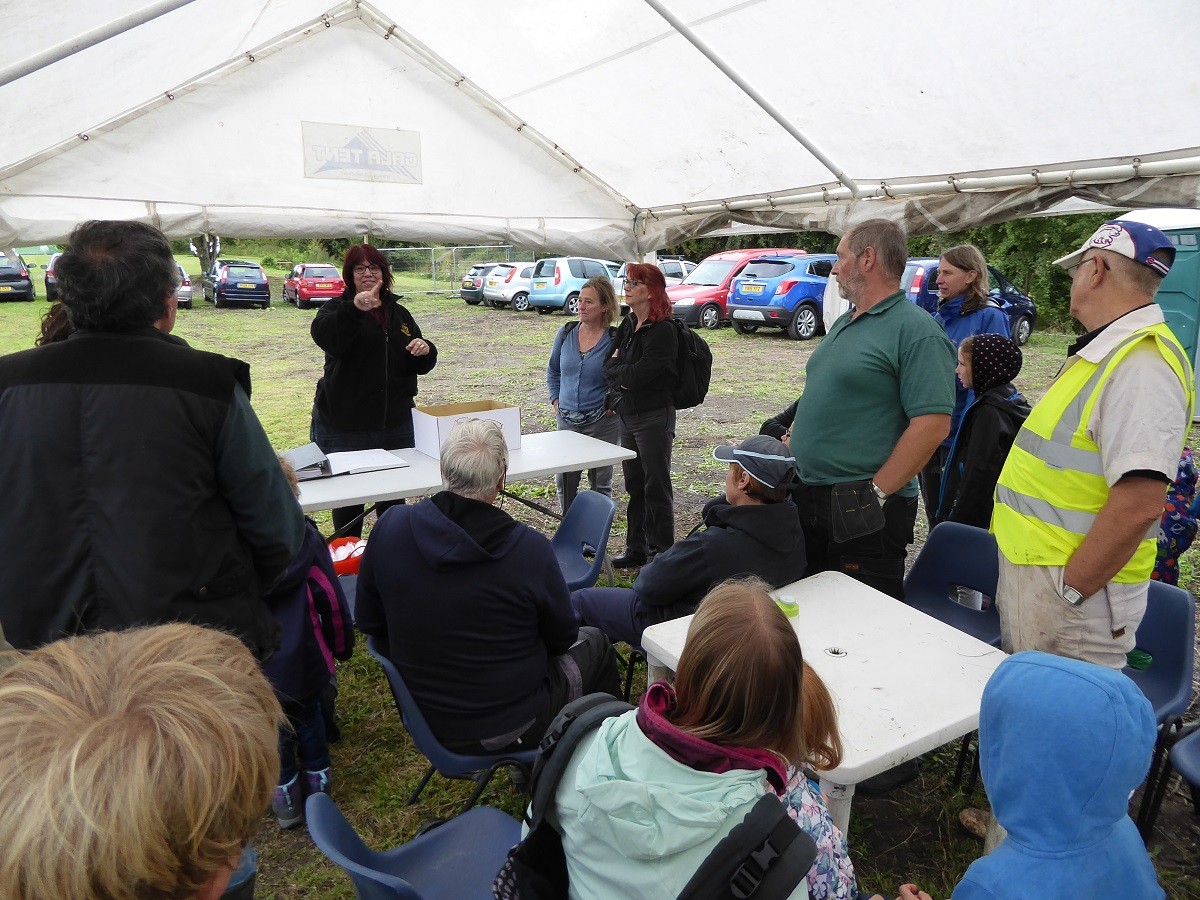
Christine Rawson from Elmet Archaeological Services gave a briefing.
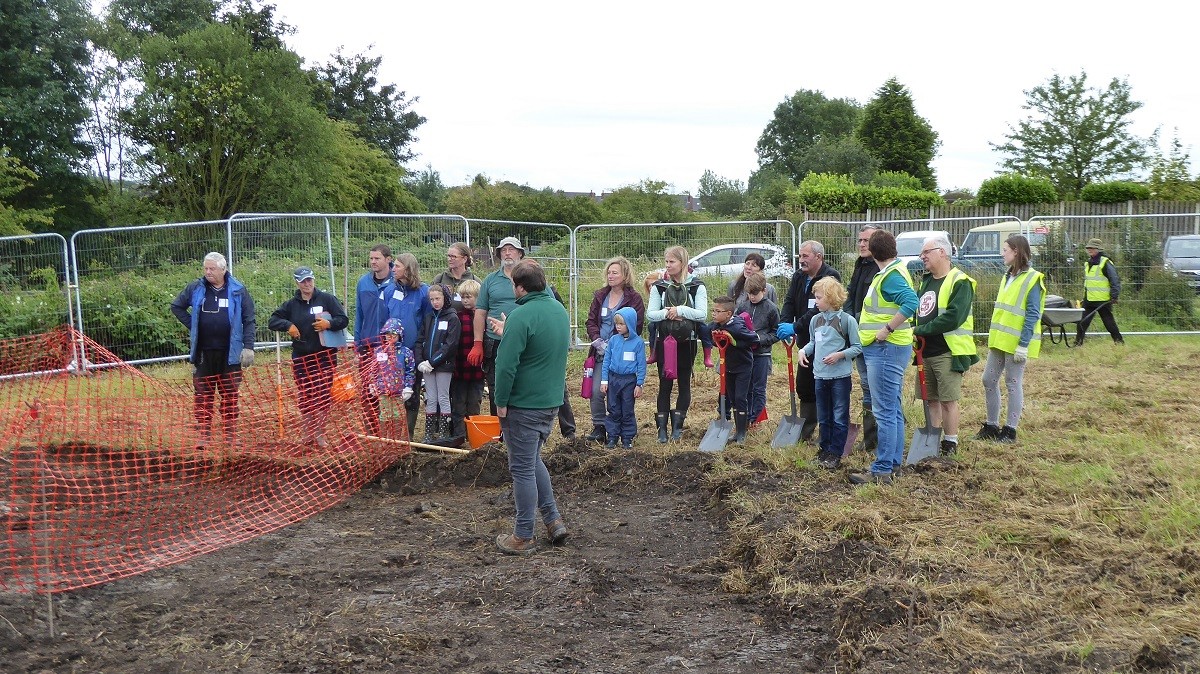
Down at the site, there were three choices.
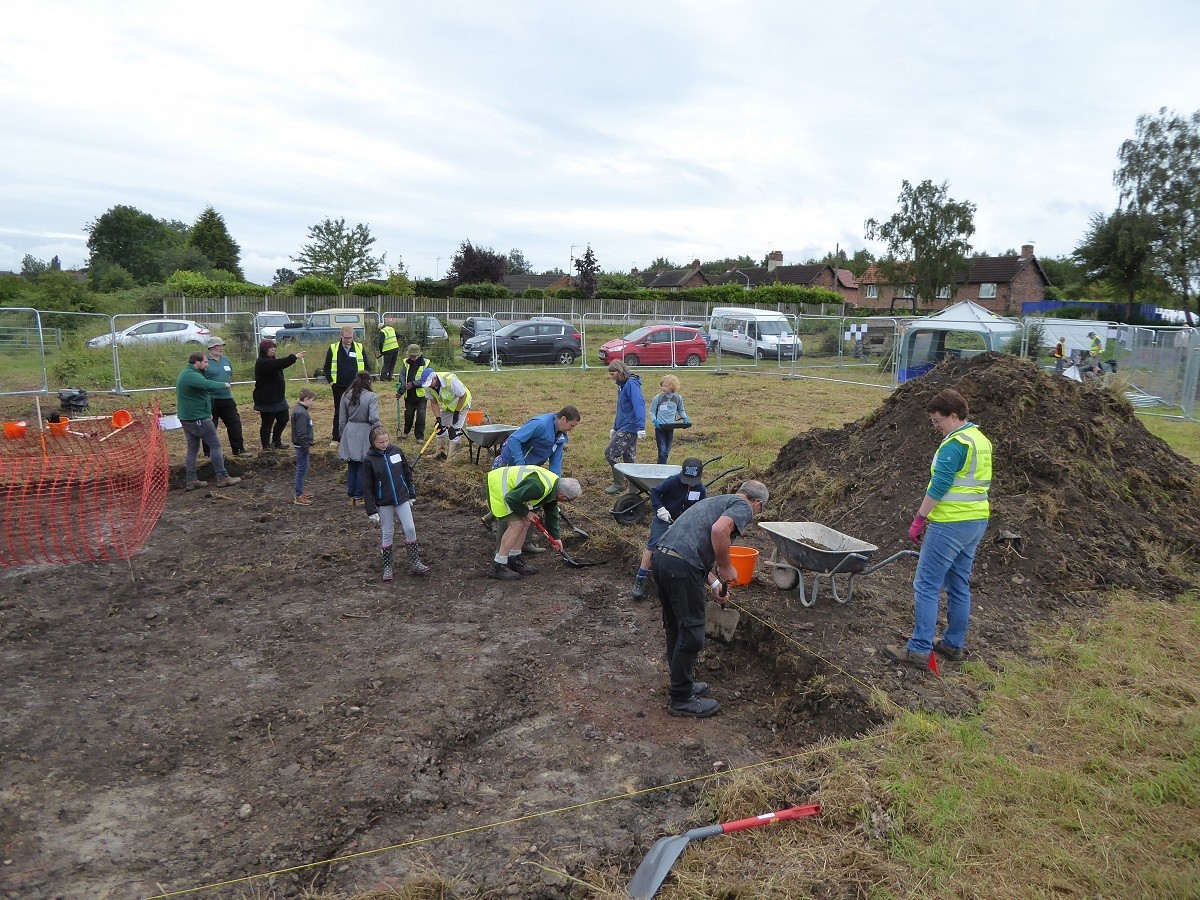
Some chose to work at the basin site.
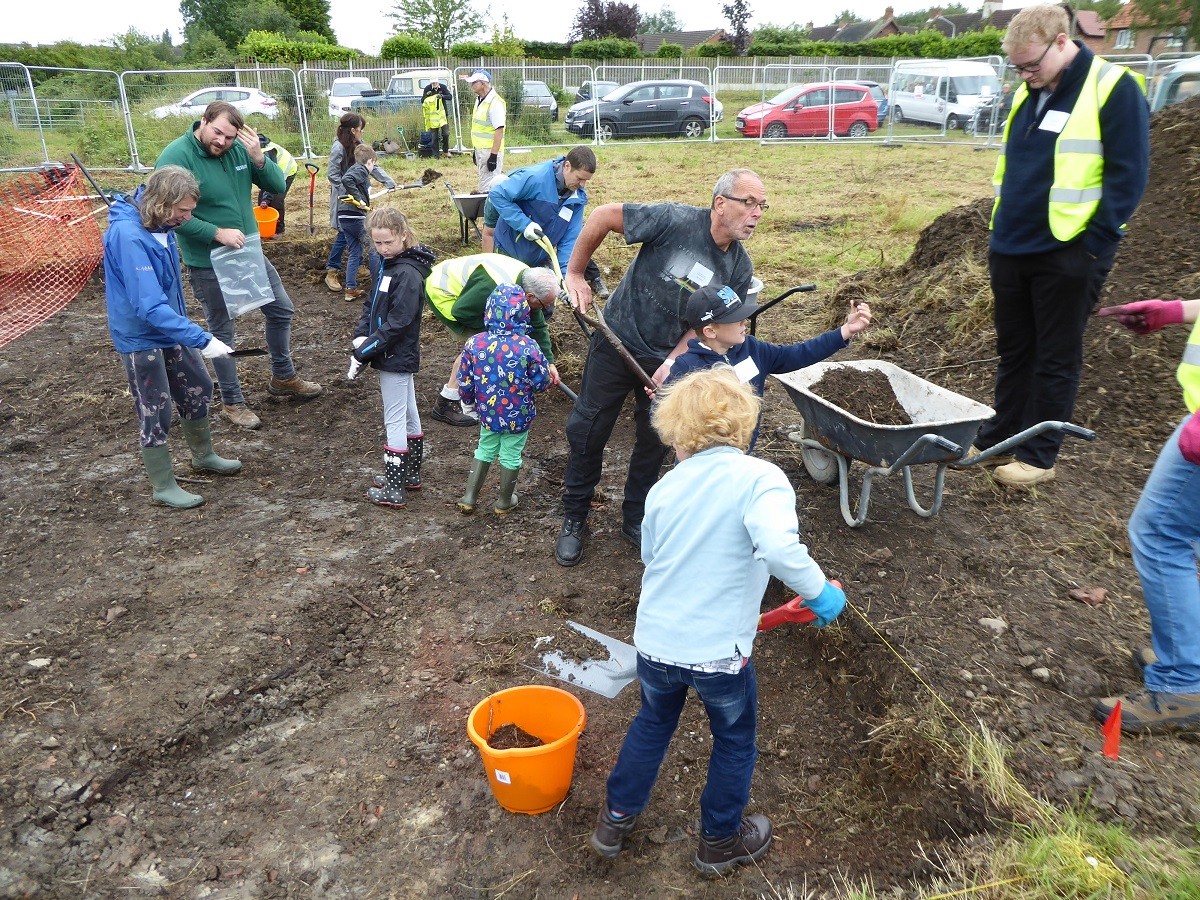
Finds were soon being made.
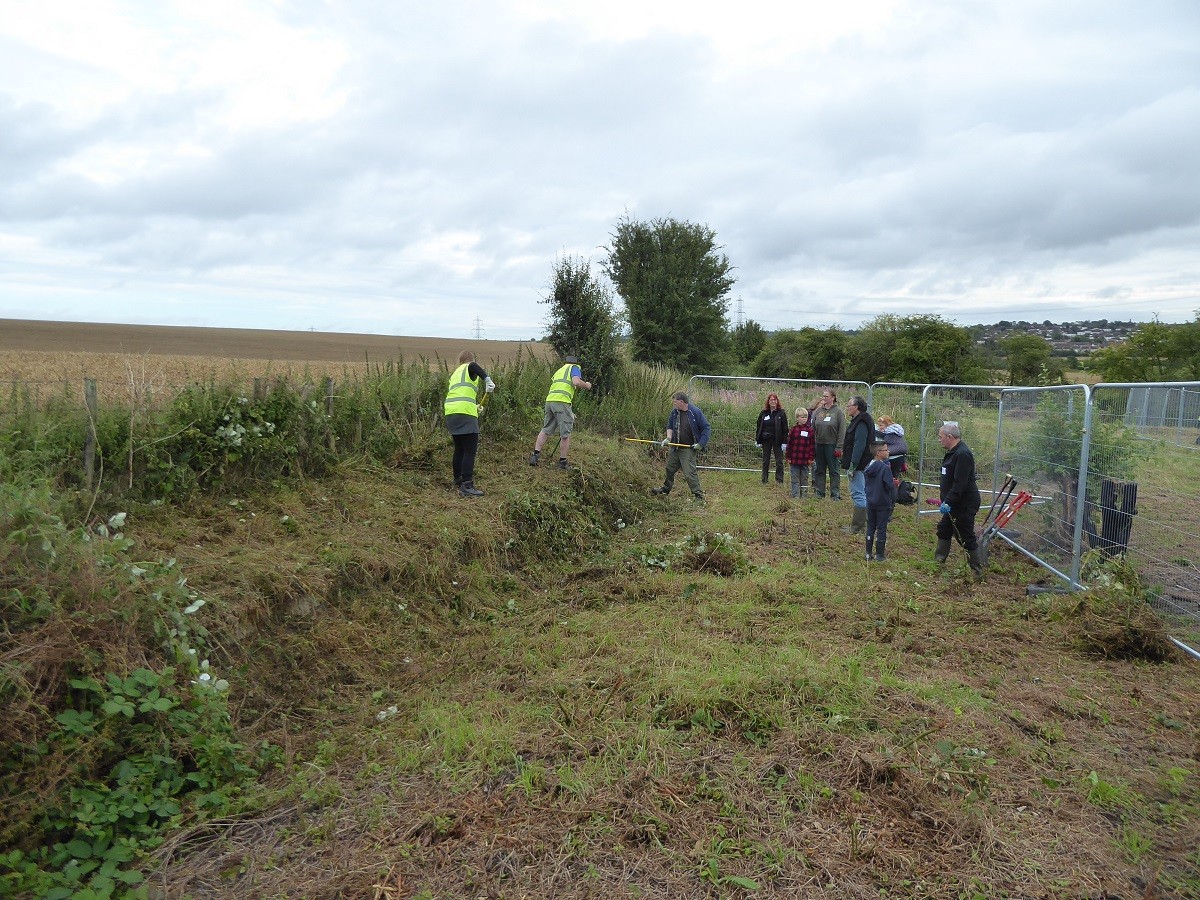
Some went to clear the canal bank and towpath.
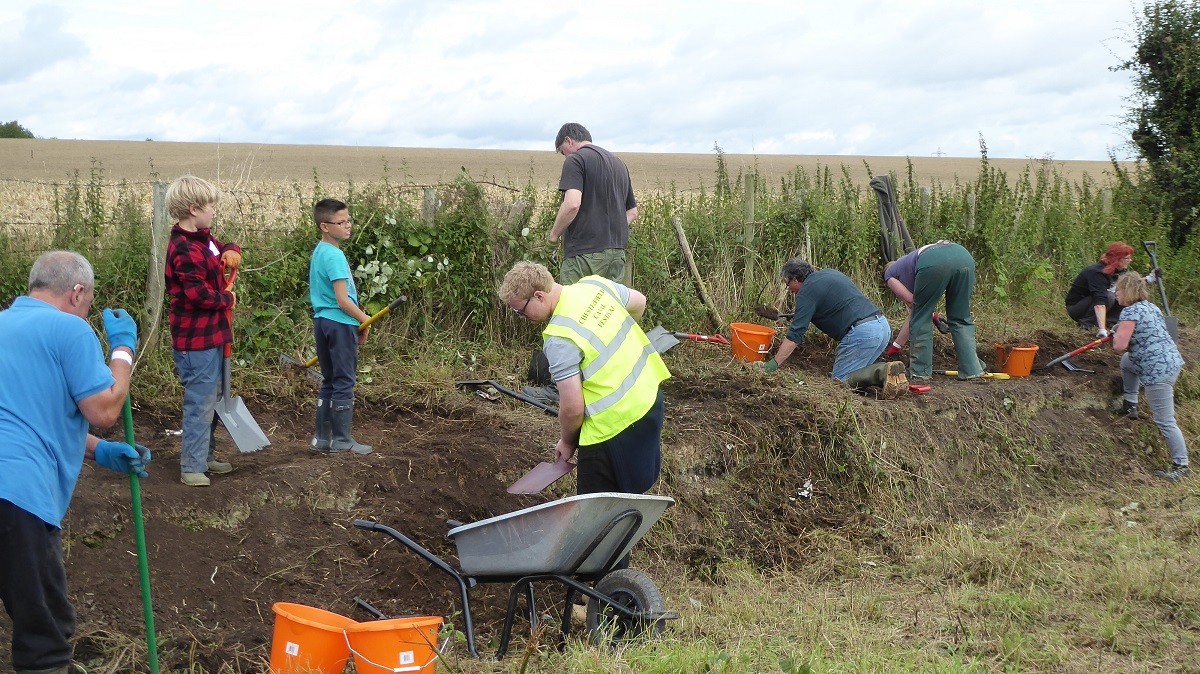
They soon got stuck in.
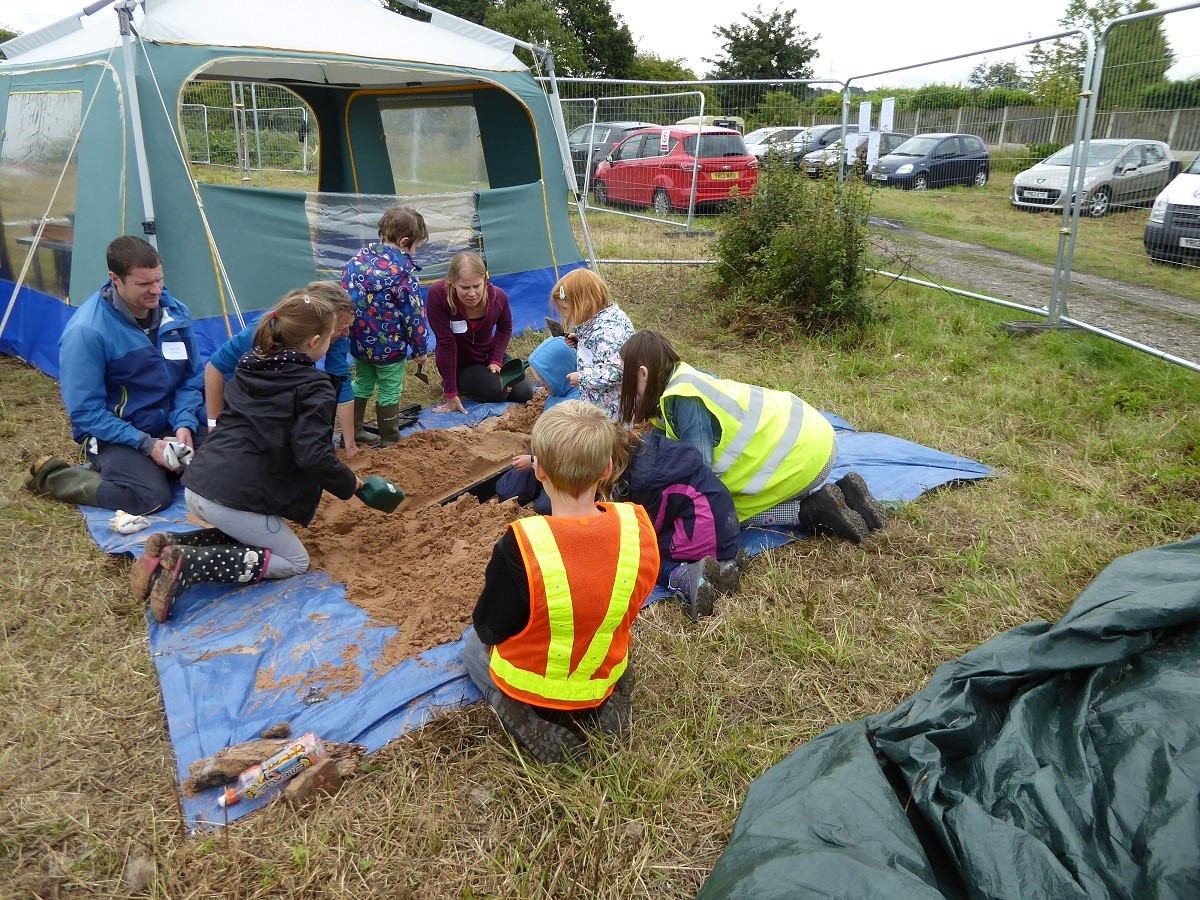
Some youngsters tried their luck in the sandpit.
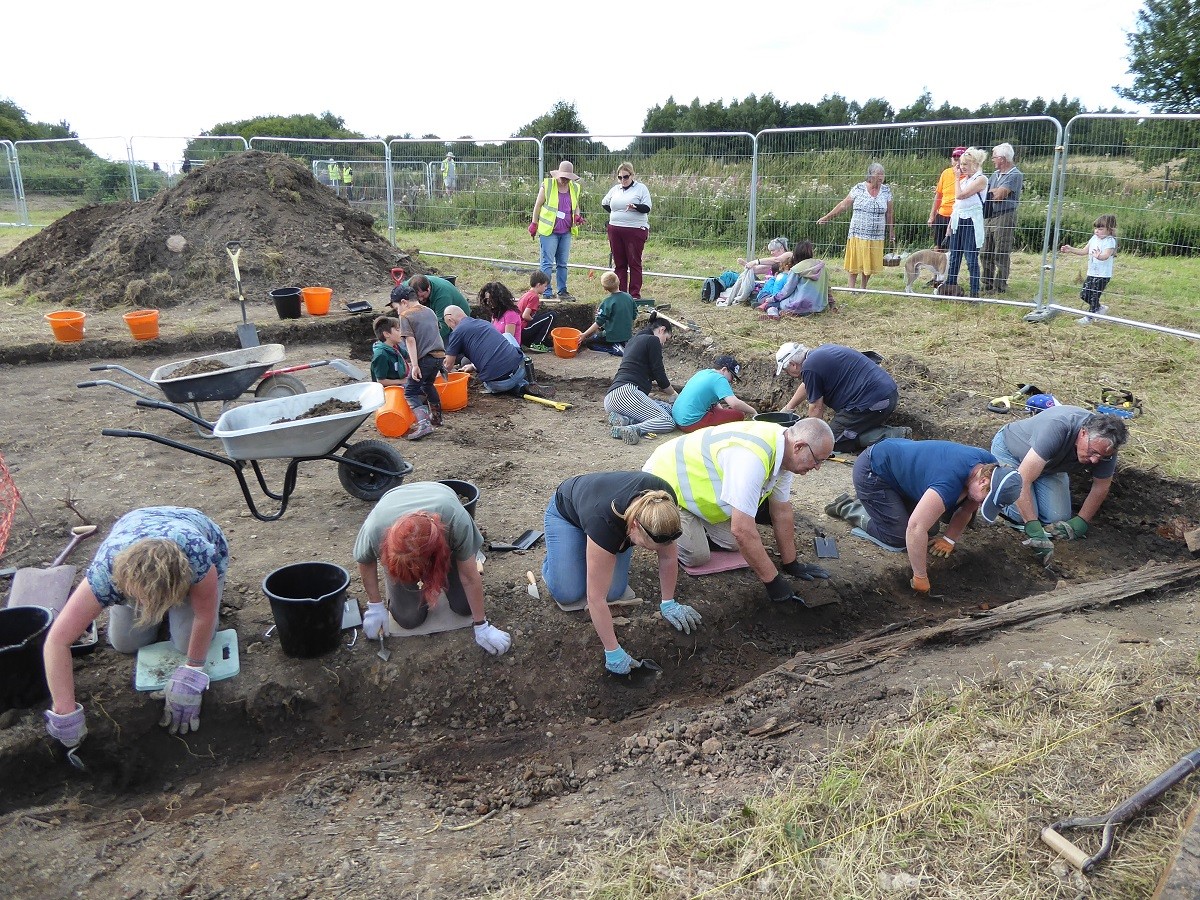
By the afternoon real progress was being made.
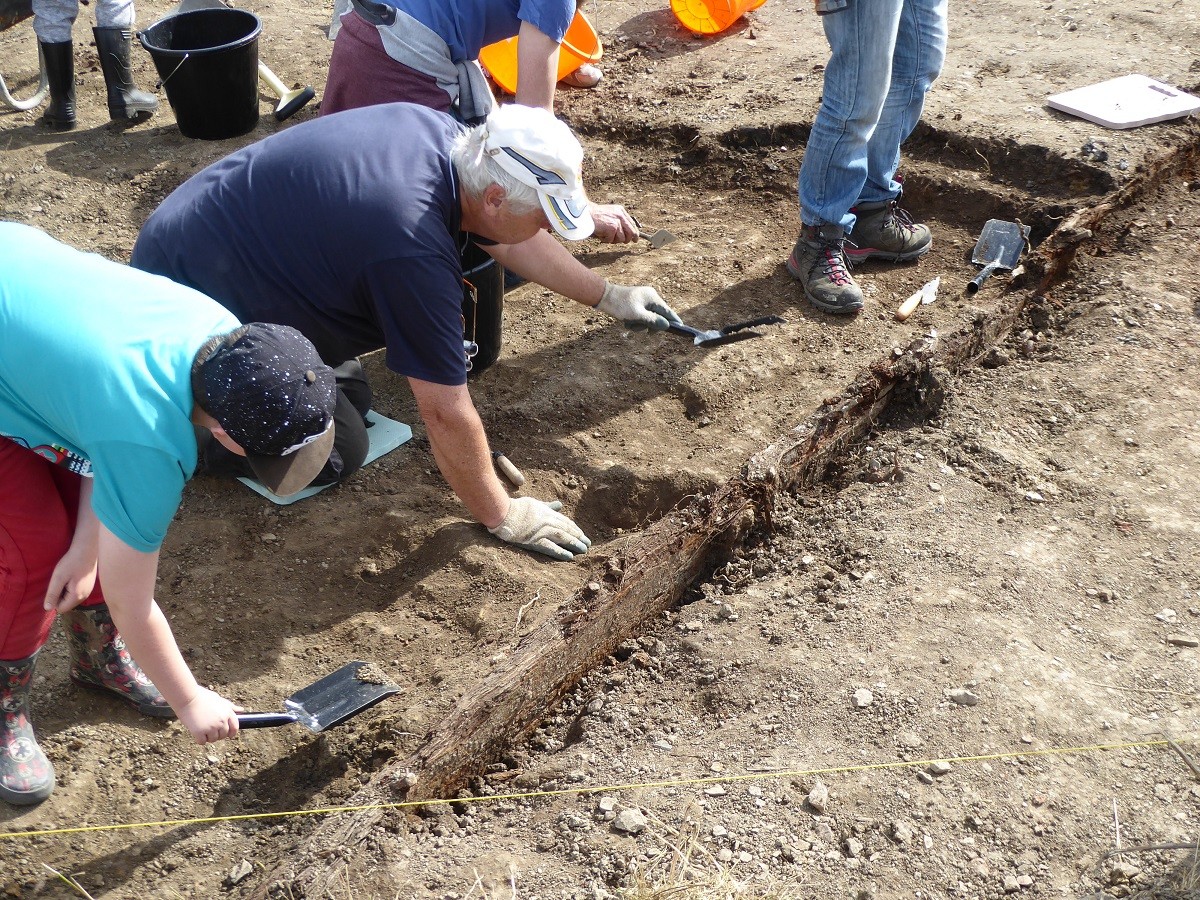
This was the second boat.
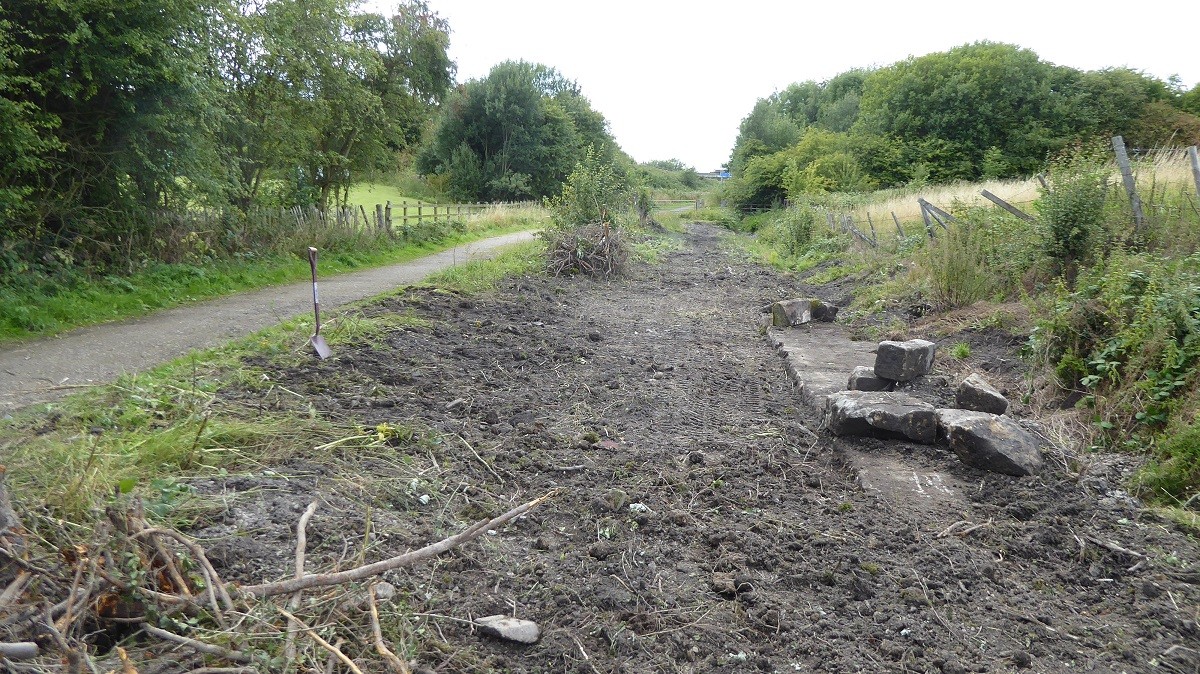
Meanwhile Dave had been using the digger to clear the canal line back towards the Loop Road. The masonry on the right is the towpath side abutment wall of a railway bridge.
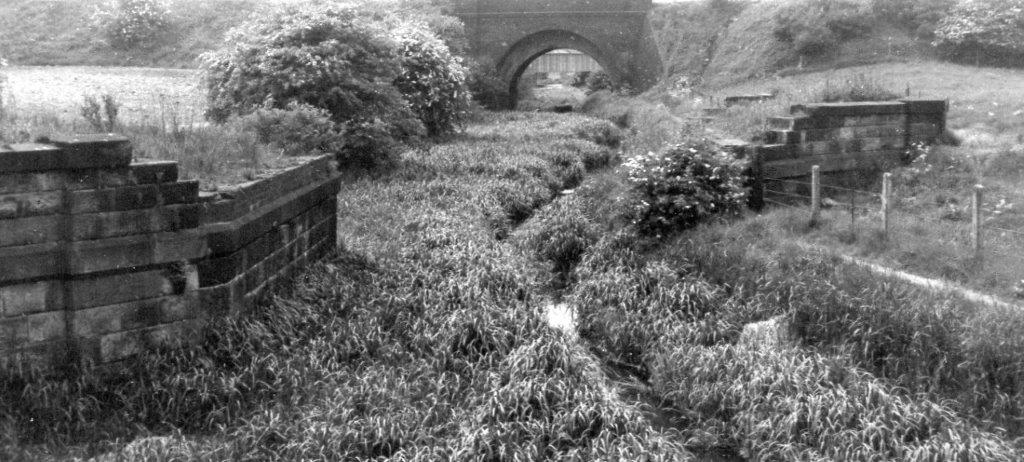
This is the same view in 1970. The Great Central Railway Bridge in the distance is now part of the Trans-Pennine Trail.
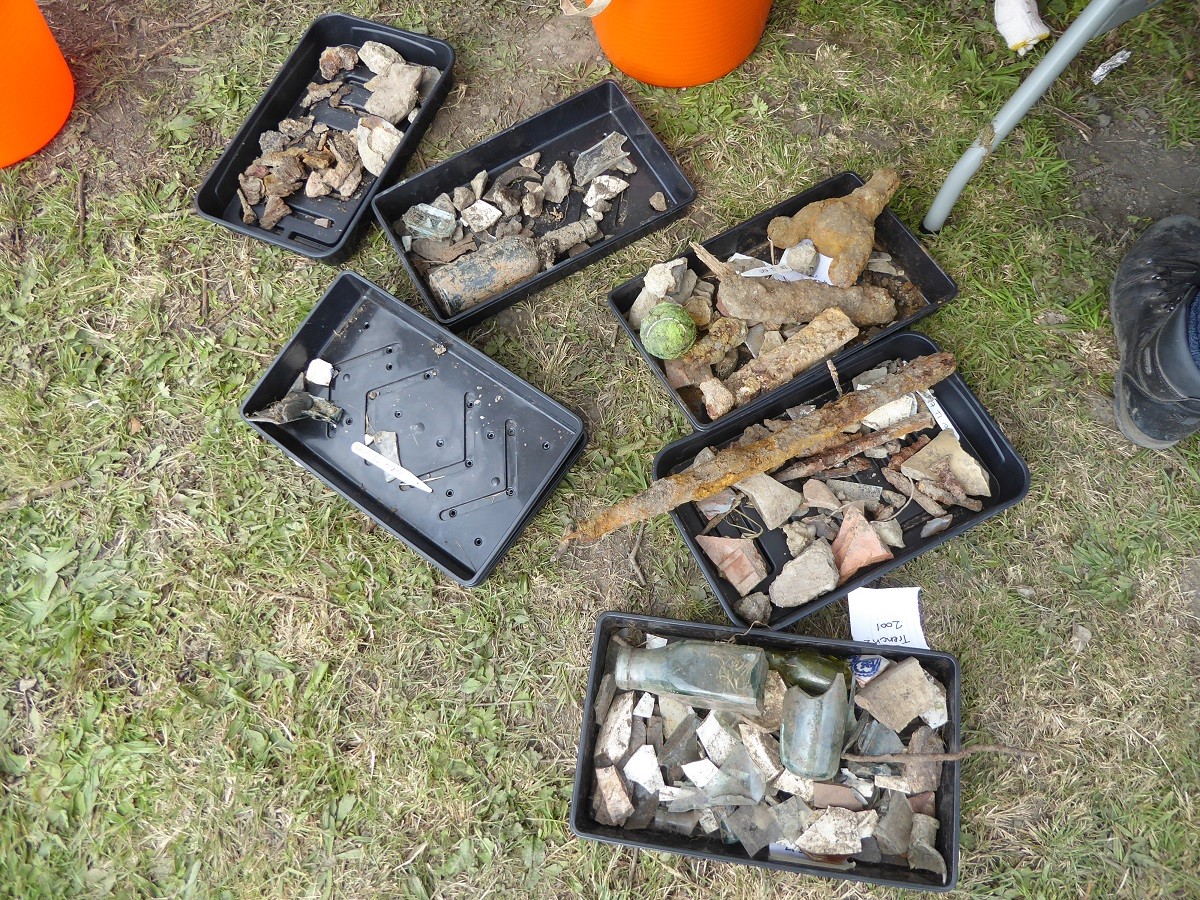
There were lots of boxes of finds, all of which had to be washed. (Note the palaeolithic tennis ball!)
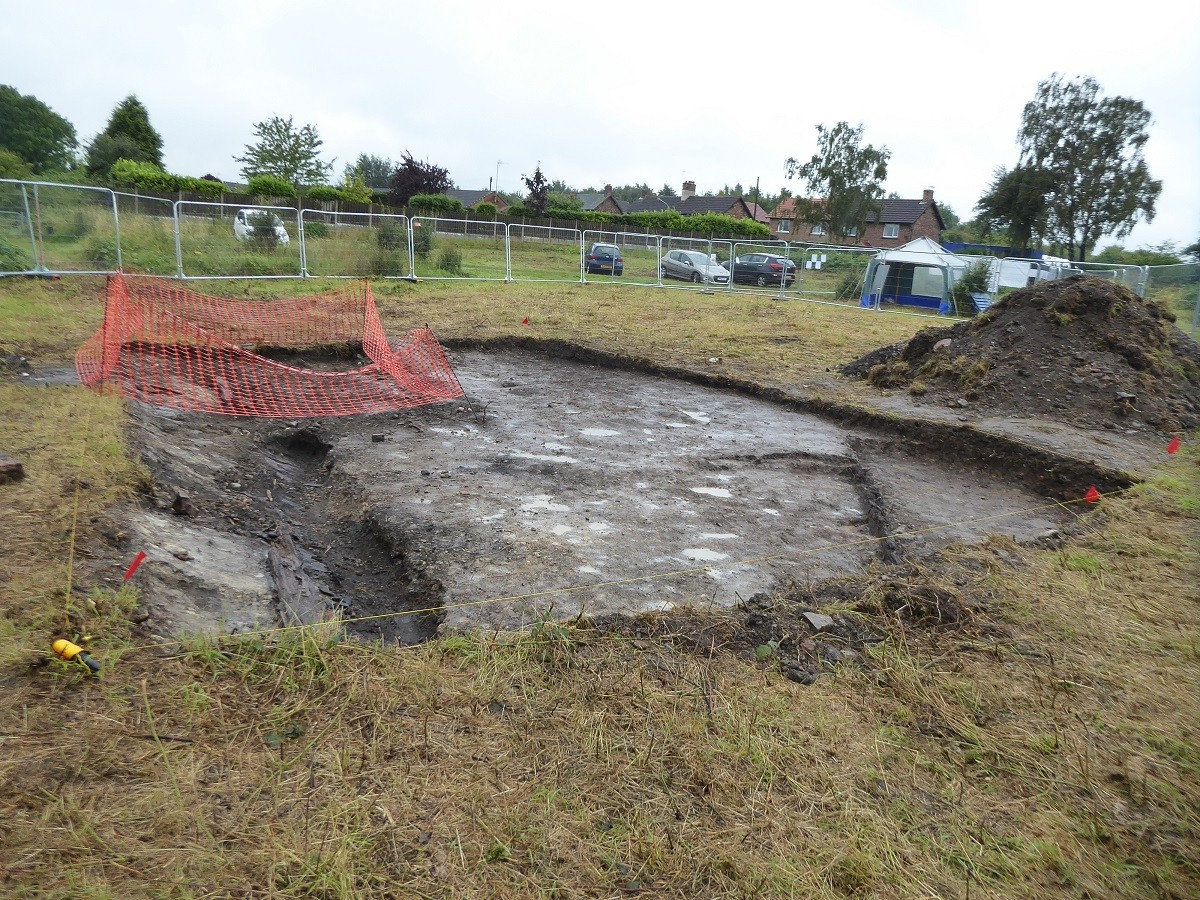
8th August. It poured down all day, so unfortunately there was no digging, however the forecast for the rest of the week was good.
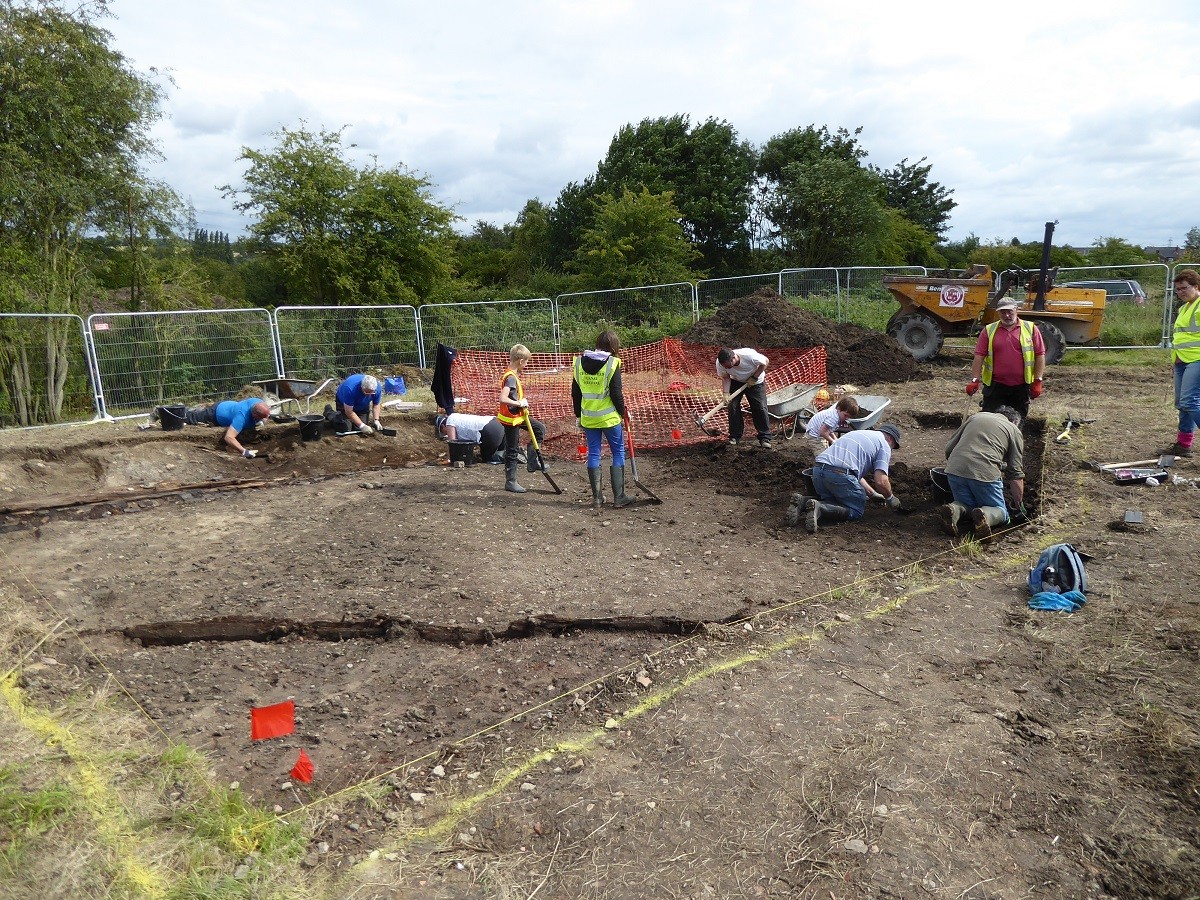
9th August. The weather was certainly a lot better then yesterday, so digging restarted.
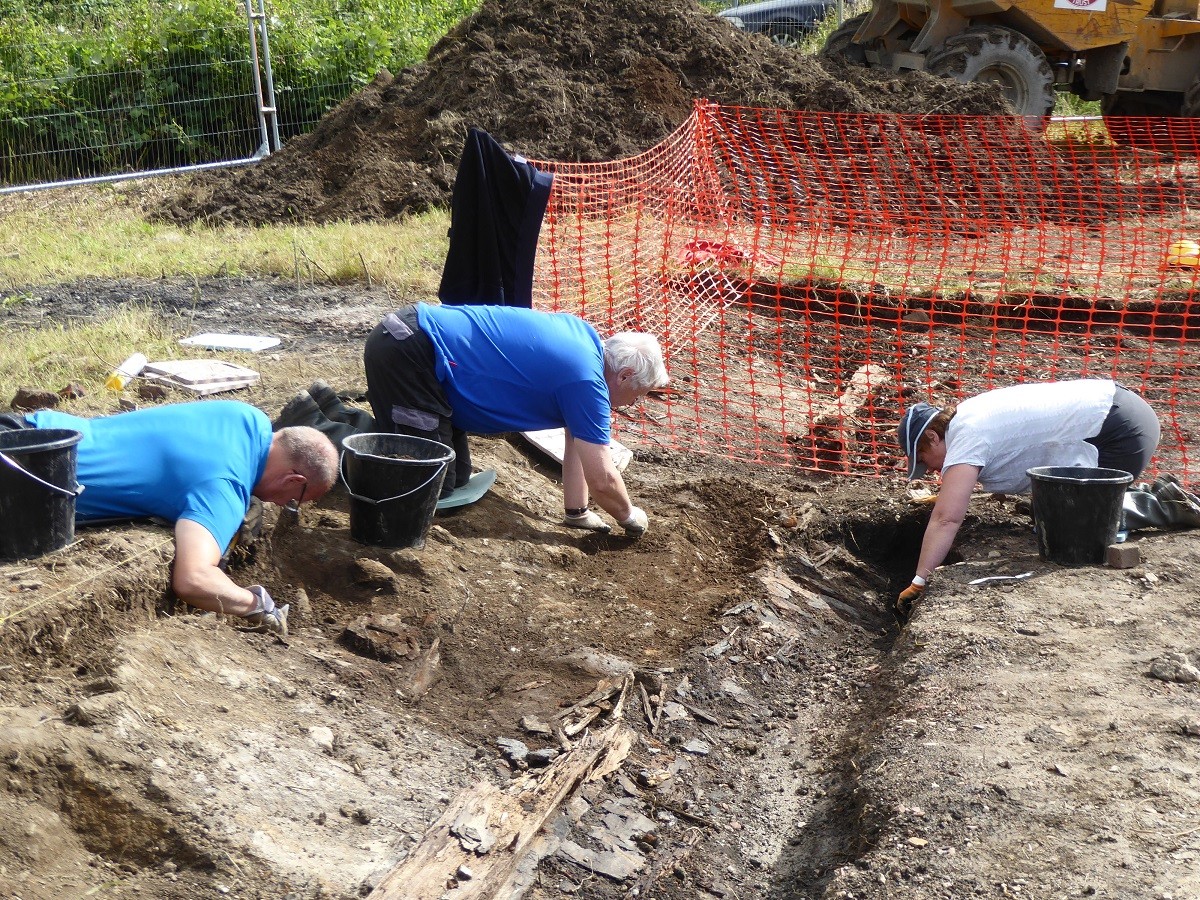
It seemed as if the side of the boat had been bulldozed into the clay bank.
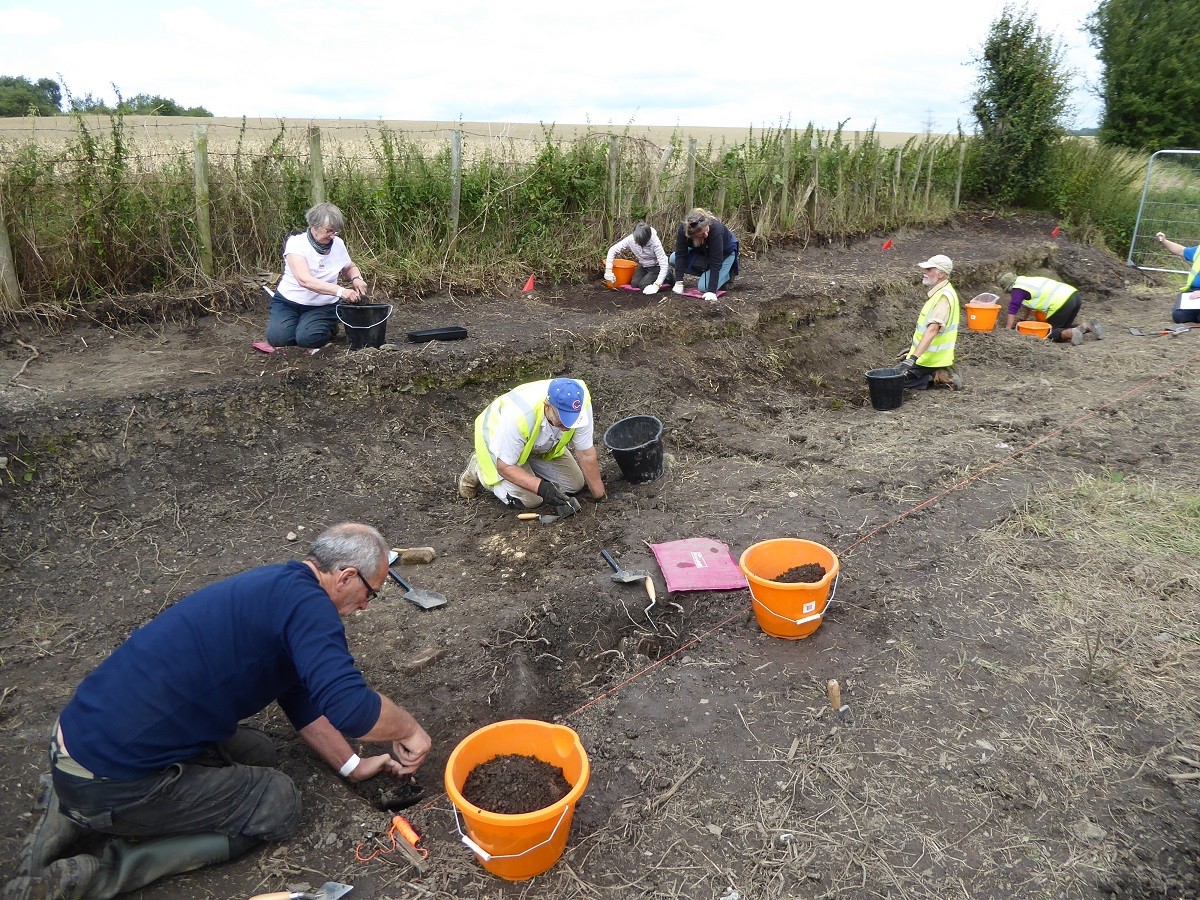
Work continued on the towpath site.
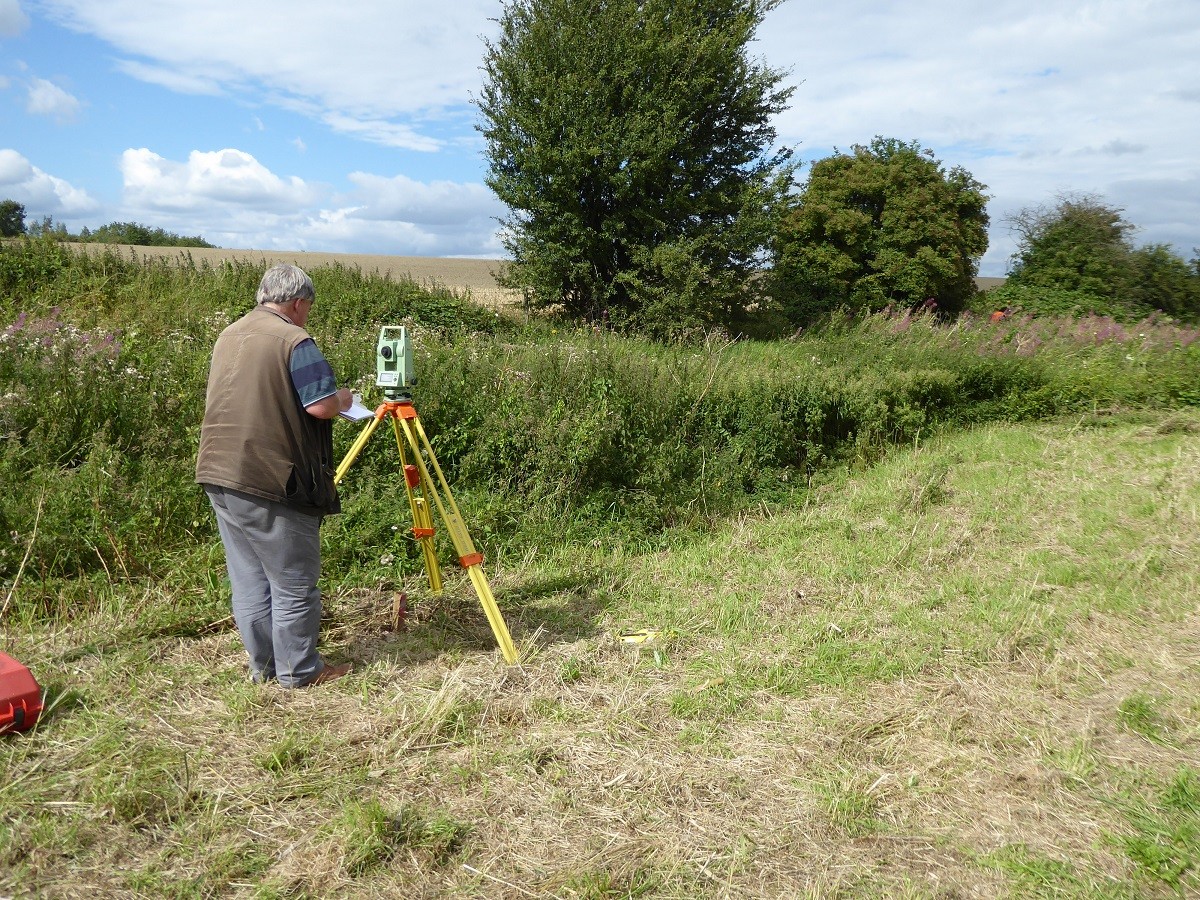
There was some surveying going on – note the figure in the undergrowth on the right.
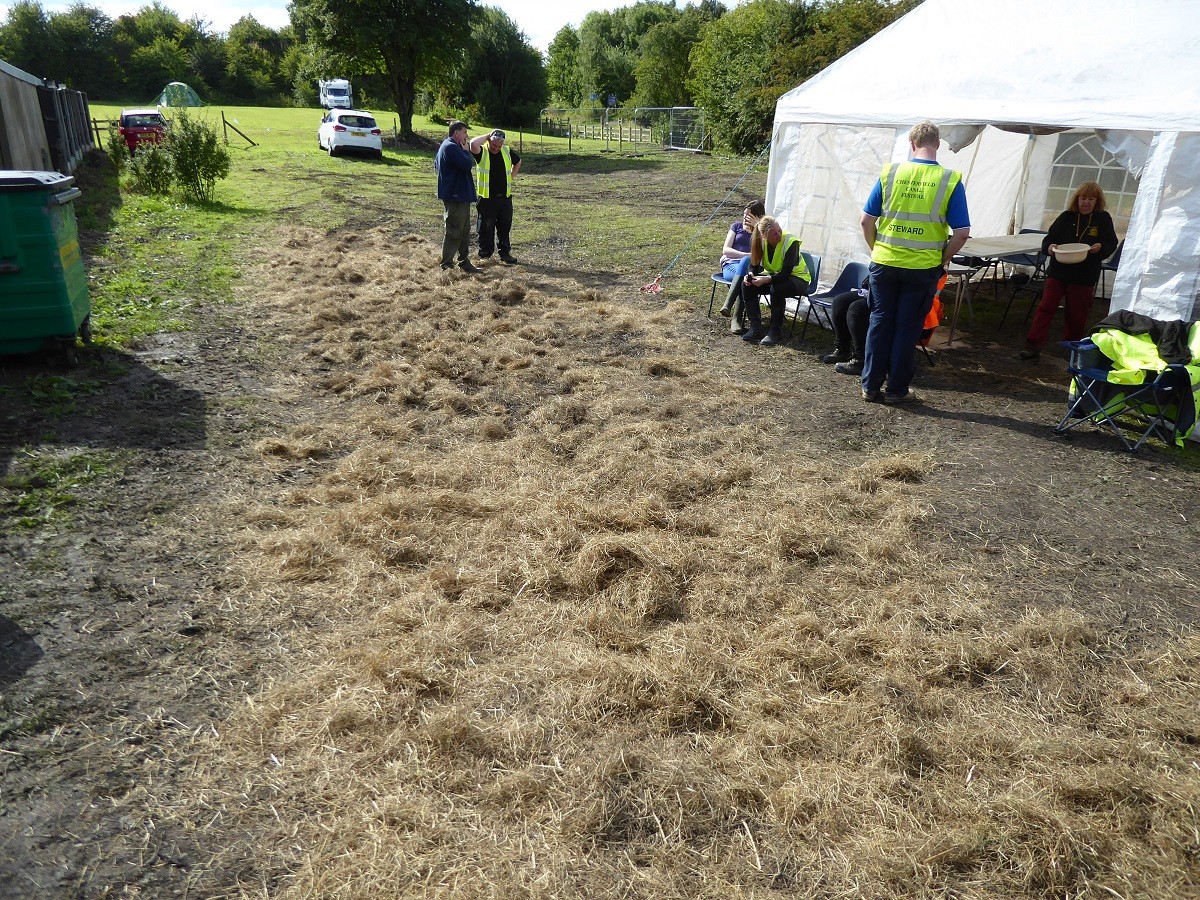
Yesterday’s downpour had left a serious bog in the main assembly area. This was solved by a delivery of straw from Carl Pass of Premier Pitches.
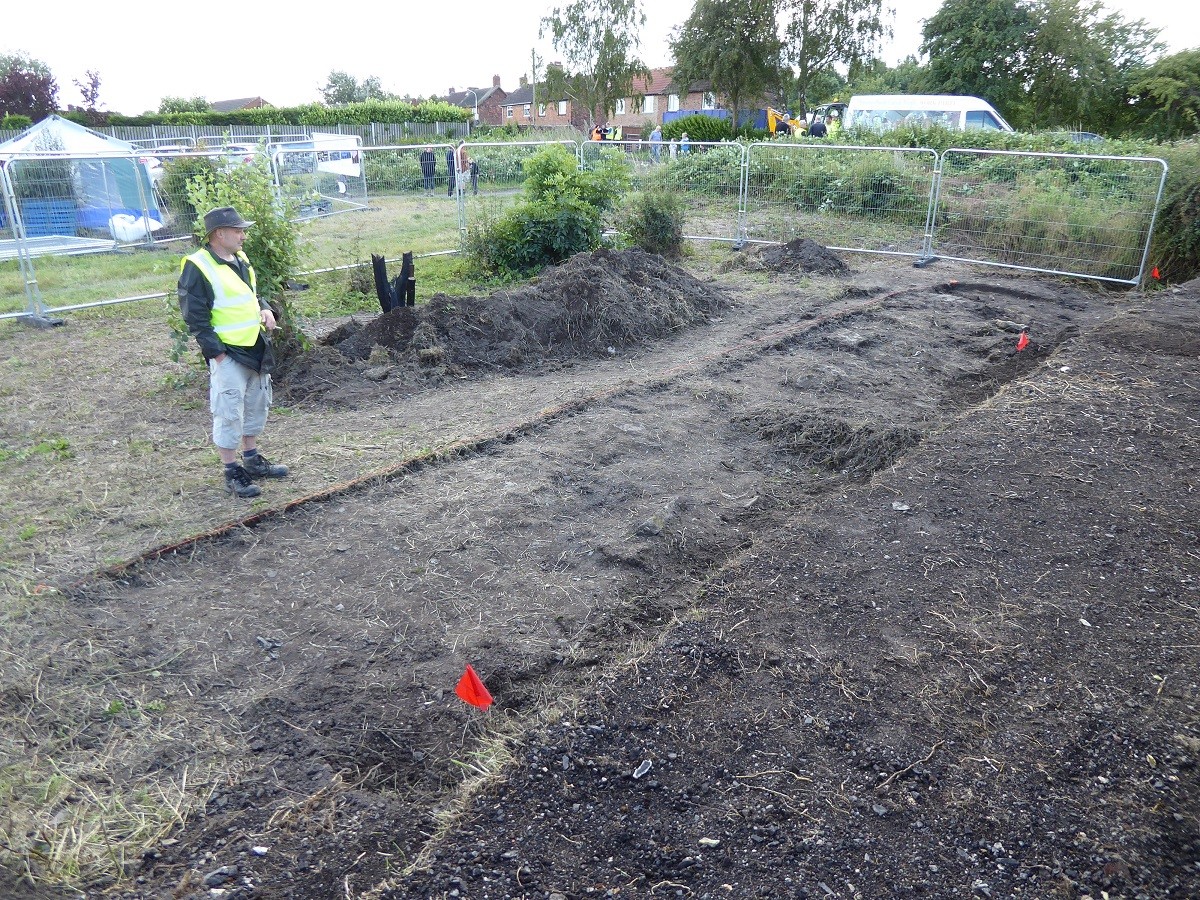
At the end of the afternoon, Andy contemplated the scene …..
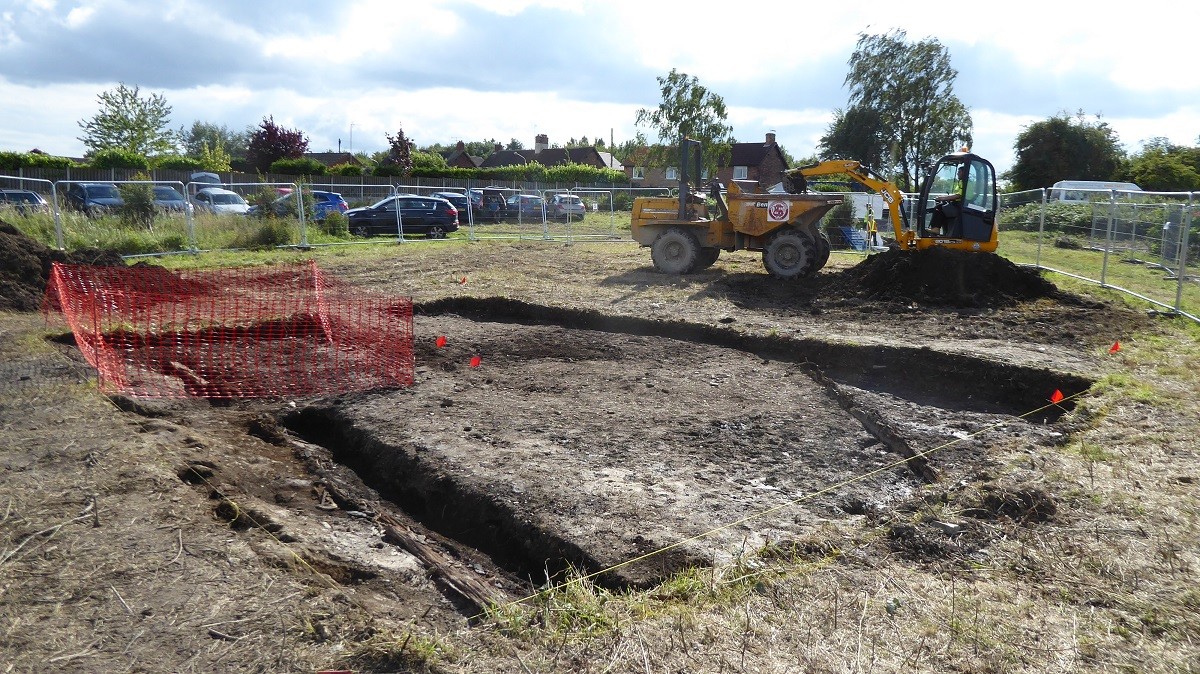
….. whilst Phil finished moving the old spoil heap to its new position on the left.
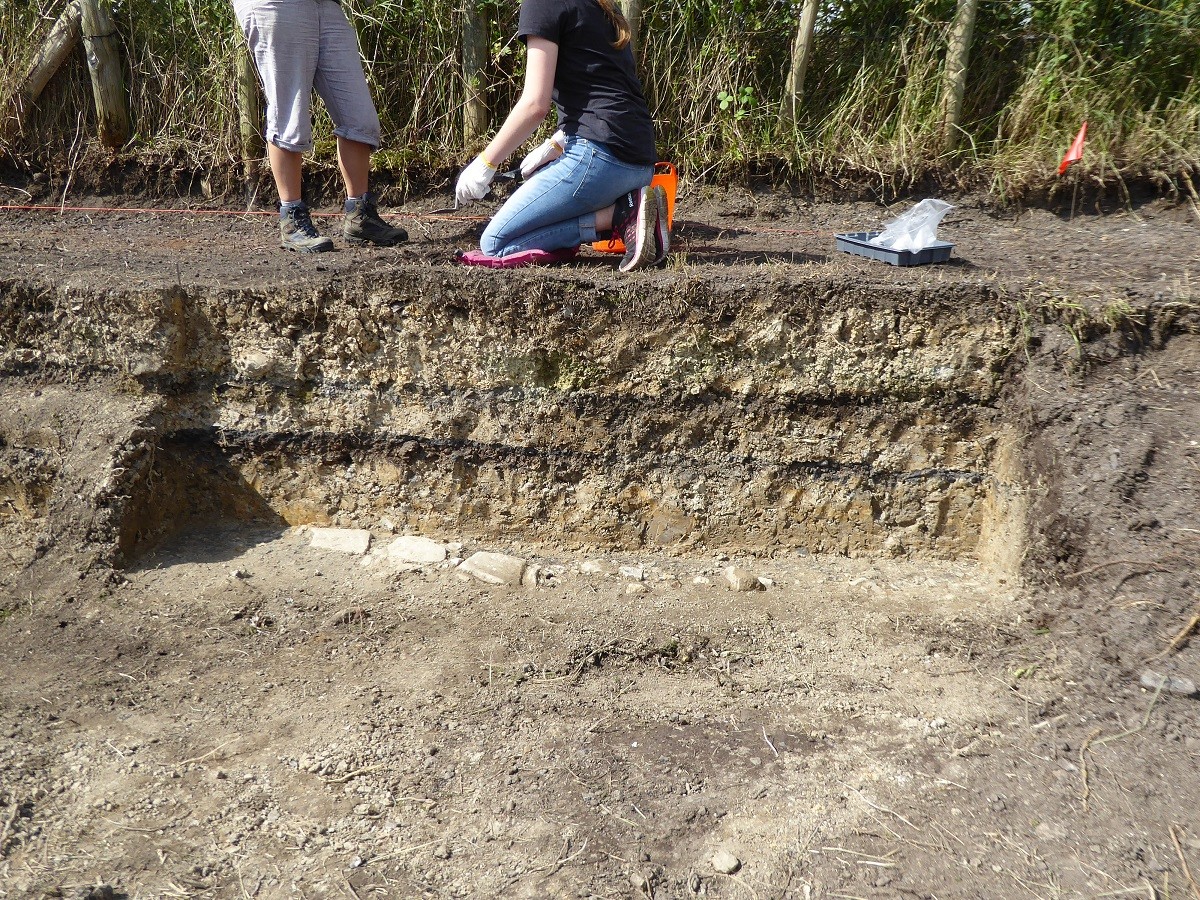
10th August. On the towpath site, the various layers had been exposed down to a line of stones. Possibly the stones were the original wharf level, but constant subsidence (there was lots of mining in this area) meant the towpath had to be built up frequently.
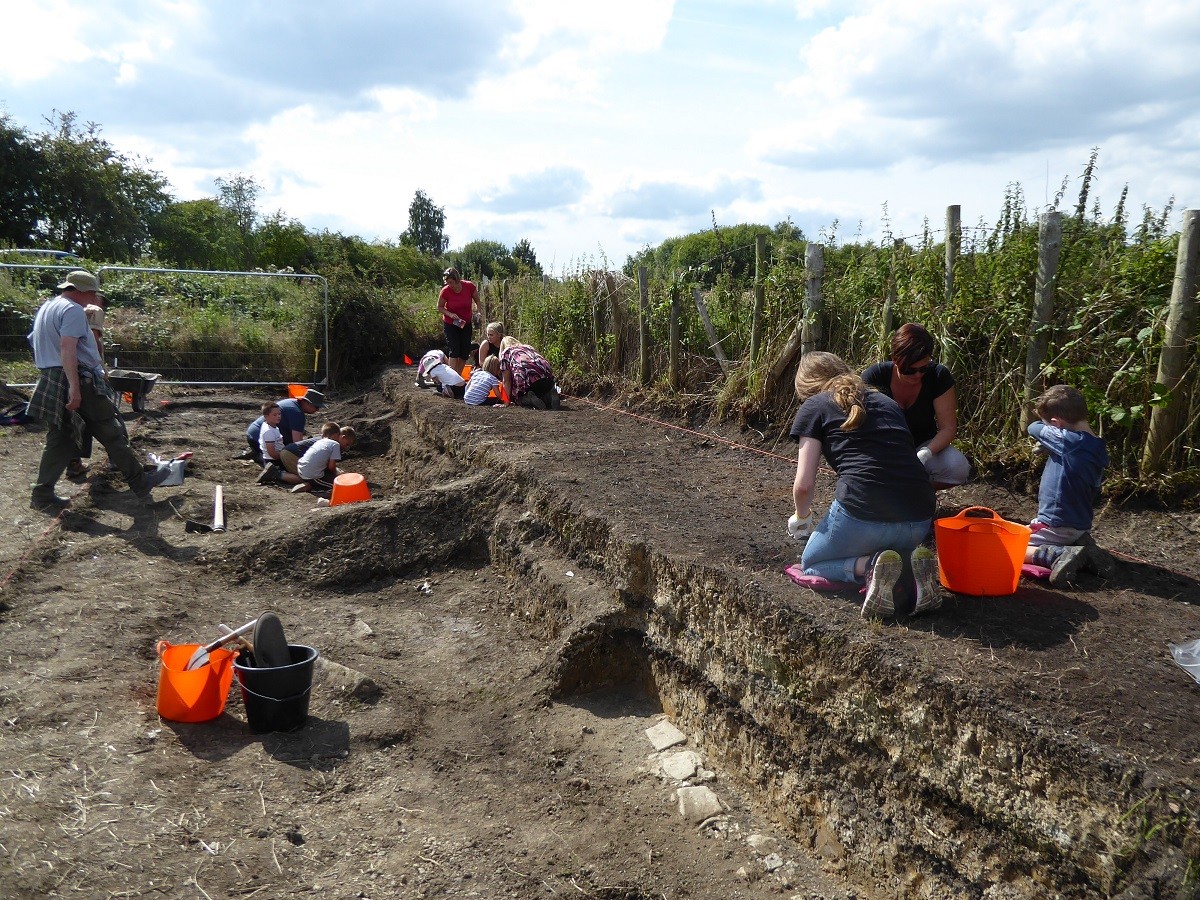
You could see this again on the bottom right.
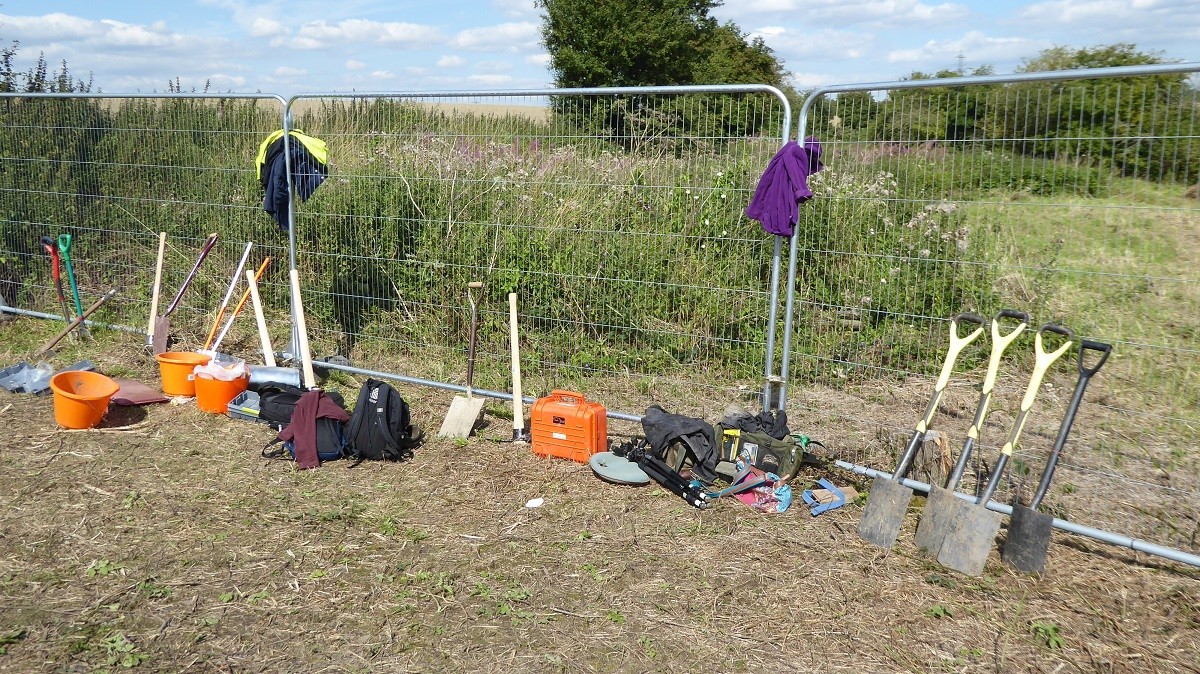
We had lots of tools and other kit.
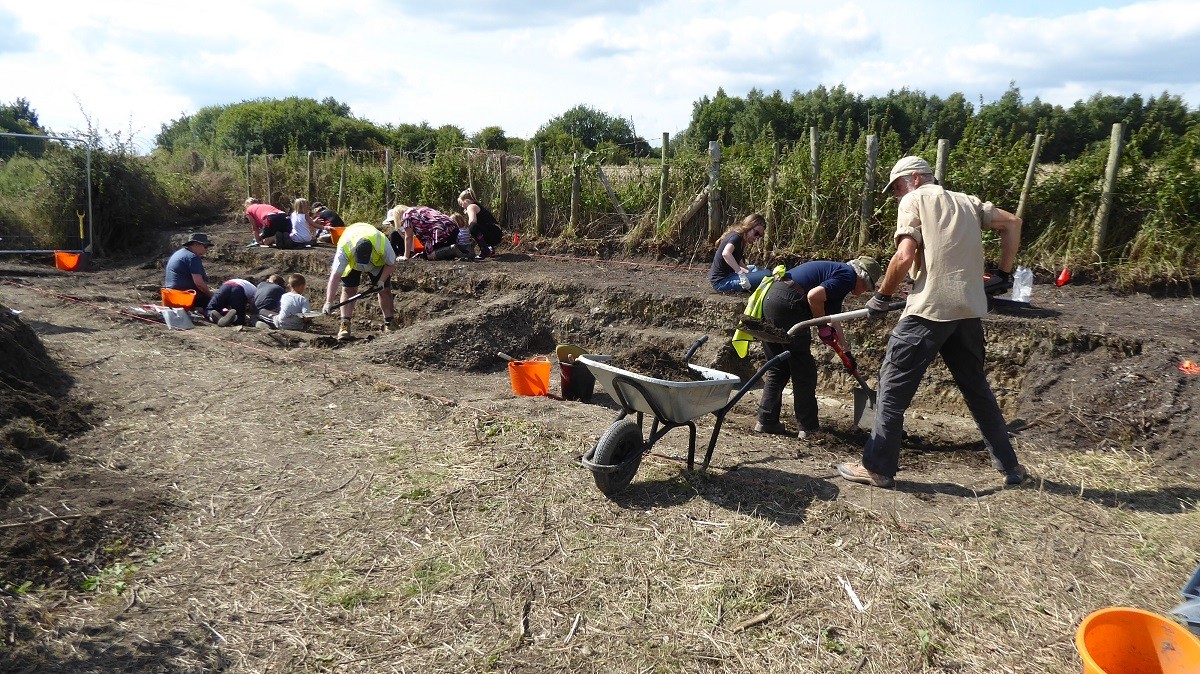
You could tell the experienced diggers; they often have their own tools like this long handled shovel.
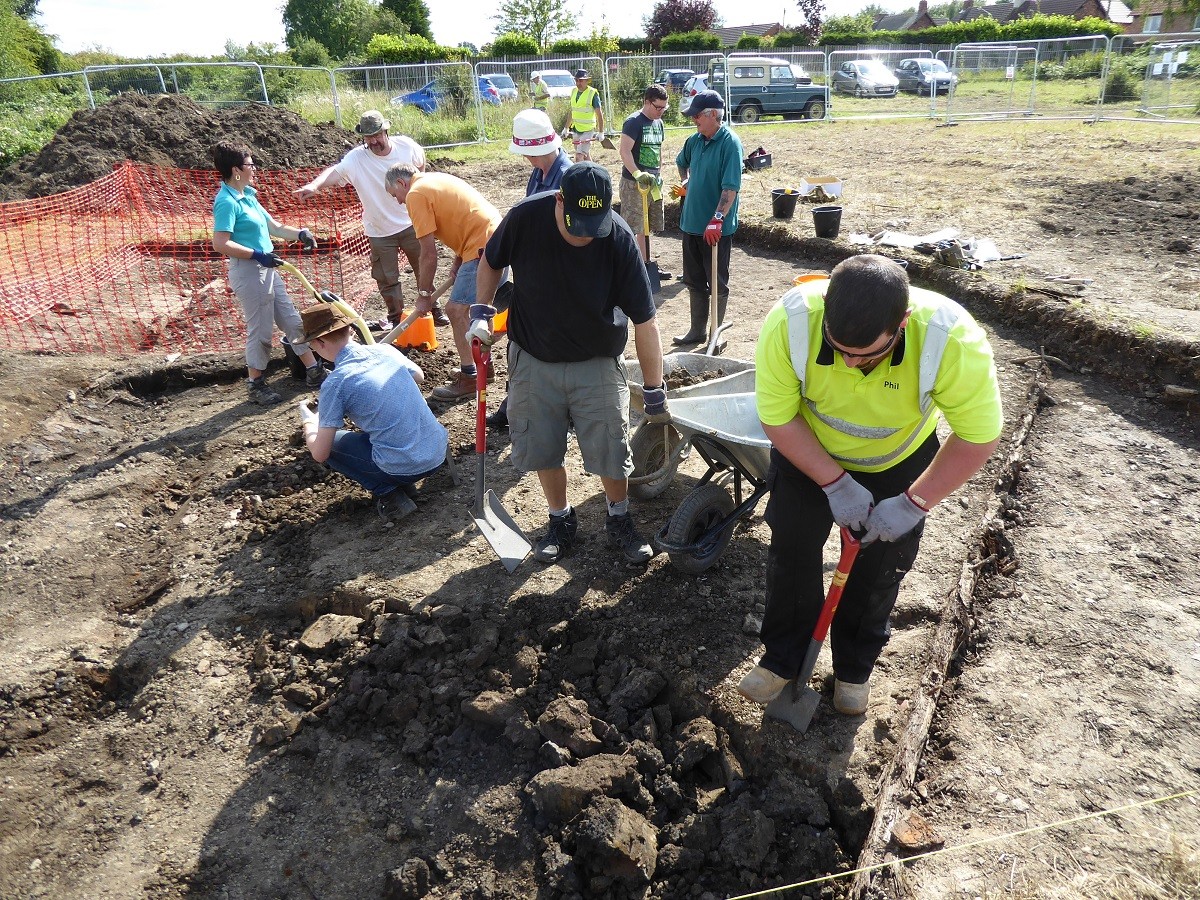
Meanwhile on the main site, there was some serious digging.
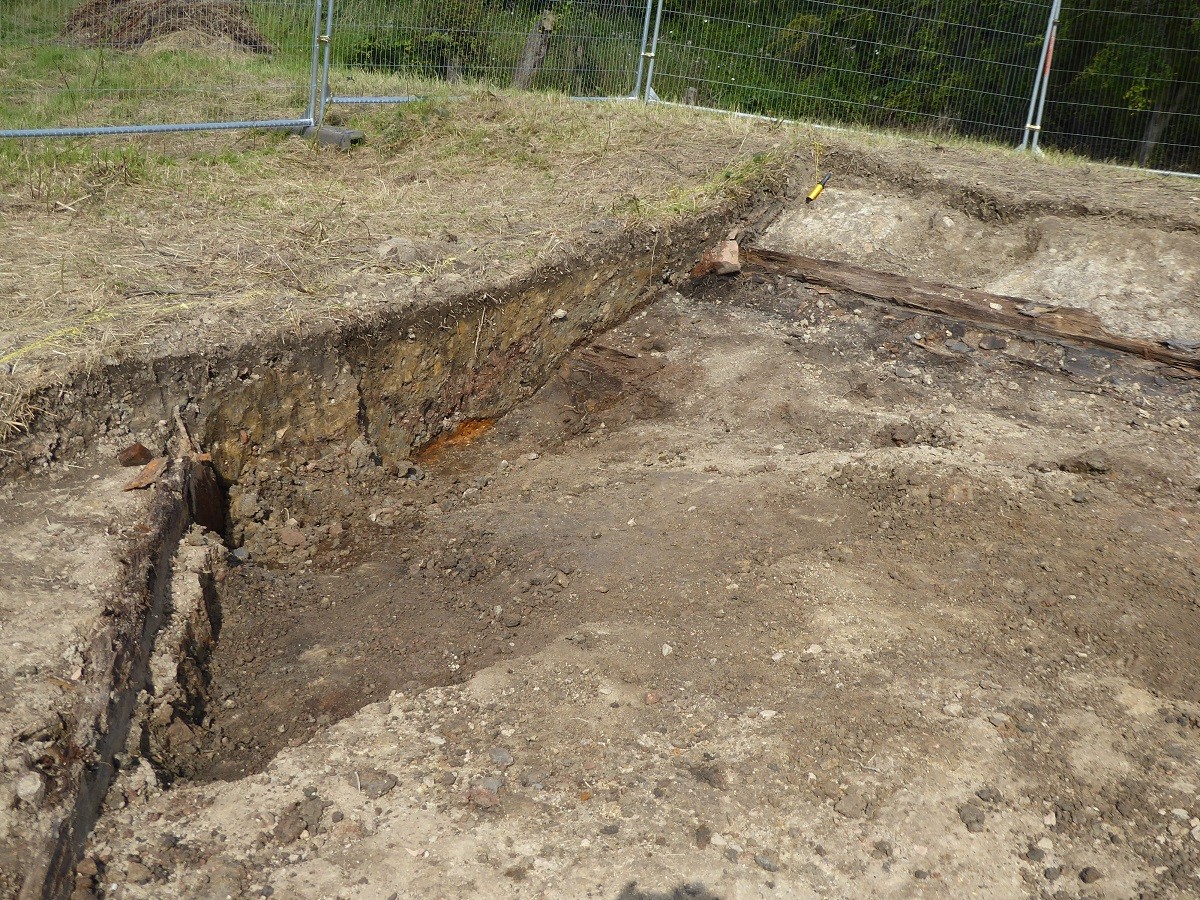
On the right you could see that more of the boat had been exposed.
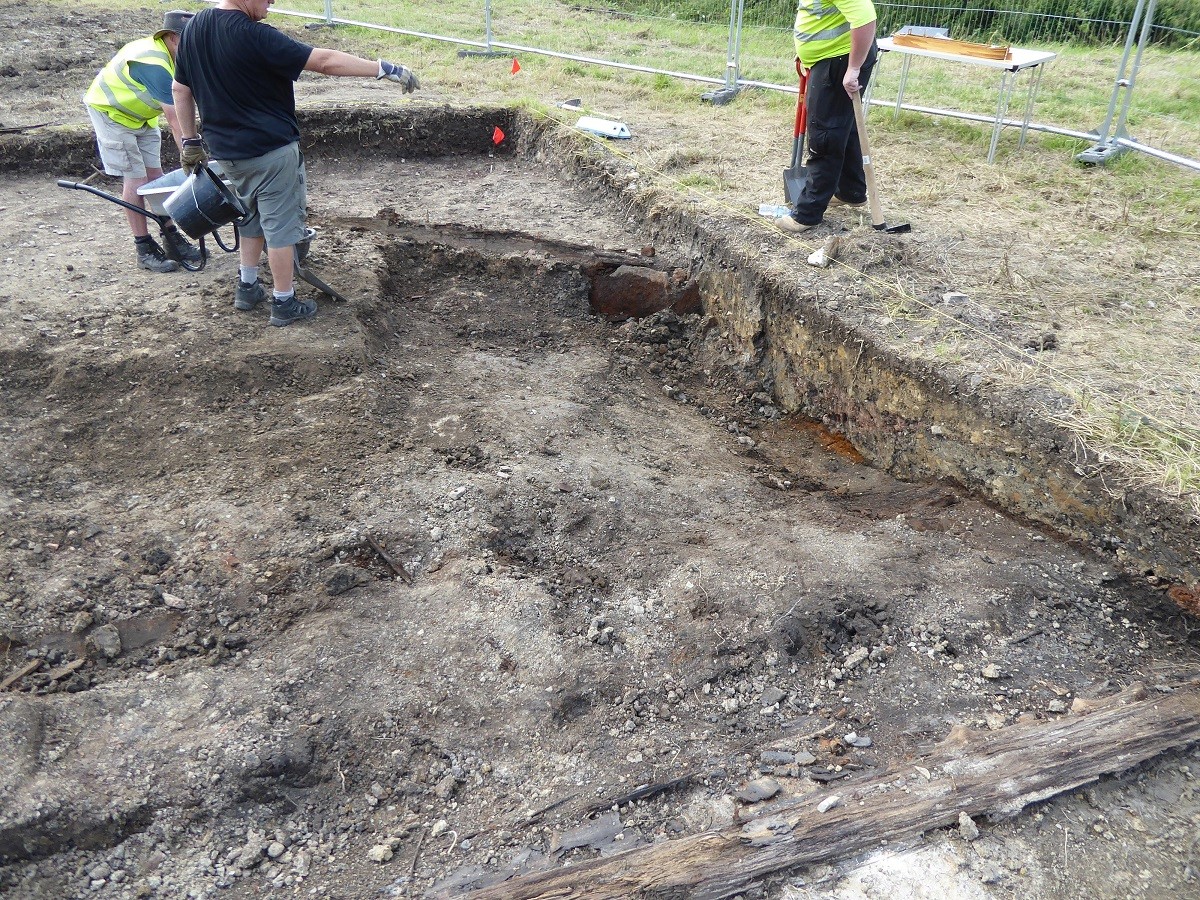
The other boat seemed to have a large piece of metal at the front.
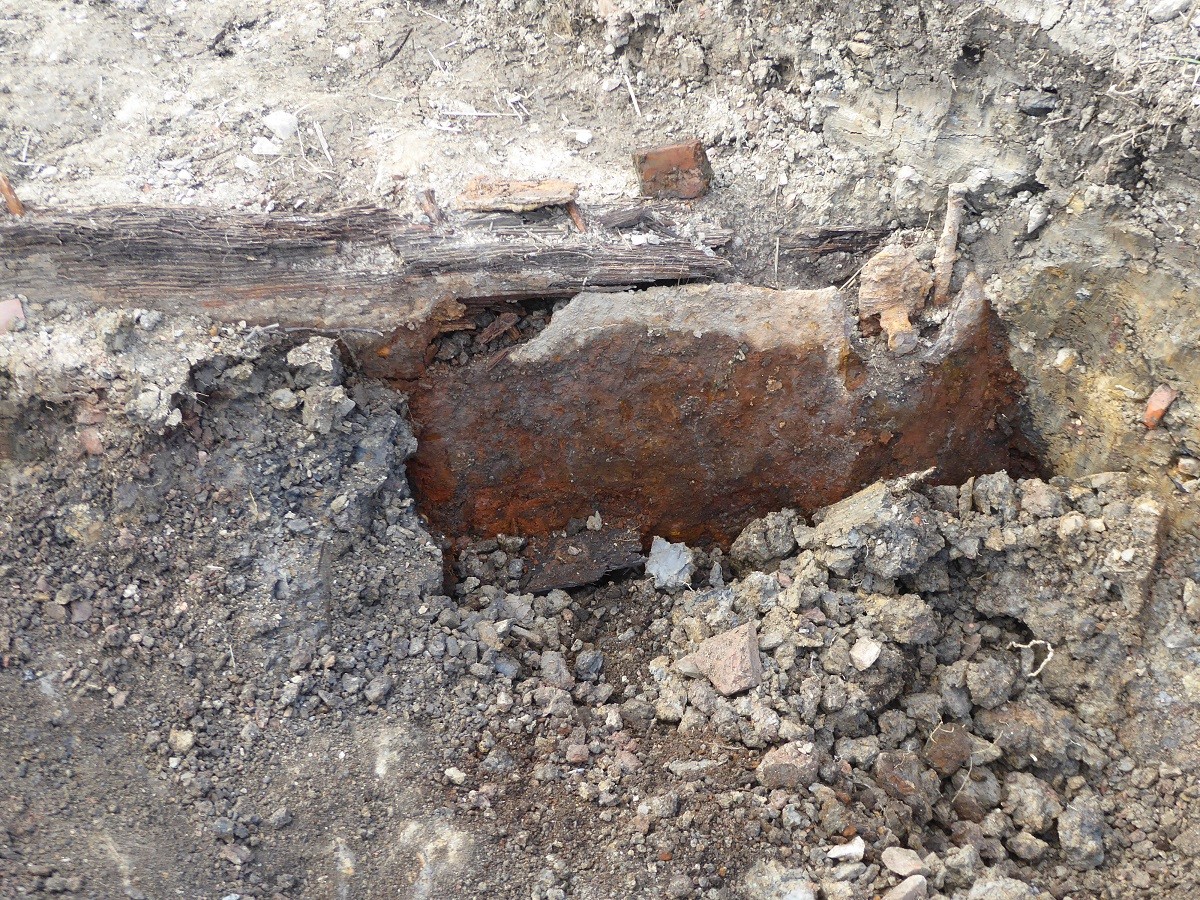
Here’s a closer view.
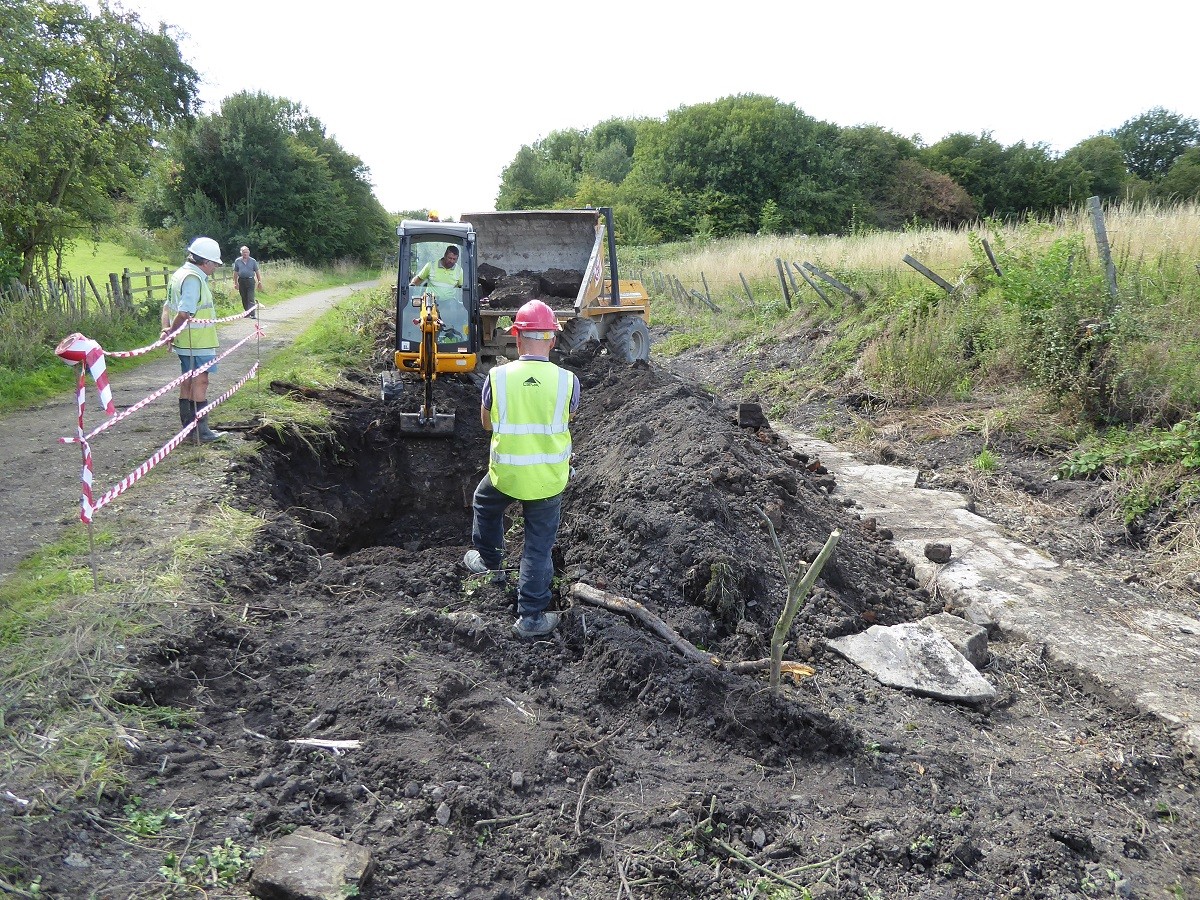
Our Work Party was also digging, but this time at the remains of the railway bridge – see 7th August above.
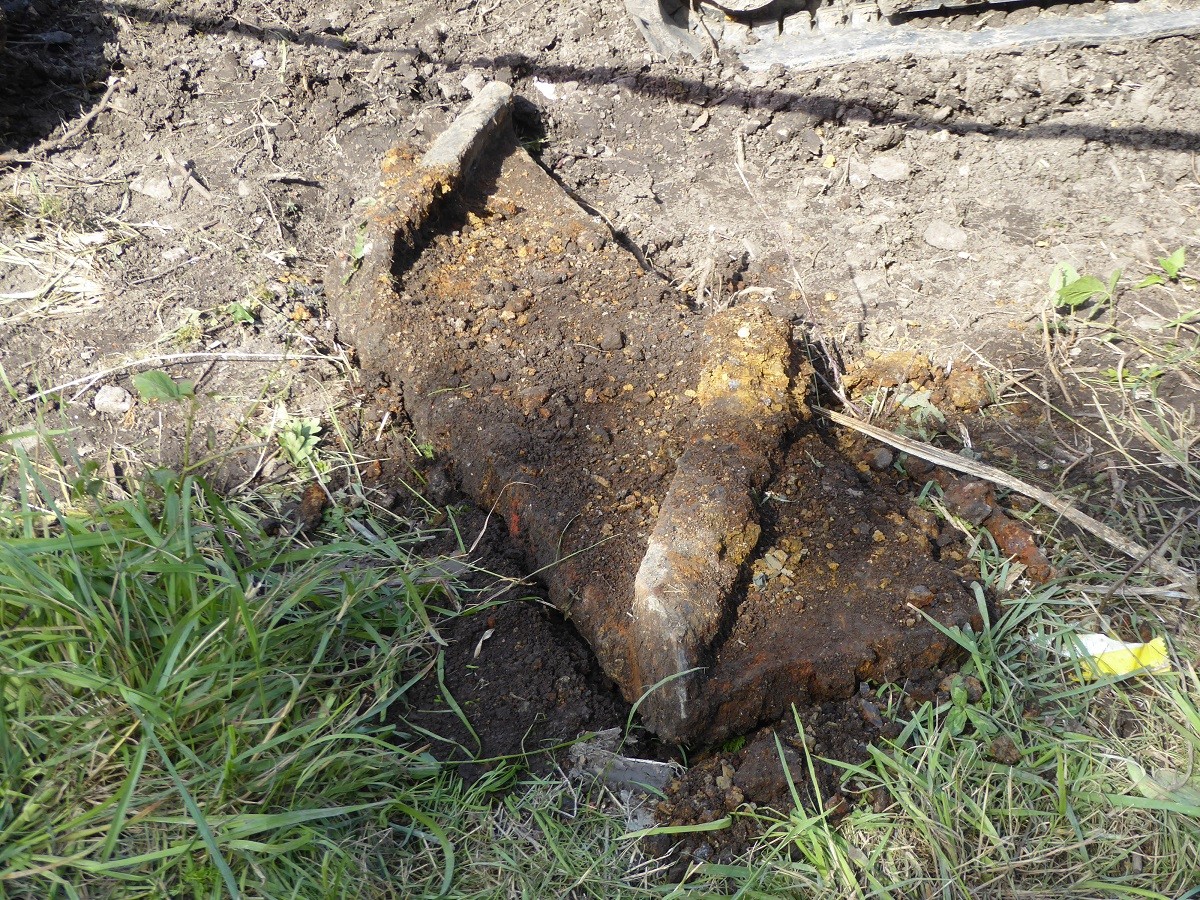
They retrieved some scrap iron …..
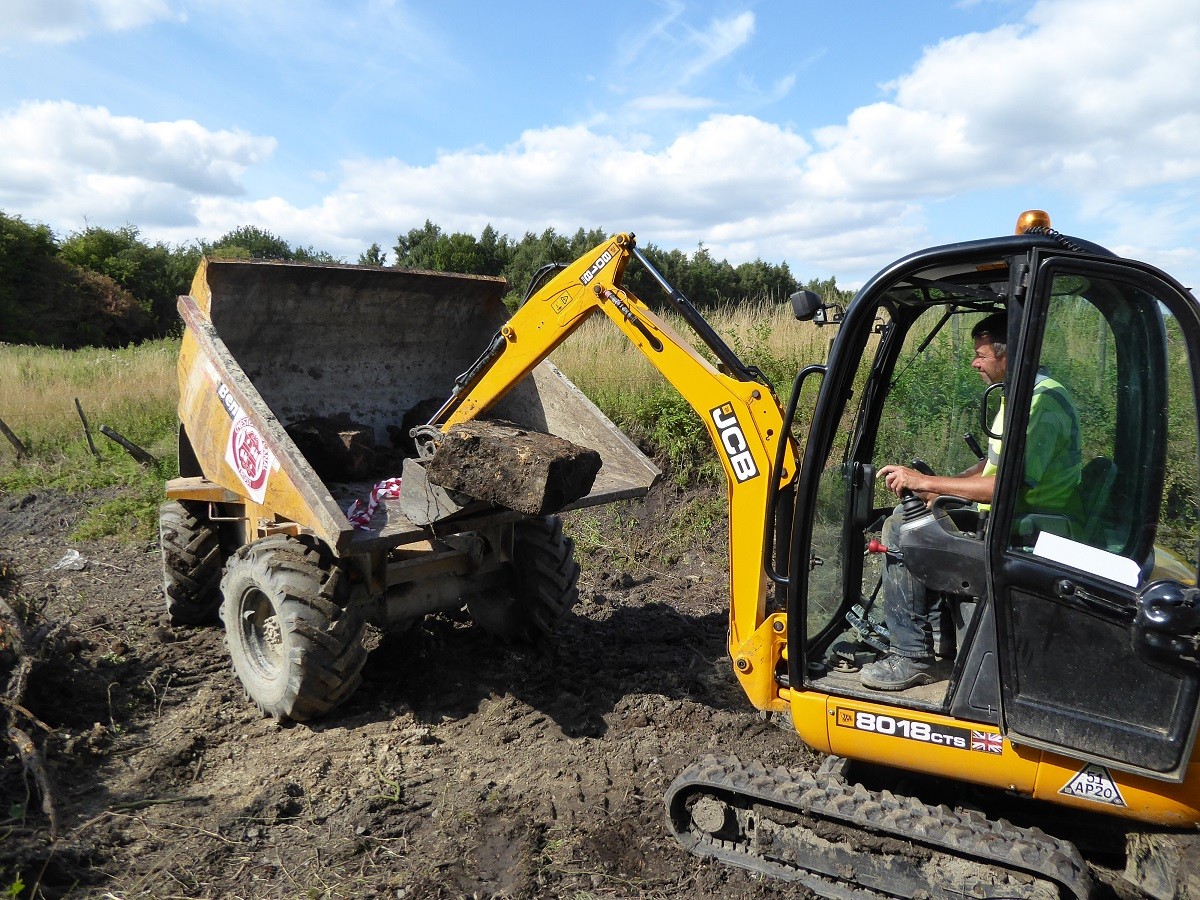
….. and lots of good stone that will be reused during the restoration.
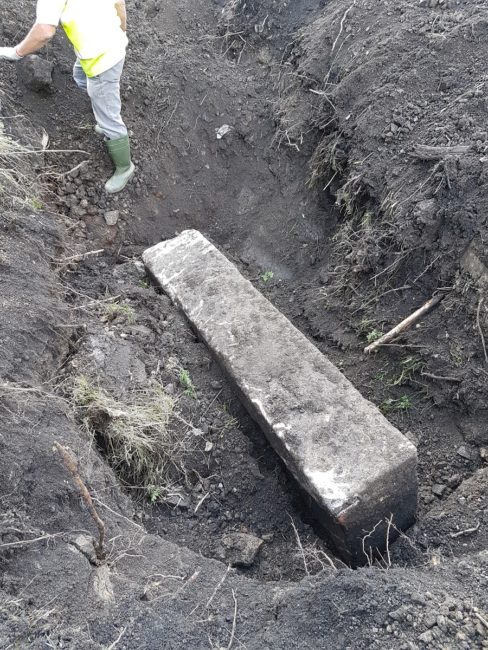
Some were seriously big. This was 6′ 8″ x 3′ 6″ x 1′ 3″. (Photo by Dave France)
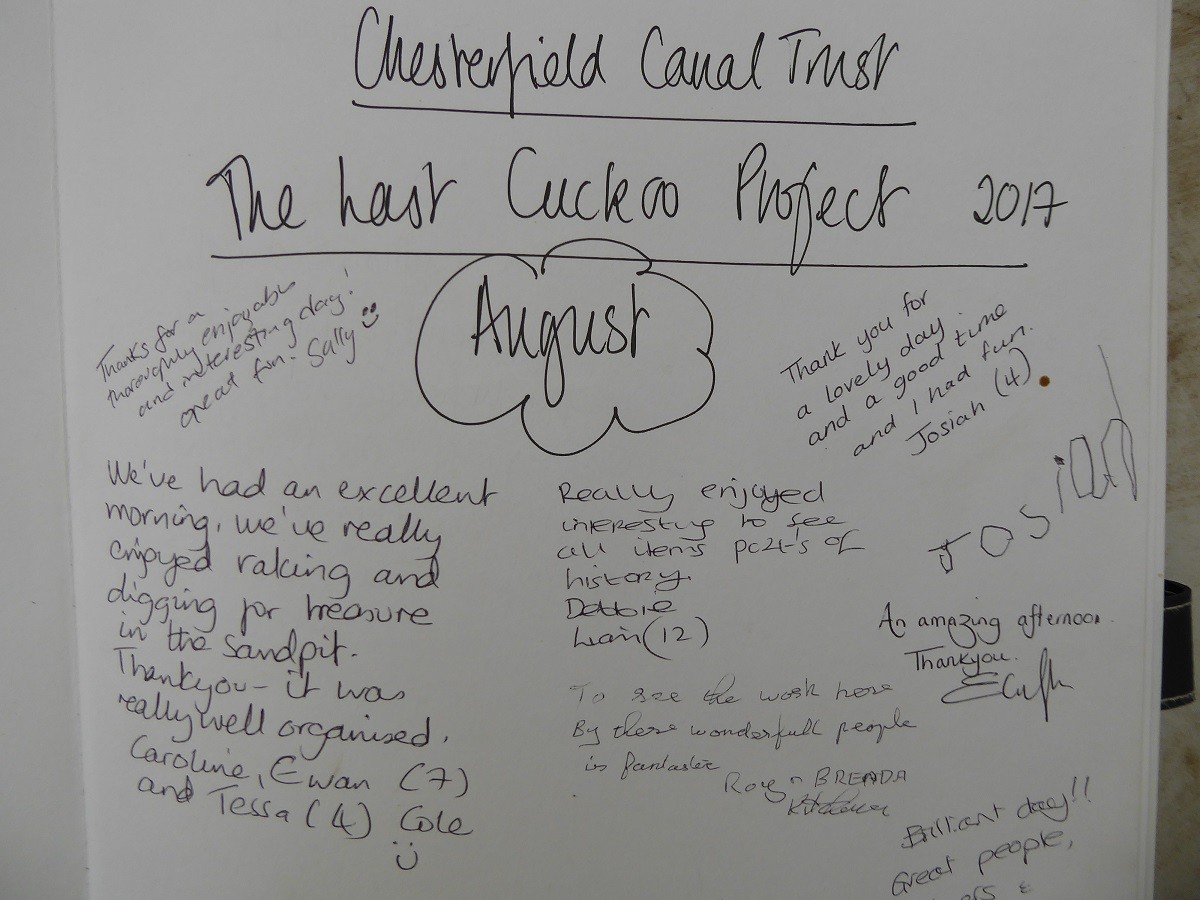
Finally, this was Page 1 of the dig diary into which everyone was encouraged to write comments.
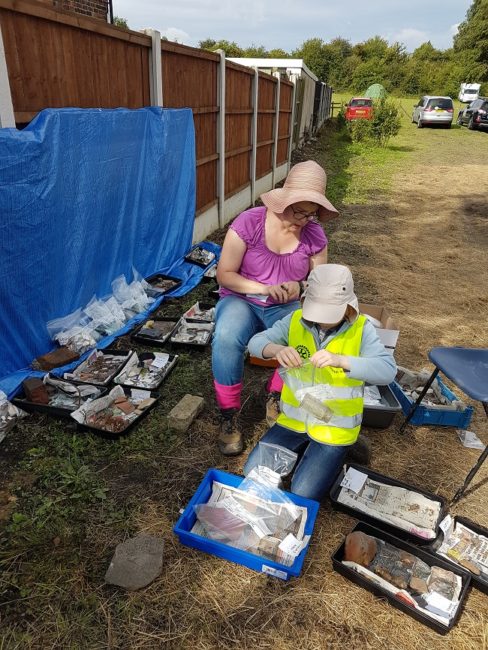
11th August. Whilst the digging may attract much of the attention, someone had to clean and sort out all the finds. (Photo by Mark Walker)
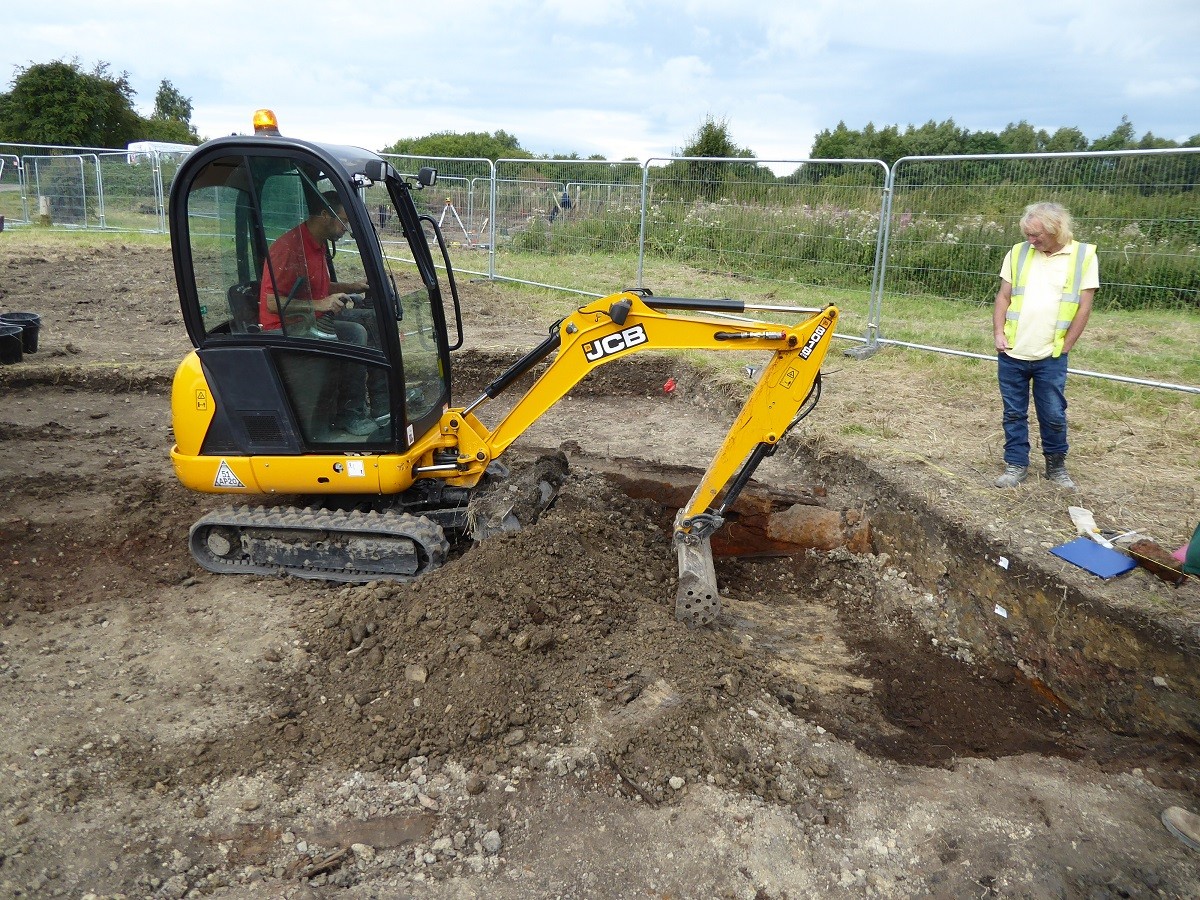
The volunteers were struggling to get through the rock hard clay, so the digger was brought in.
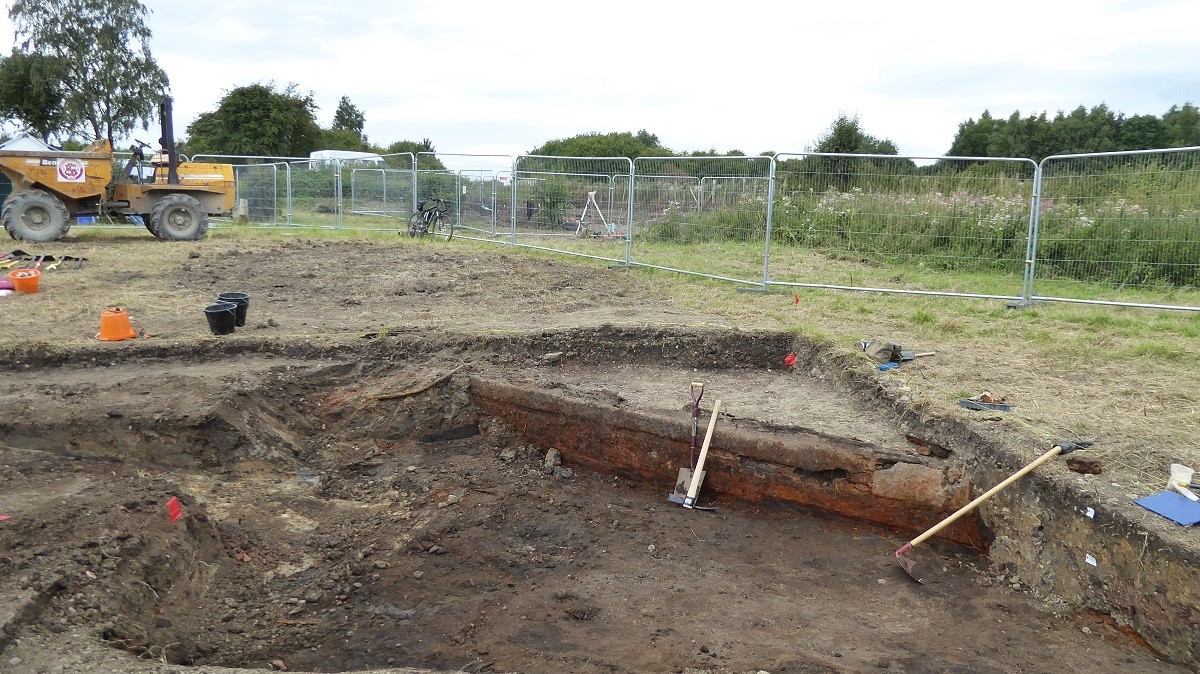
It soon shifted lots of infill leaving a large section of boat exposed. We believed that it may have been an ice-breaker because of the thick metal plate at the front (right).
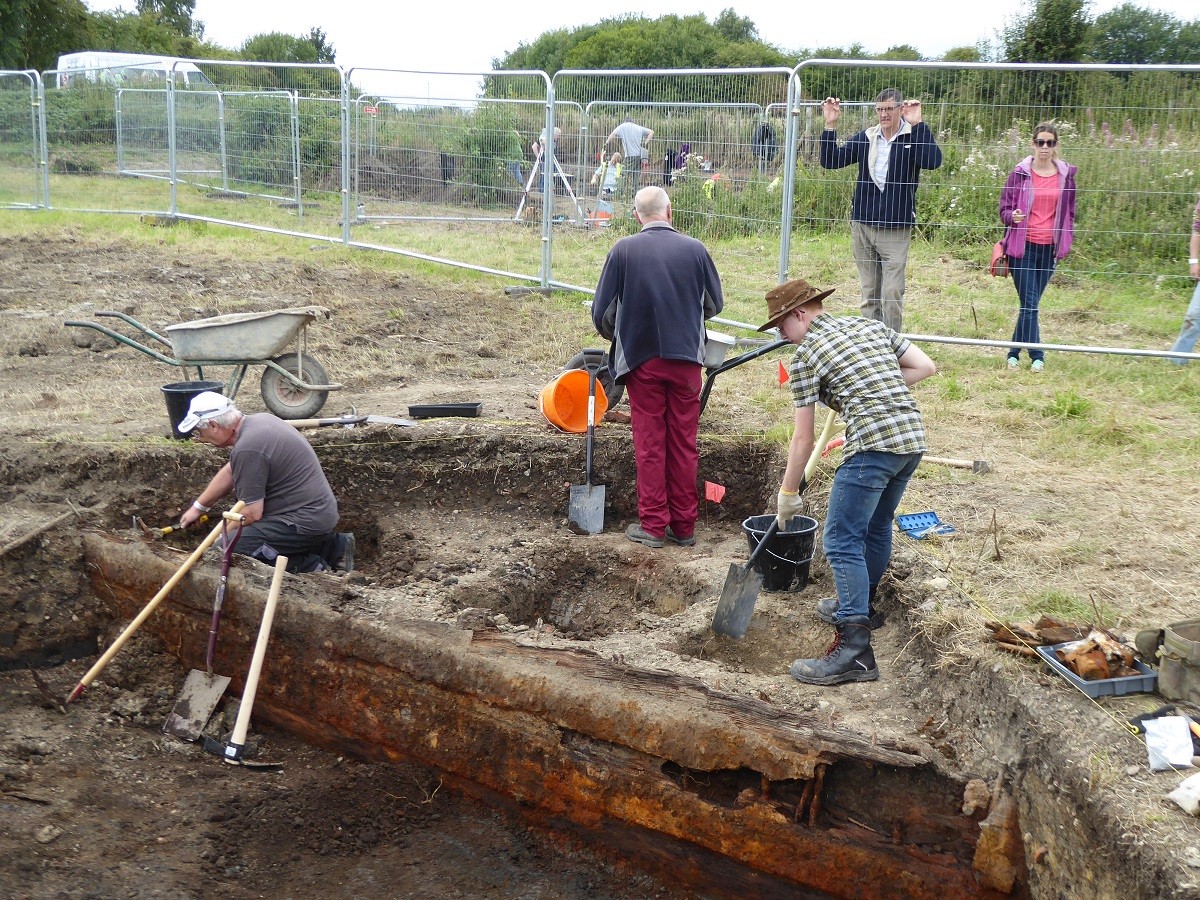
The next job was to dig on the other side.
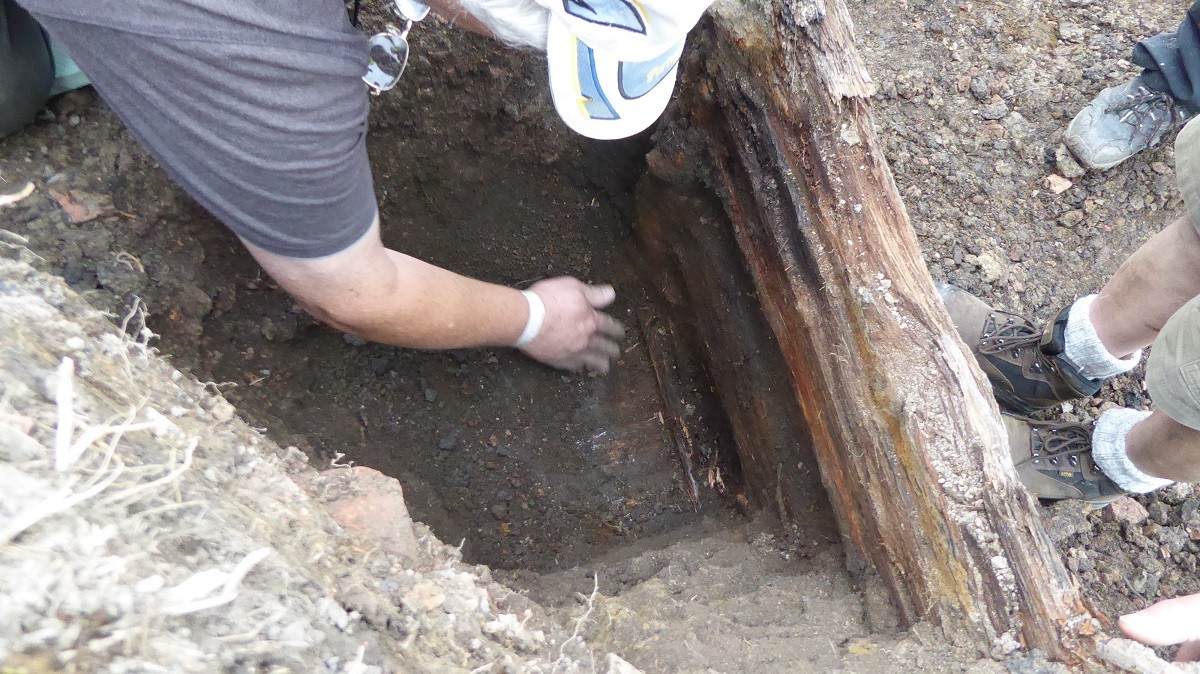
After some hard graft, wood was found.
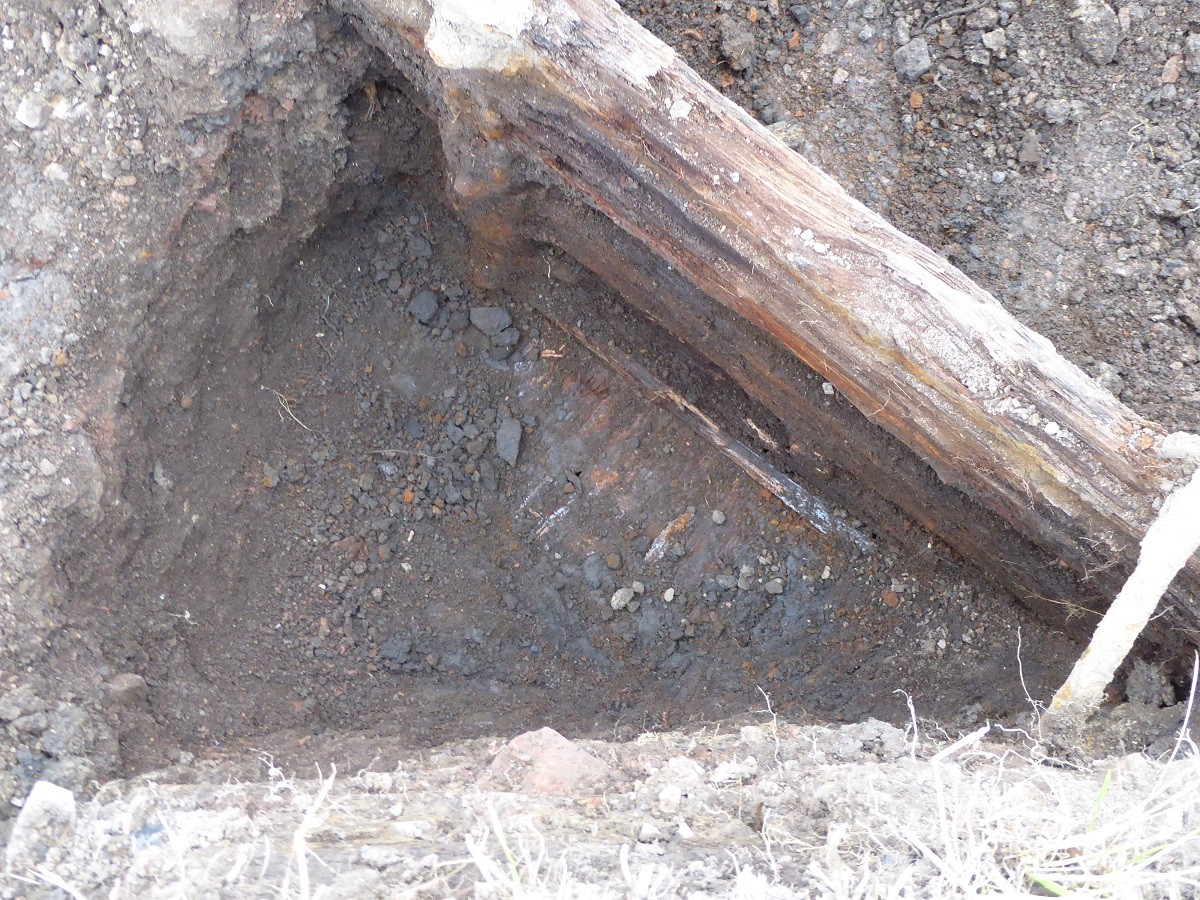
This was the bottom of the boat, at perfect right angles to the side.
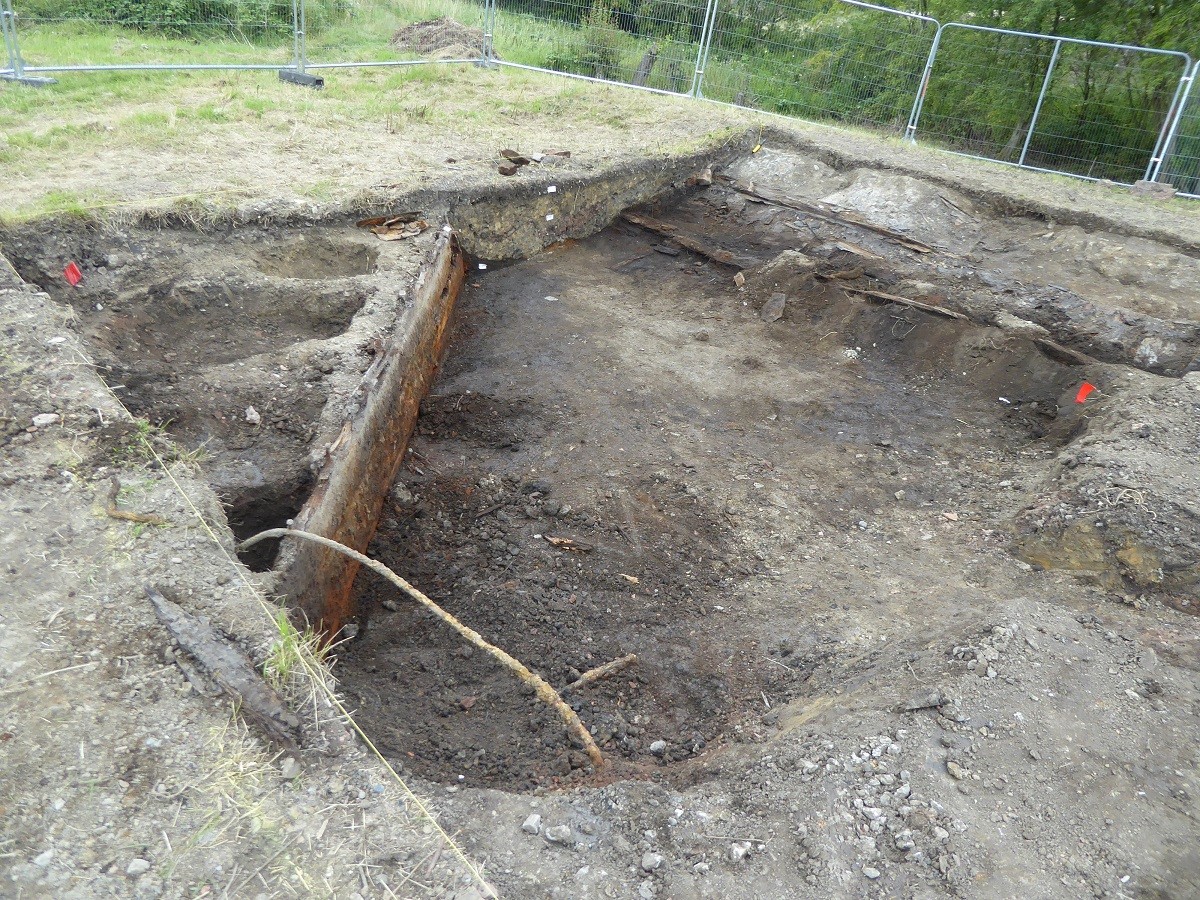
Here’s another view.
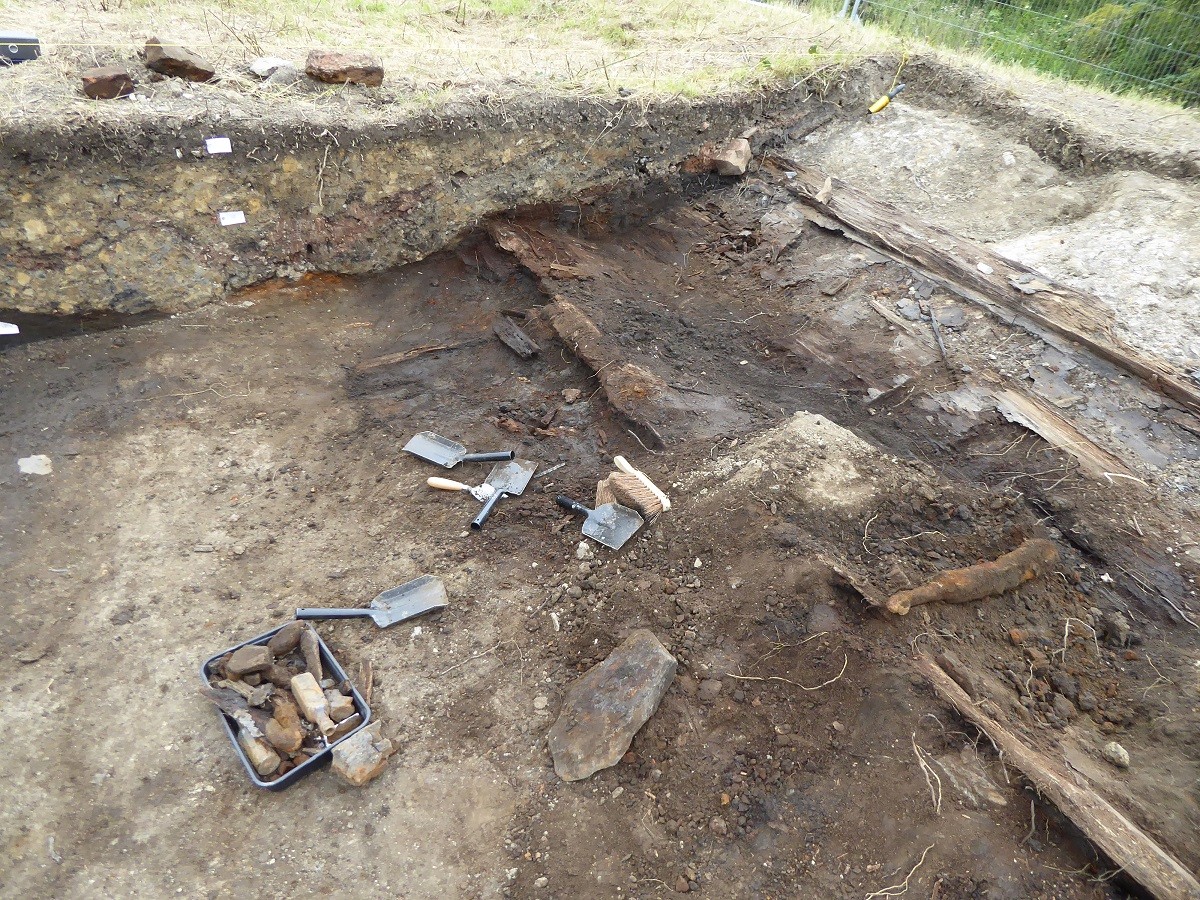
Meanwhile lots more of the first boat had been uncovered.
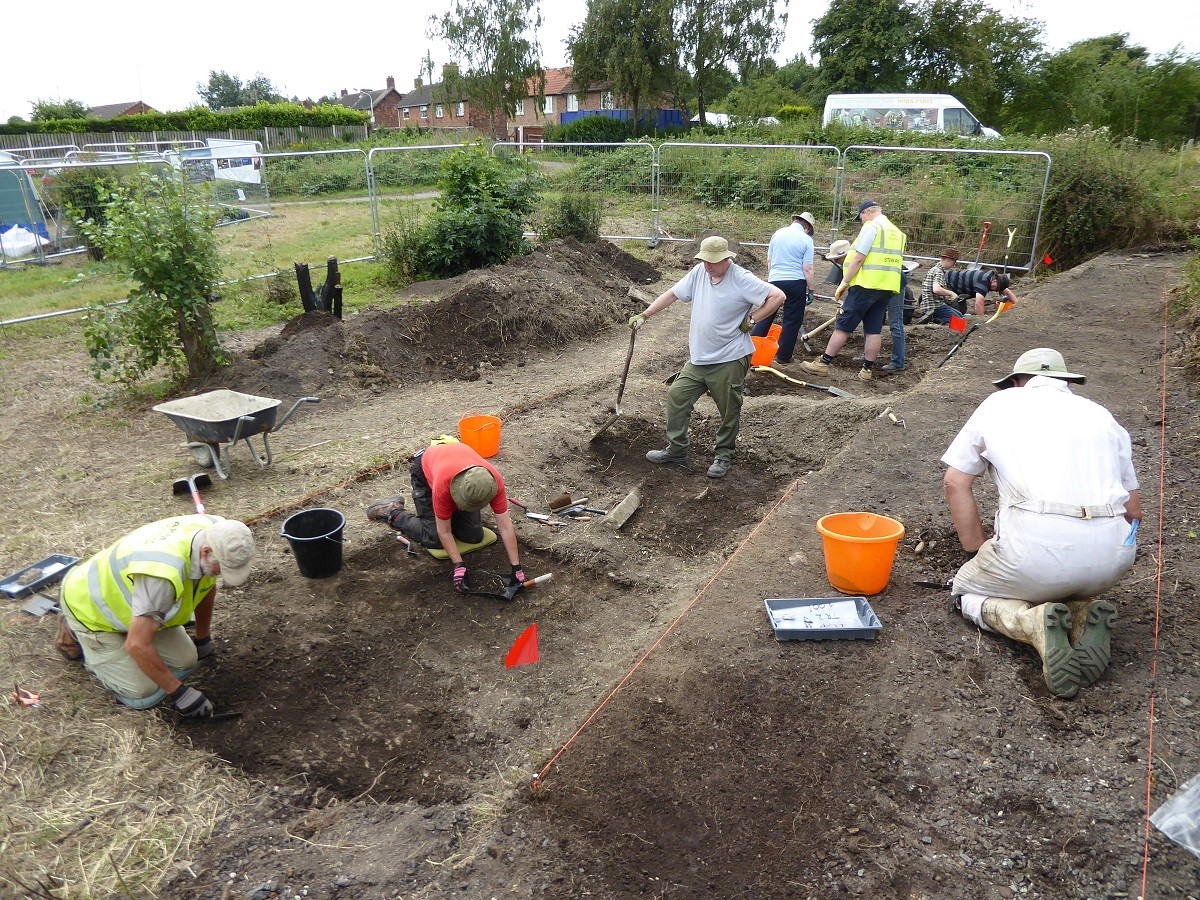
Work was steaming ahead on the towpath trench – Trench 2.
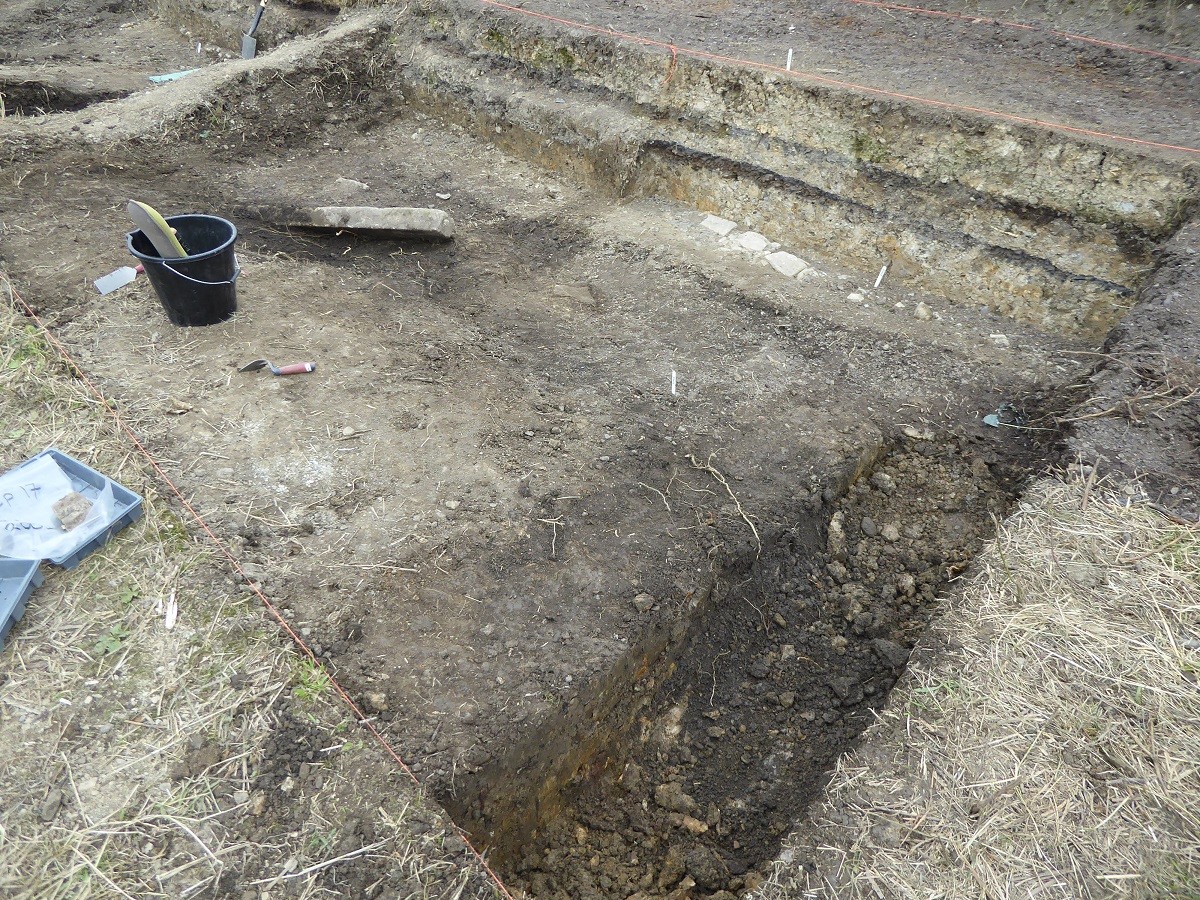
The old fence post might not be of archaeological value, but, if it was just dug up, the careful work of uncovering the site layer by layer would be ruined.
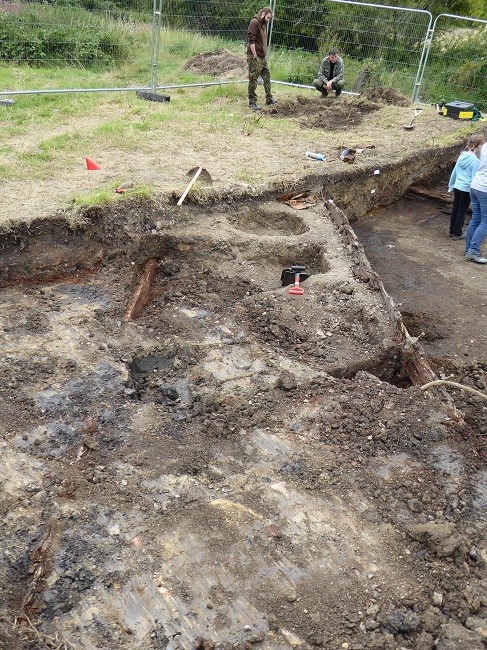
12th August. The digger went in first thing and exposed the other side of the second boat. It also started a new test pit north of the main trench.
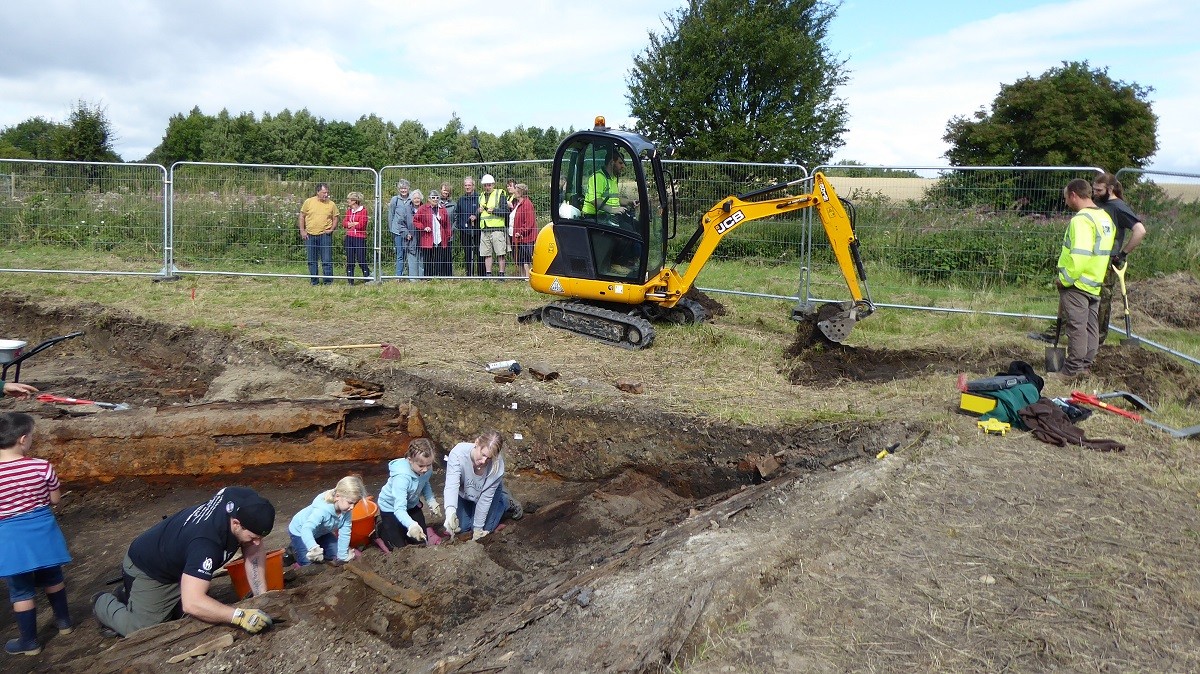
Work continued on the first boat whilst the digger did more work on the test pit.
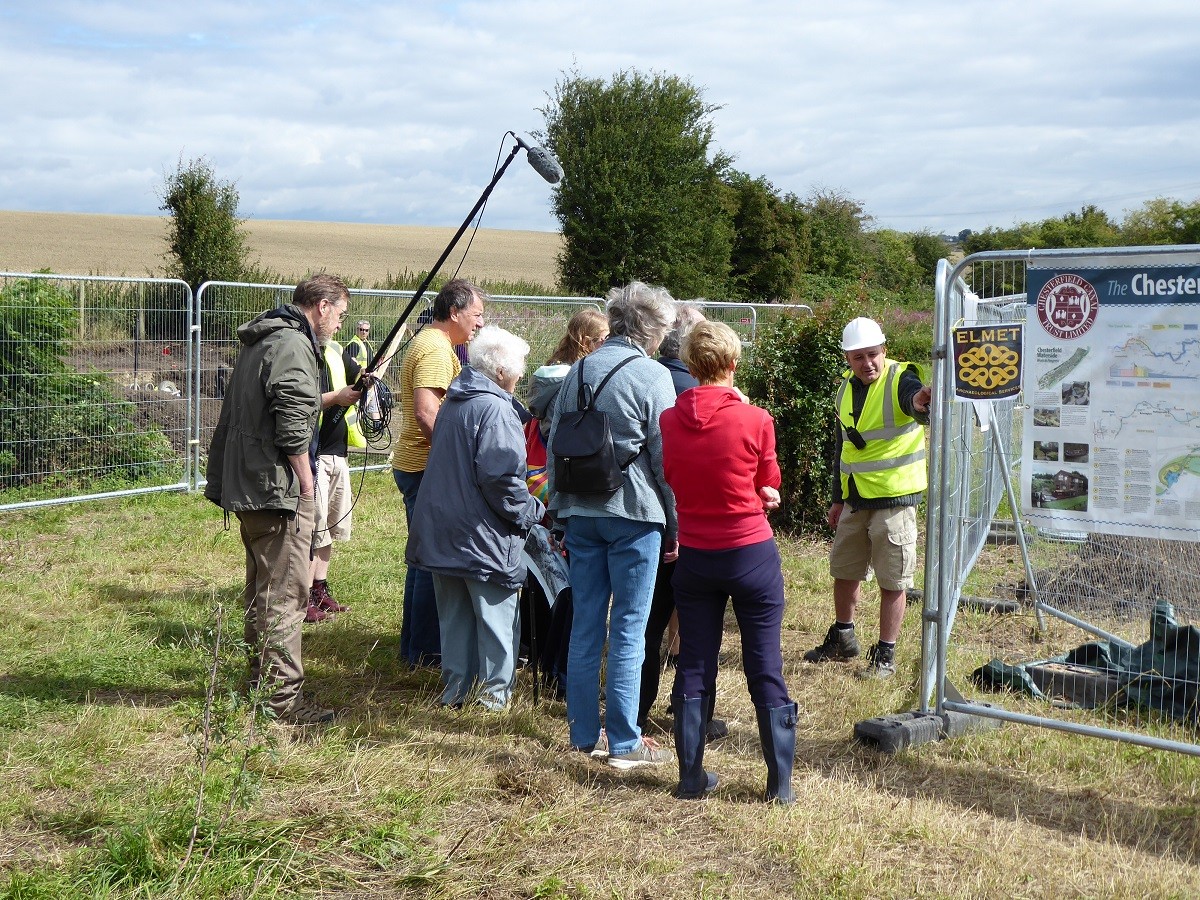
We had a visit from the Hunter Archaeological Society.
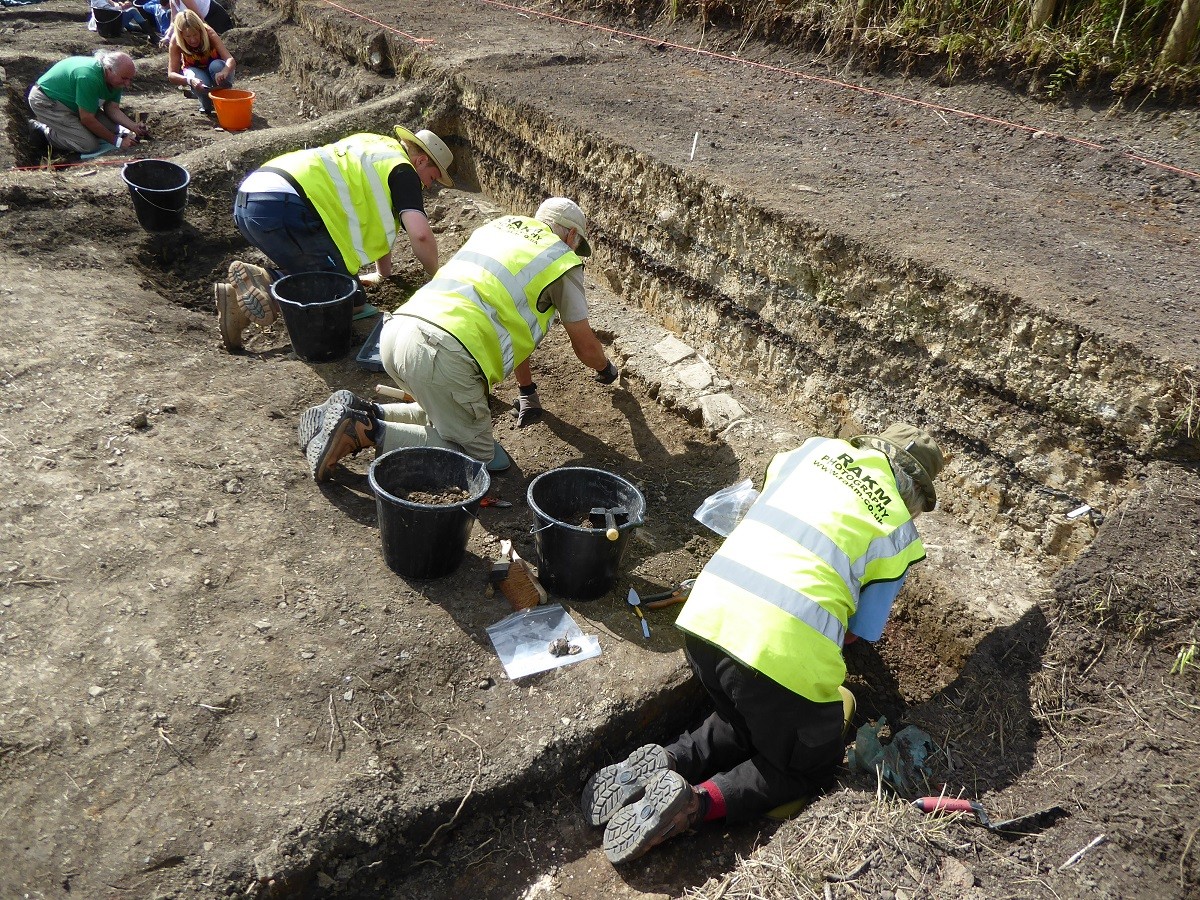
Meanwhile, in Trench 2, the steady progress continued.
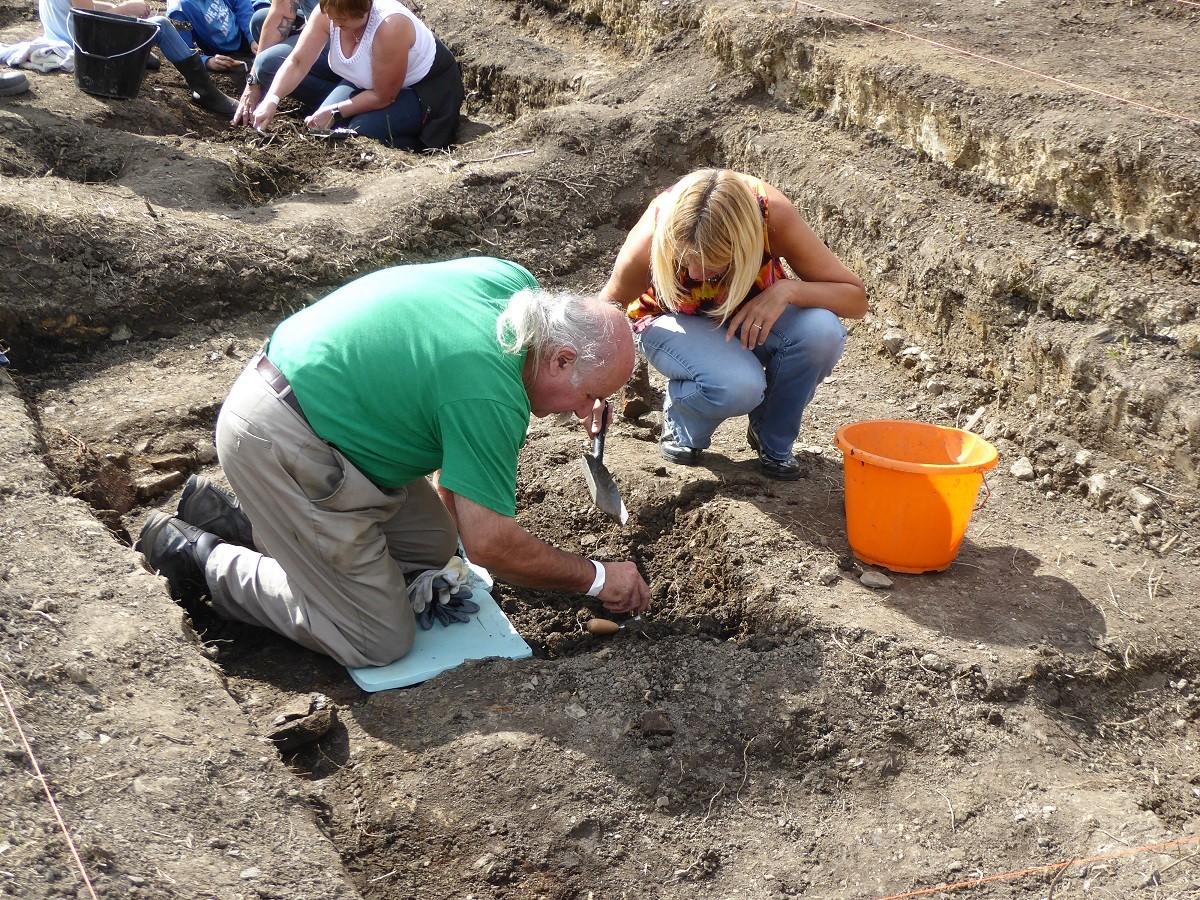
Sometimes it could be painstaking work with a trowel.
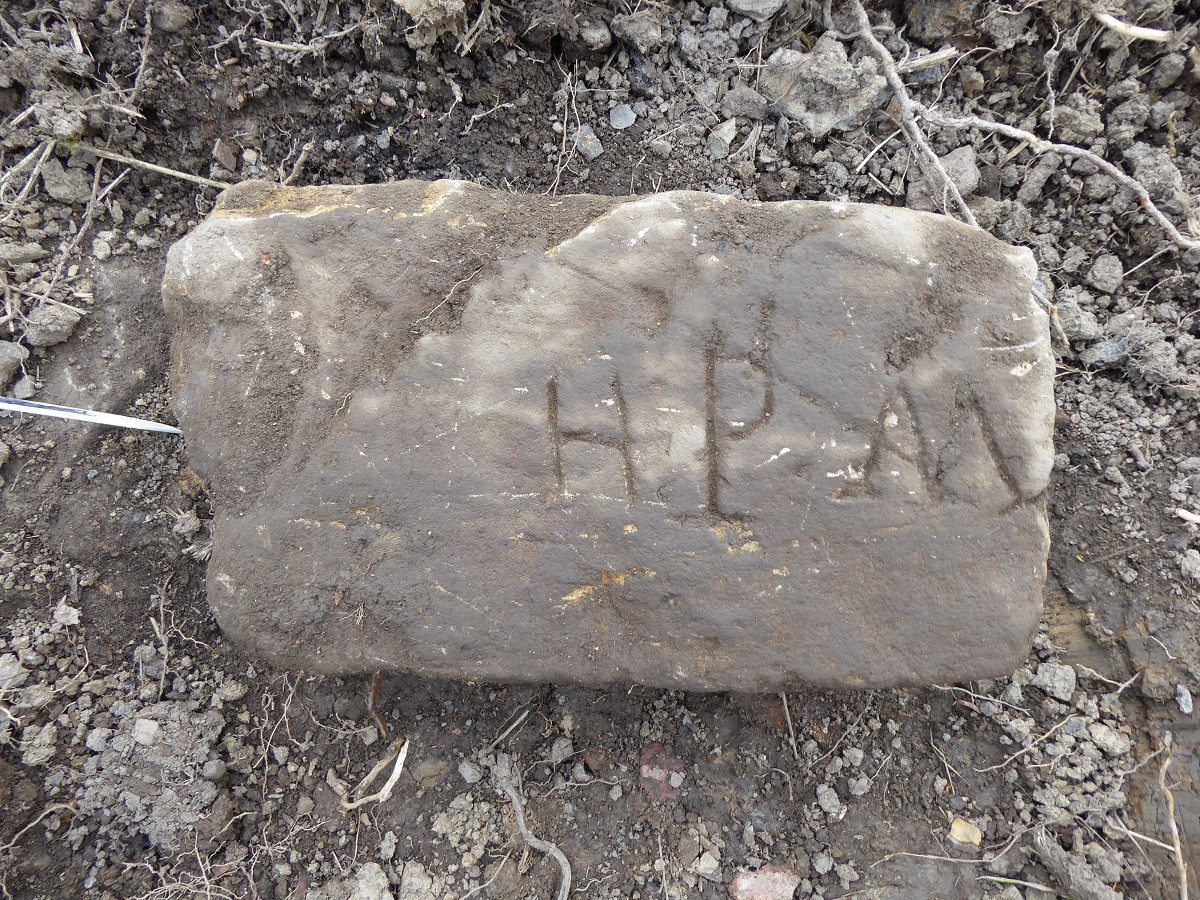
However it was worth it when a stone like this was revealed.
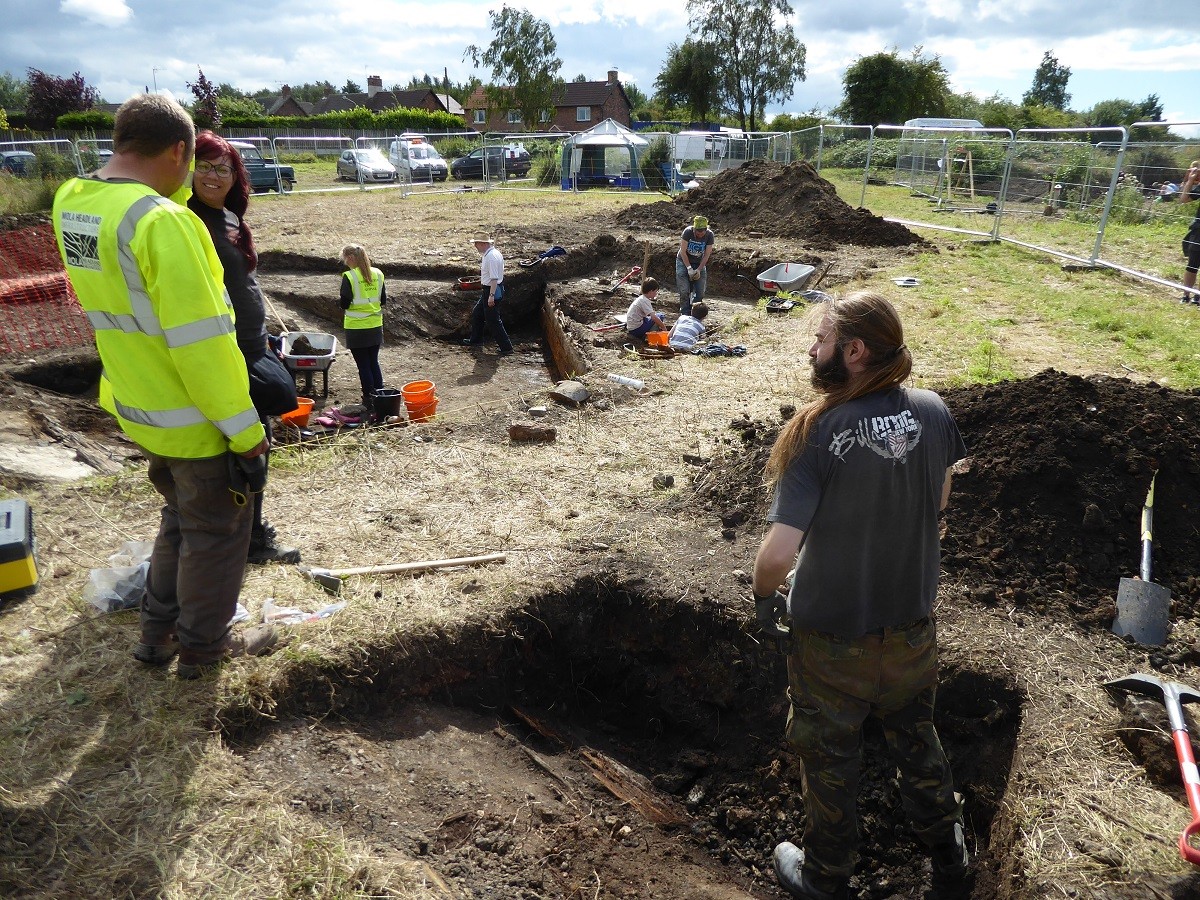
The new test pit revealed timbers in line with those from the first boat.
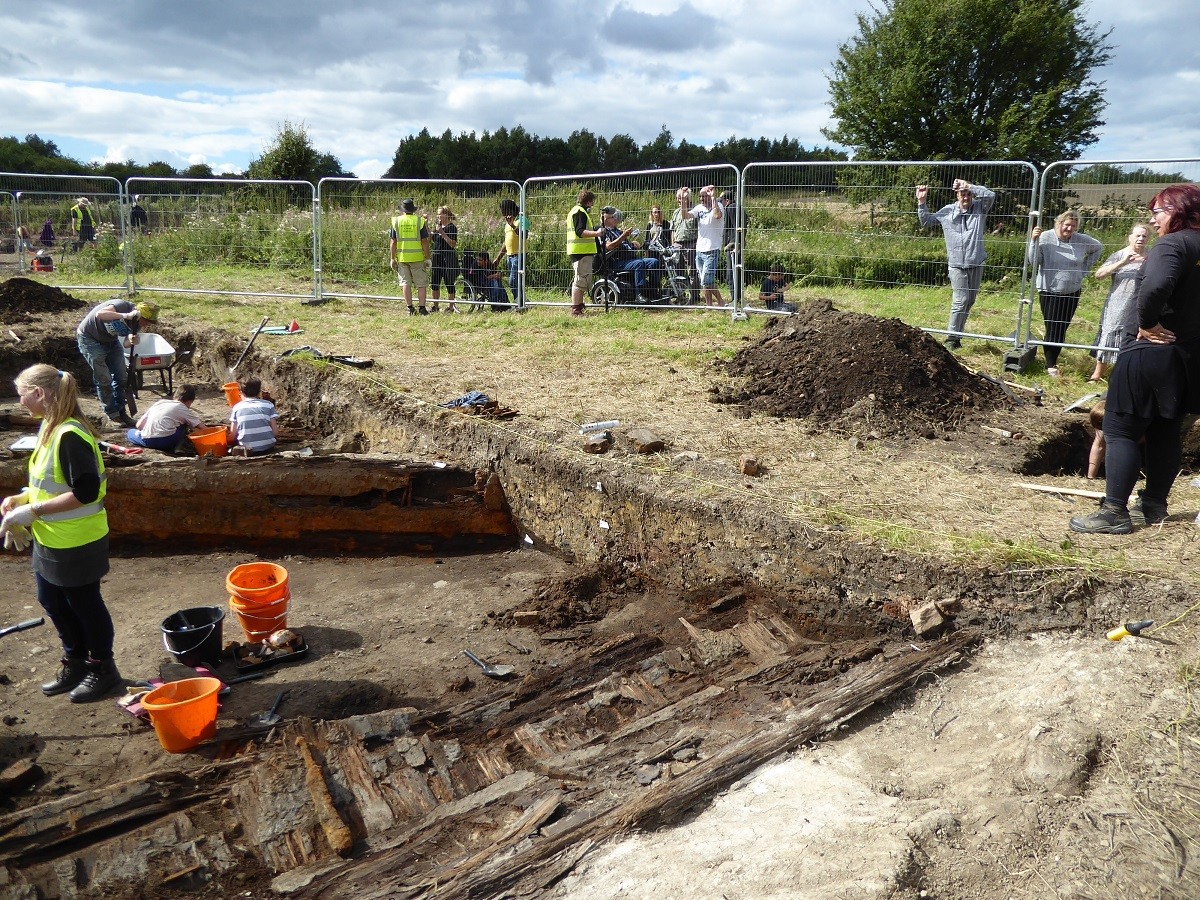
This was nearly clear …..
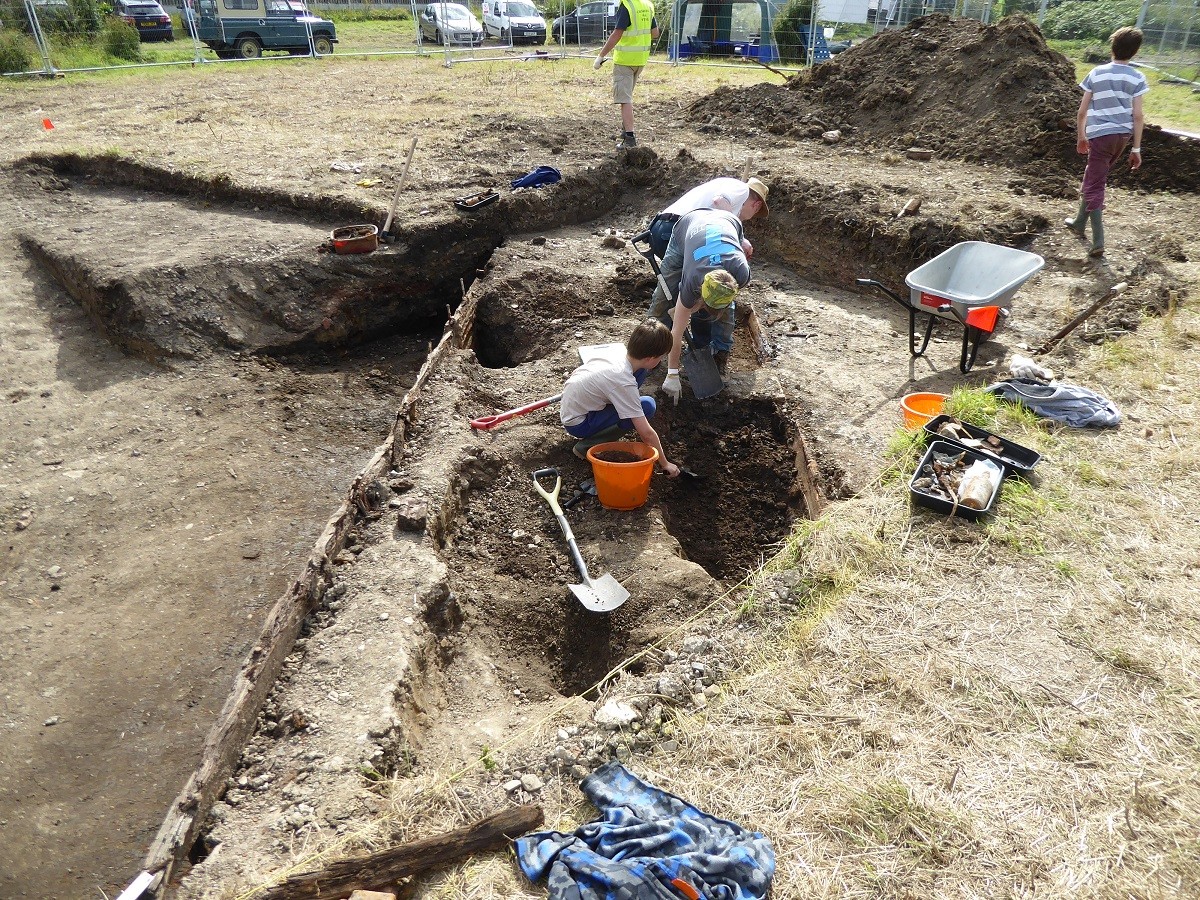
….. and the second boat was getting cleared rapidly as well.
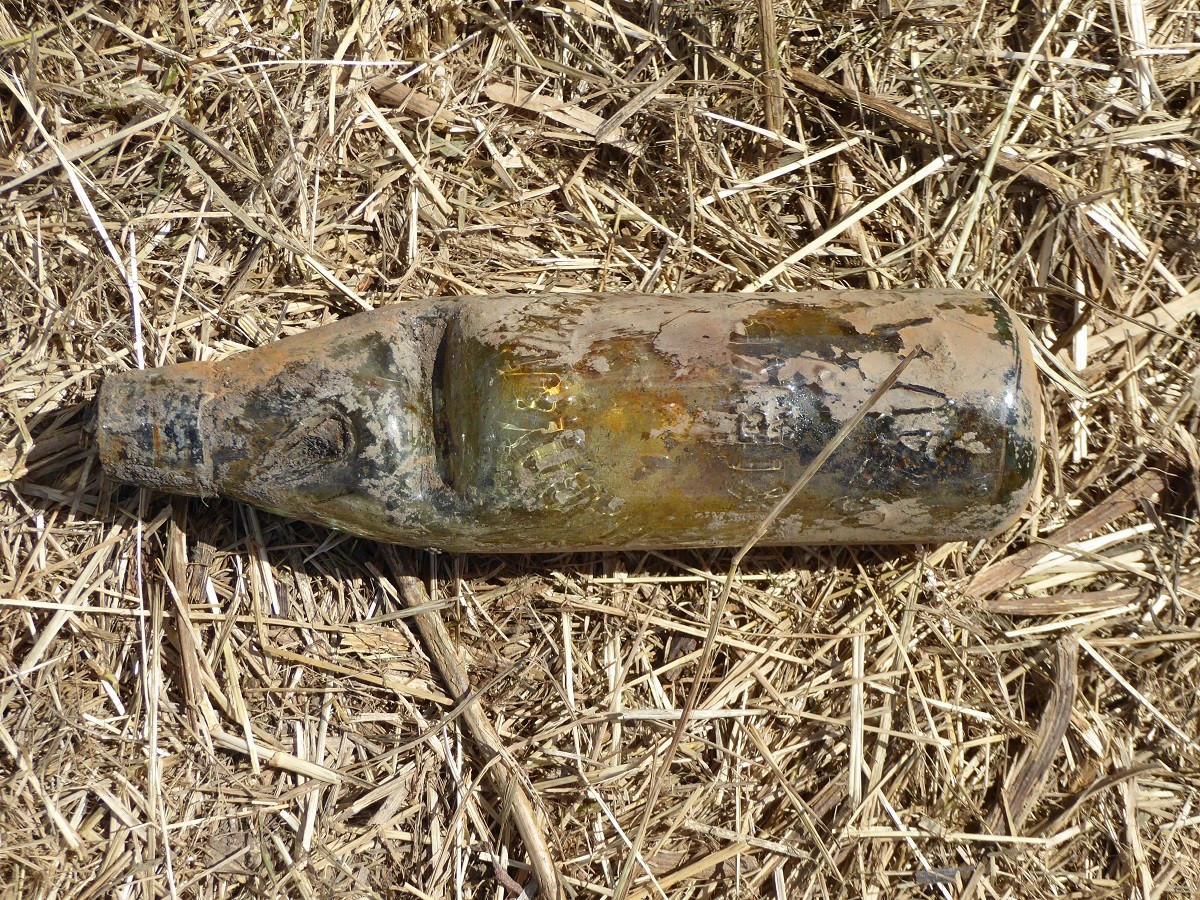
13th August. This bottle, found today complete with marble, bore the legend: “Hardy & Martin, Kirkby, Staveley”.
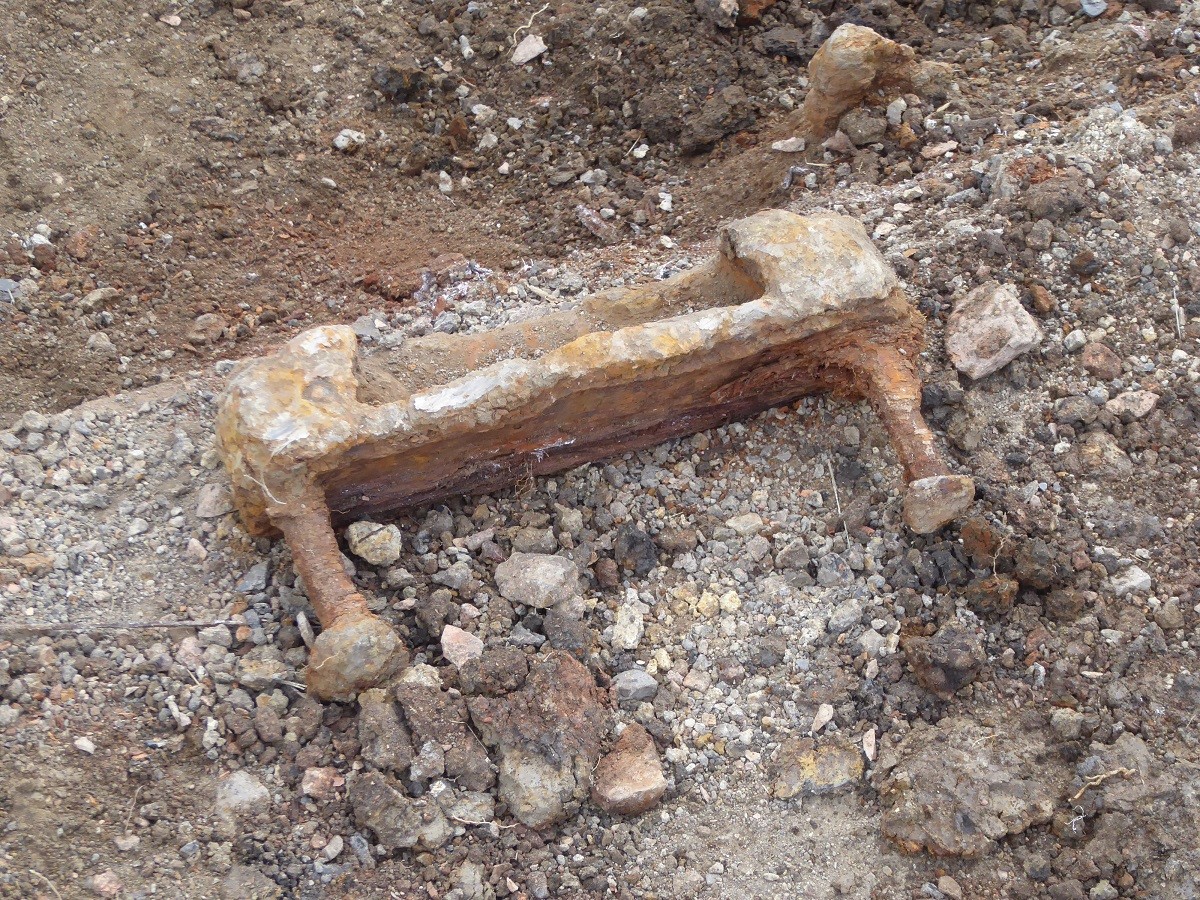
This was on top of the side of the second boat, but crumbled off. It is where cross boards could be secured.
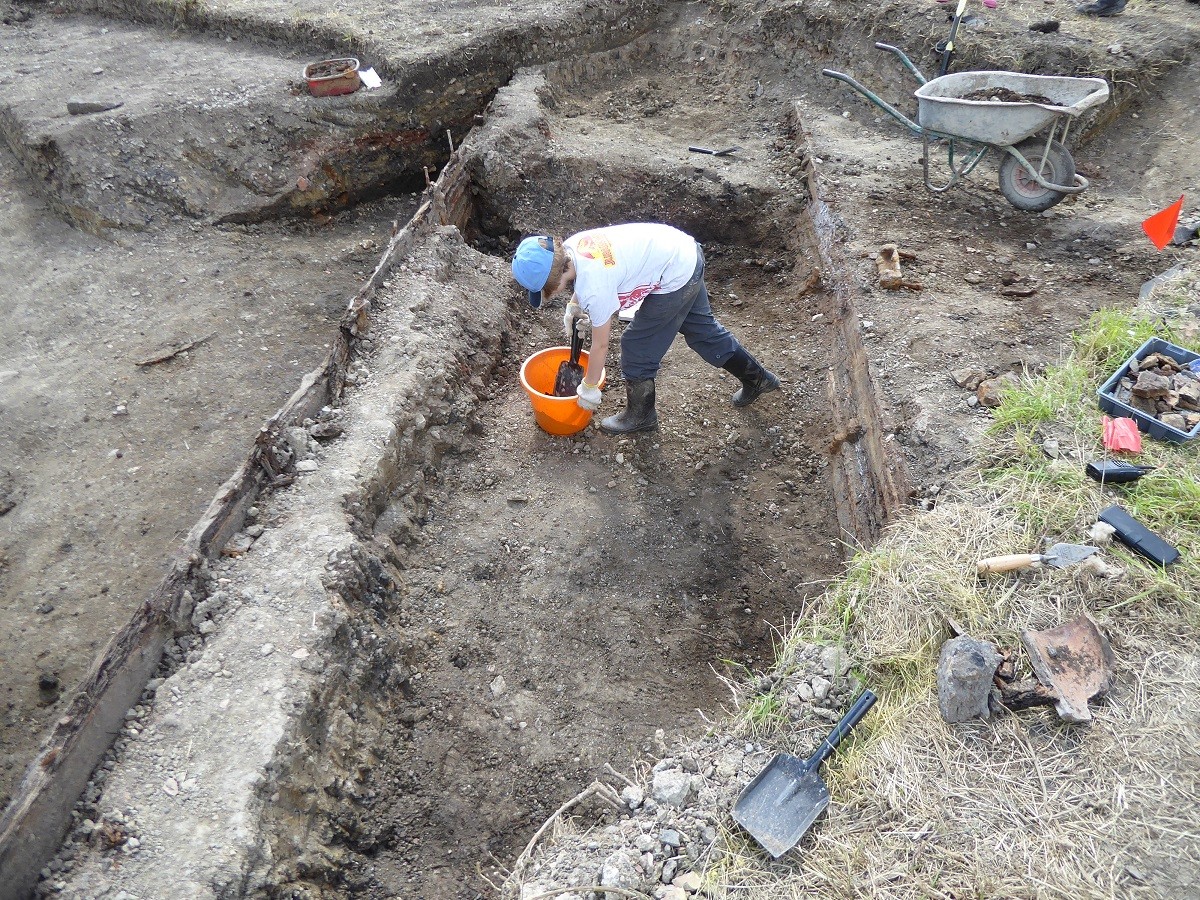
The second boat was being cleared gradually.
The test pit ahead of the first boat was yielding lots of finds. It appeared to be tapering in towards the projecting bit of metal.
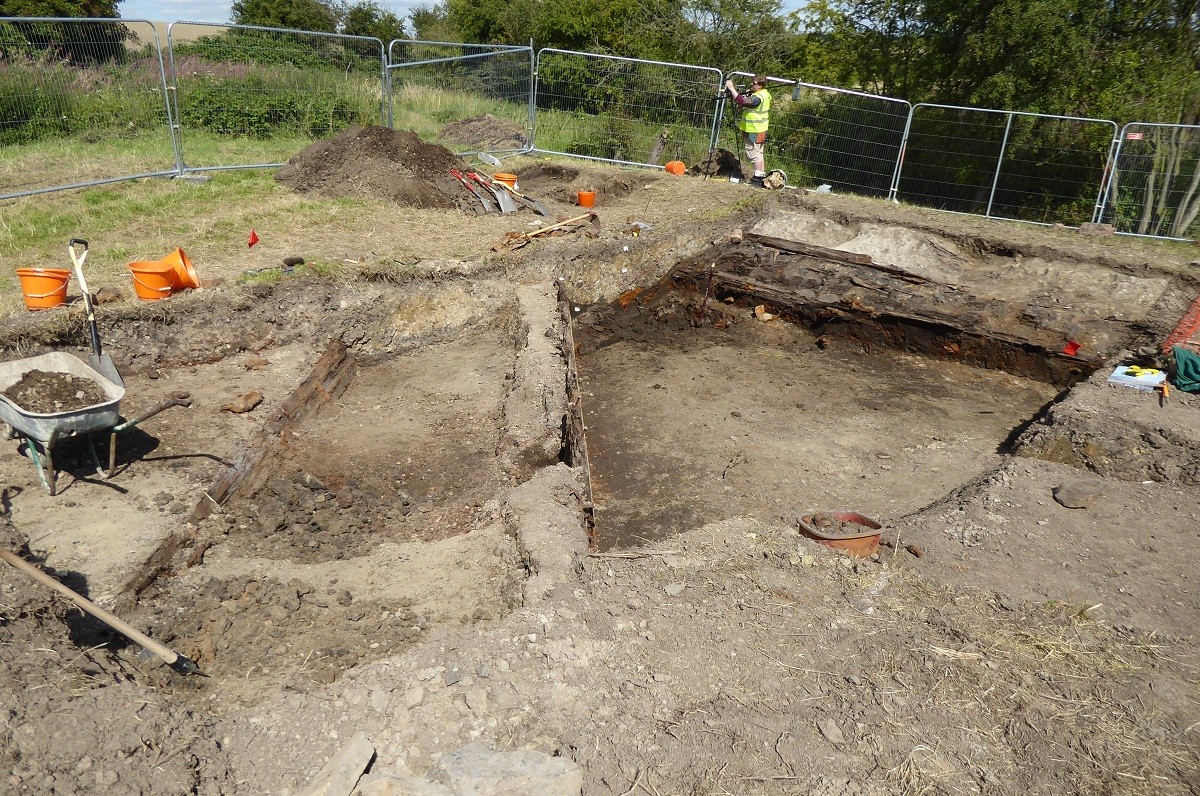
This shows the whole of the Trench 1 investigation.
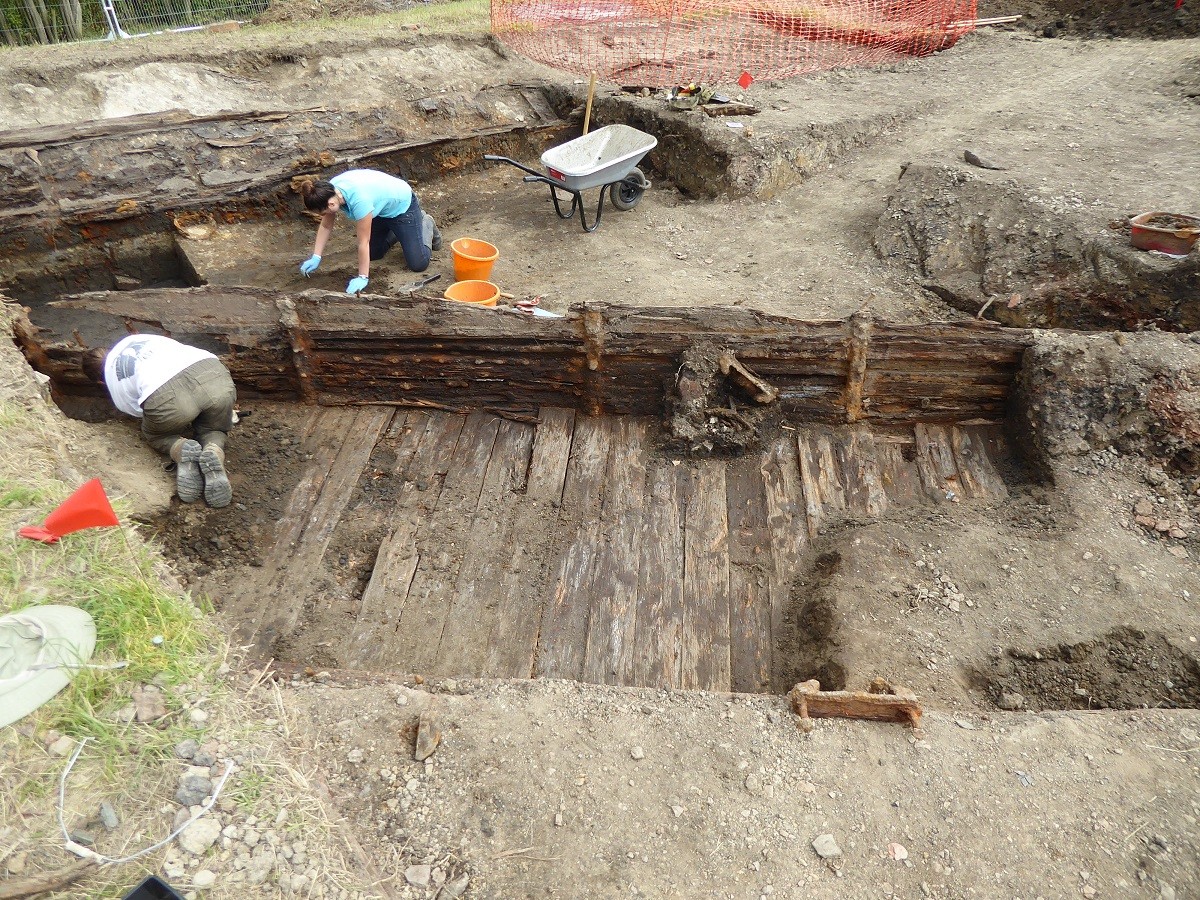
14th August. The planks of the second boat had been exposed. We thought that this was a maintenance boat.
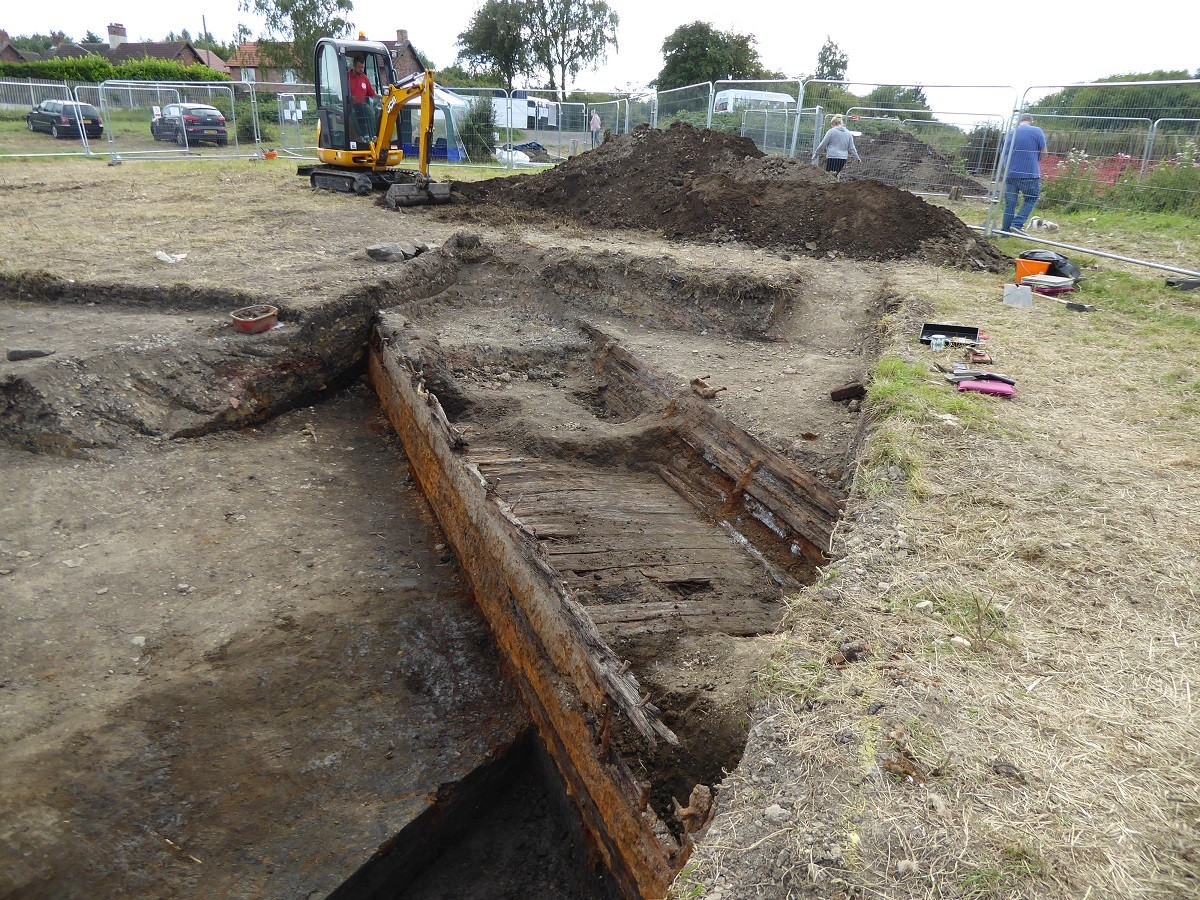
Here’s another view.
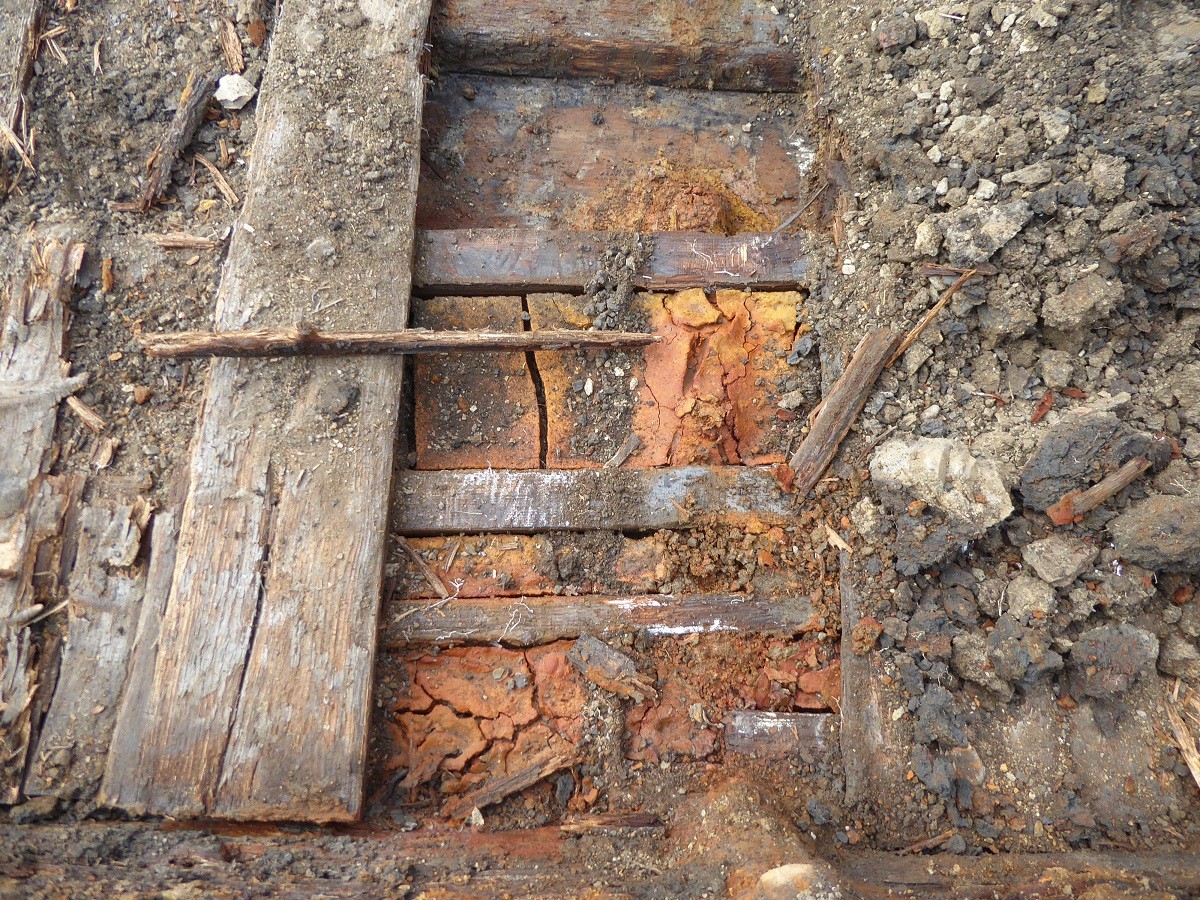
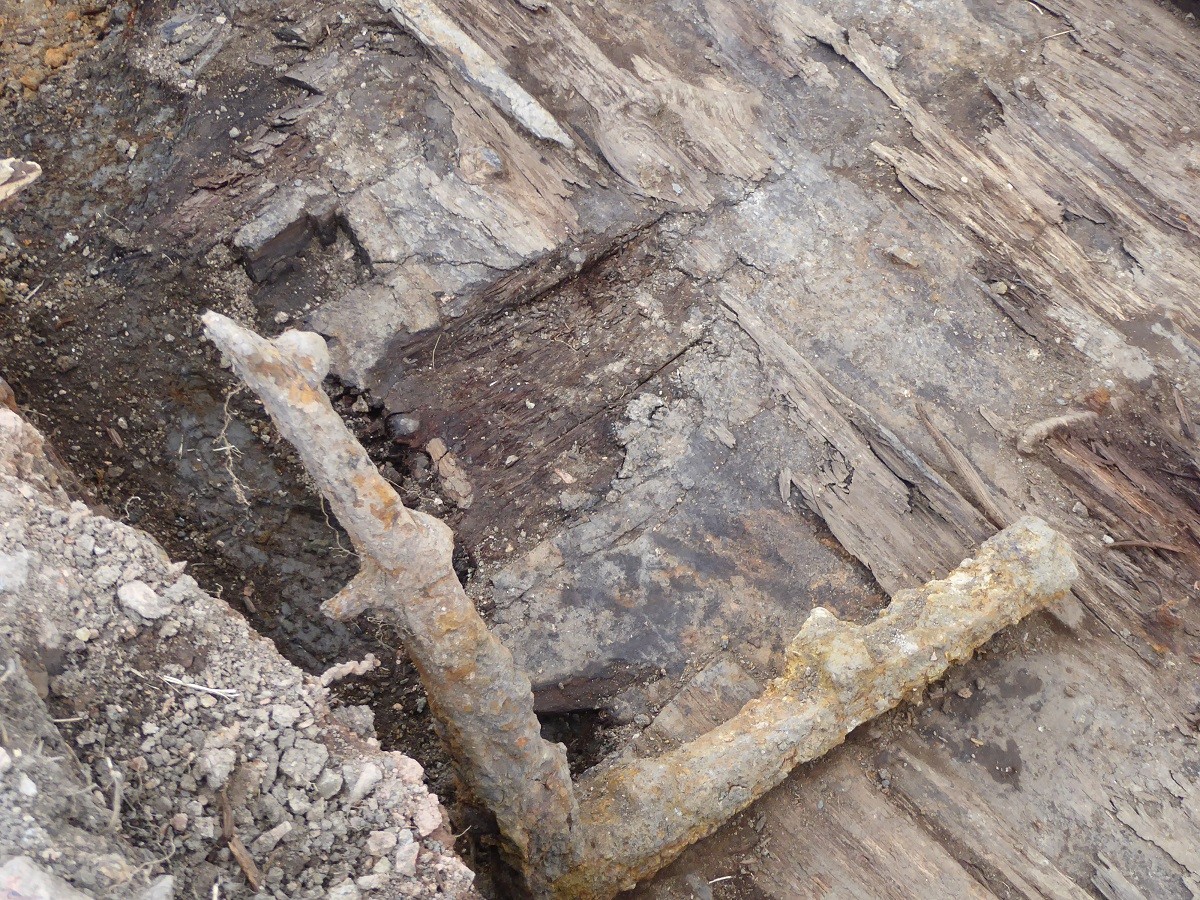
After lifting a couple of the planks, it seemed that the timbers at the bottom of the boat ran lengthways. The sides were held in place by large L-shaped metal brackets called knees. You could see one of these knees bottom centre right. It ran across the boat and was anchored to the bottom timbers in three places. It was also held down by thin runners, which also support the planks.
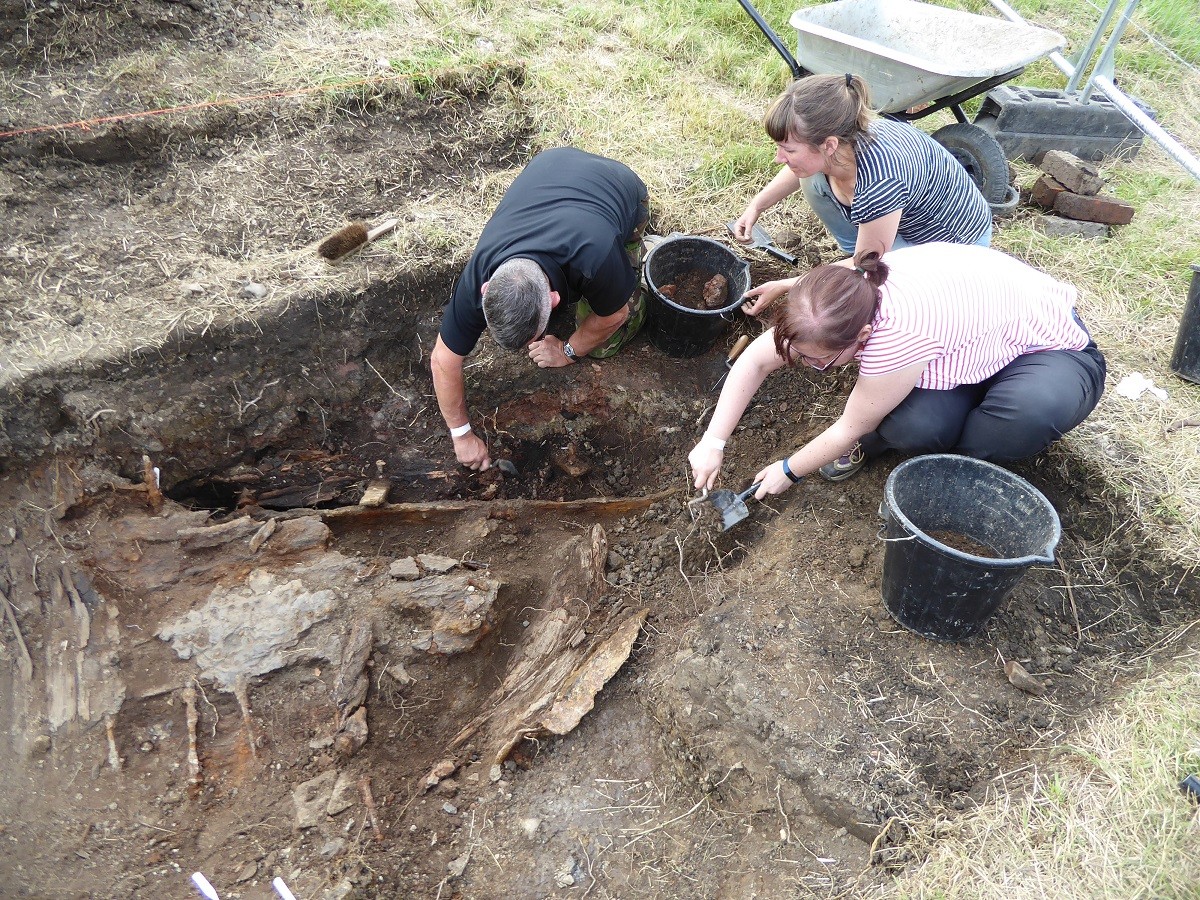
Yesterday’s test pit, now called Trench 3, was causing much debate. There should not be metal knees at the front or back of a Cuckoo boat. Had the two boats been crushed into each other?
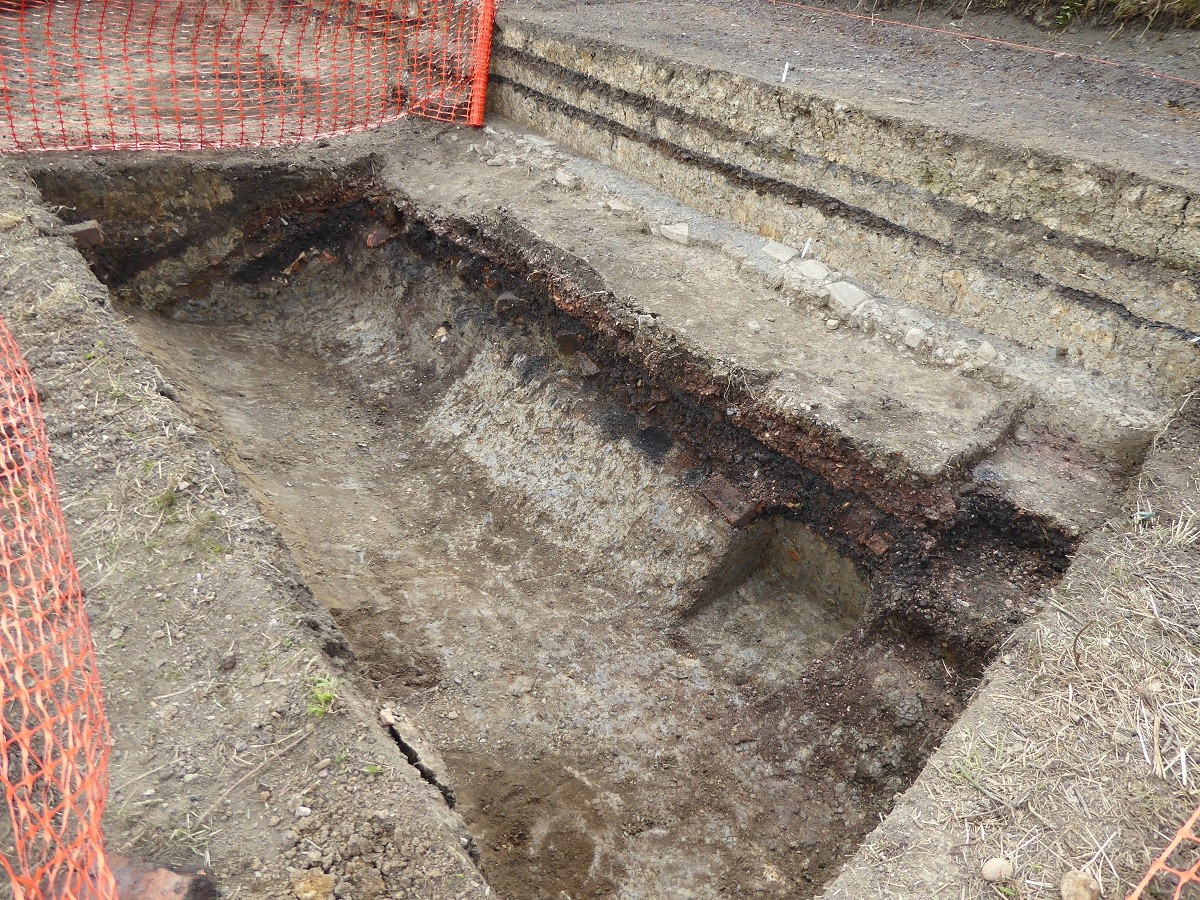
The digger had been into Trench 2 to reveal more layers. This had been netted off because it was fairly deep, so there were limits to the number of volunteers allowed.
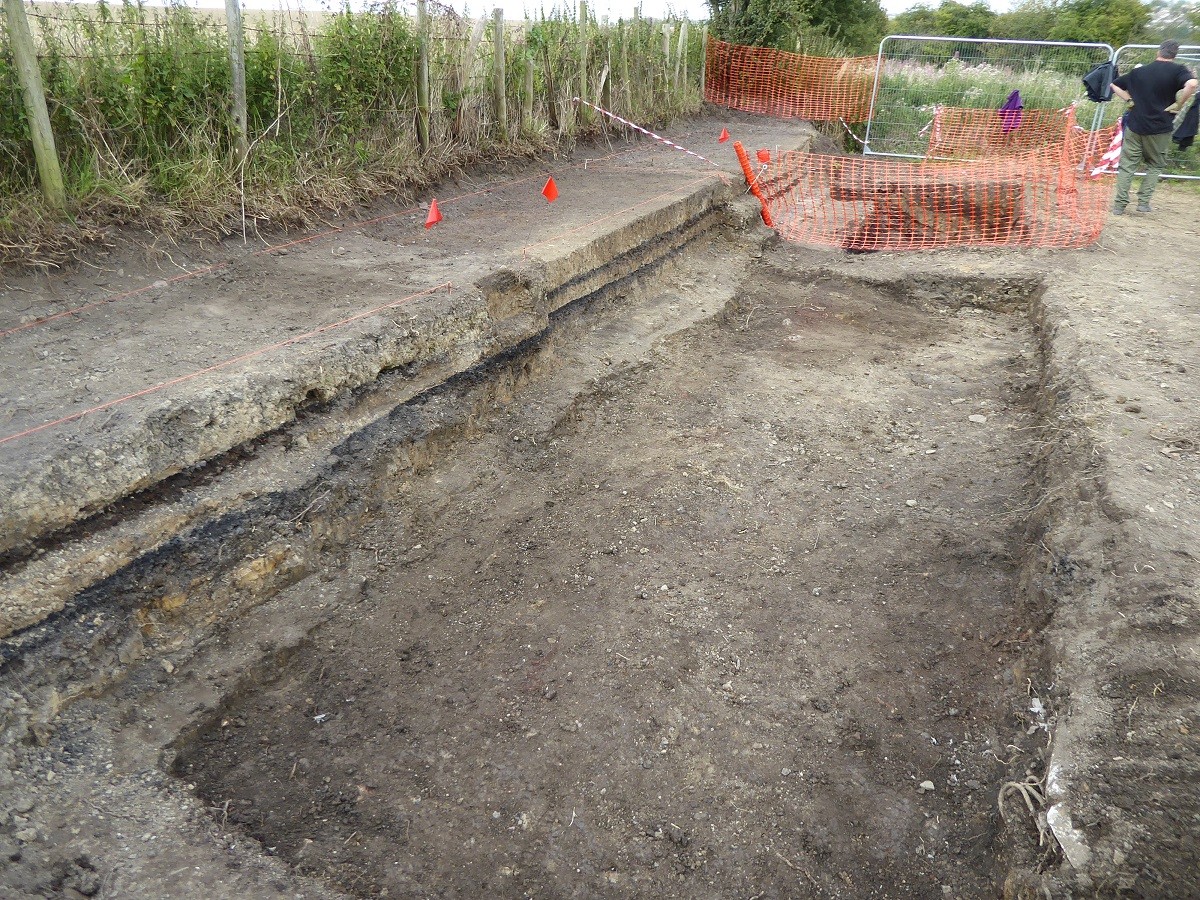
The other end was still giving lots of finds and the upper layers were being neatly revealed.
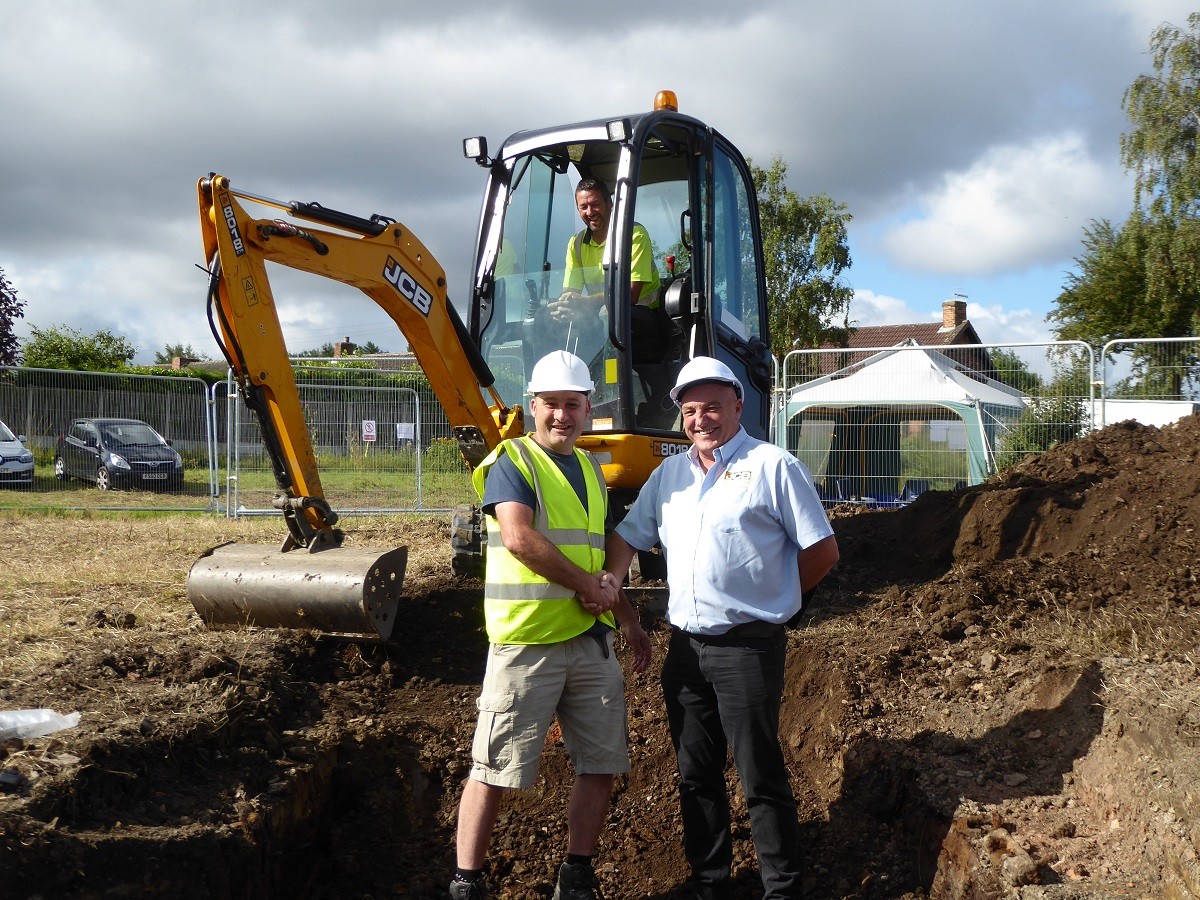
15th August. We had lots of visitors today. Steve Jarman came from T C Harrison/JCB to whom we are incredibly grateful for the loan of the digger.
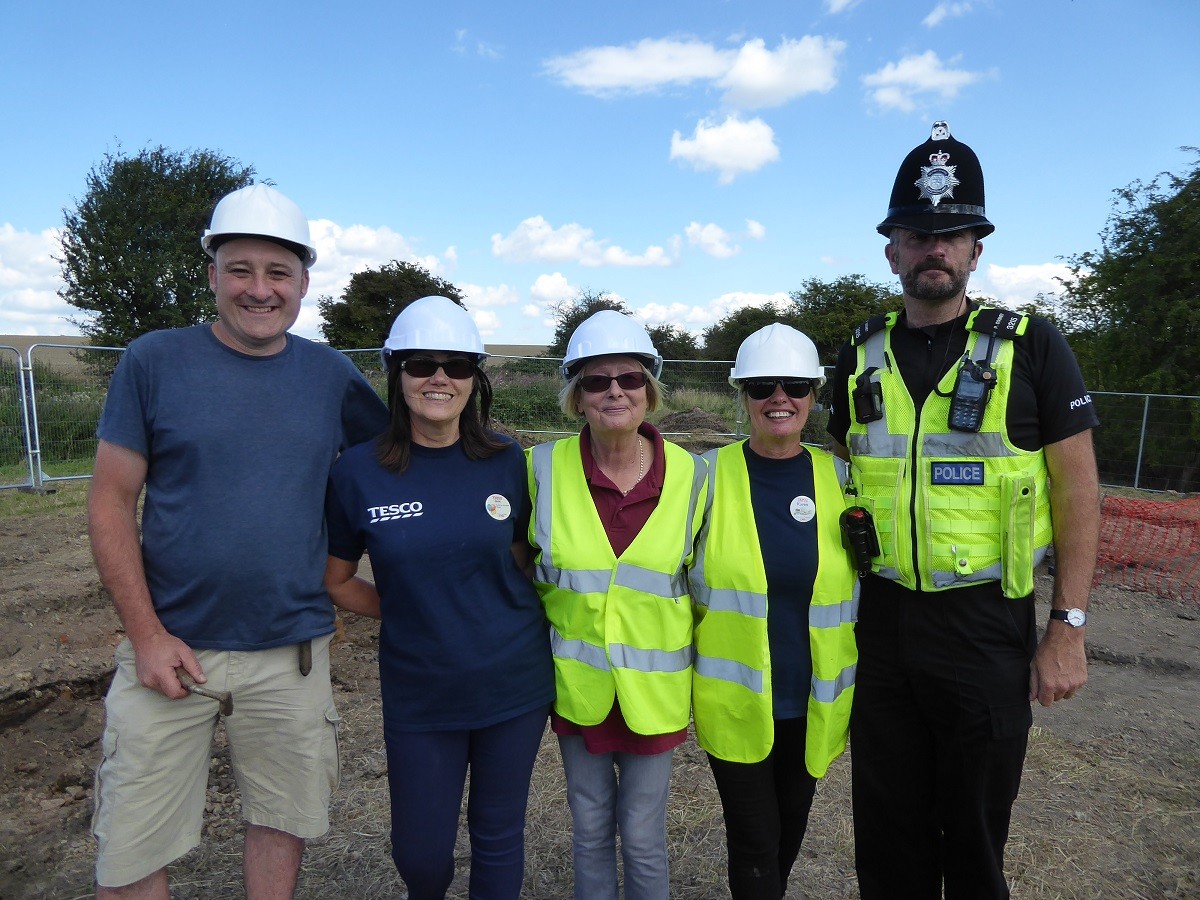
Next were Jane and Karen from Tesco, who had given us lots of water and drinks from their community fund; joined by PC Cooney.
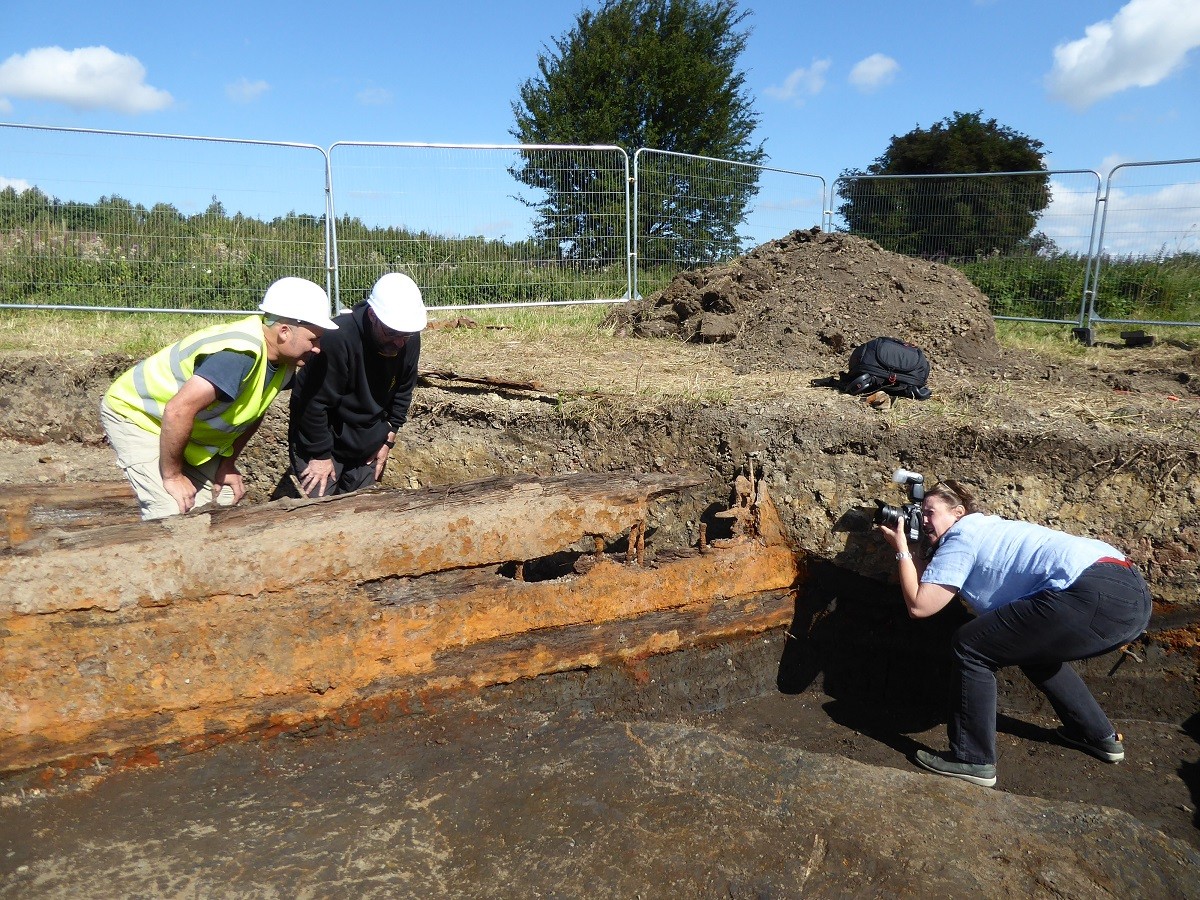
A photographer from the Derbyshire Times captured Andy and Russ …..
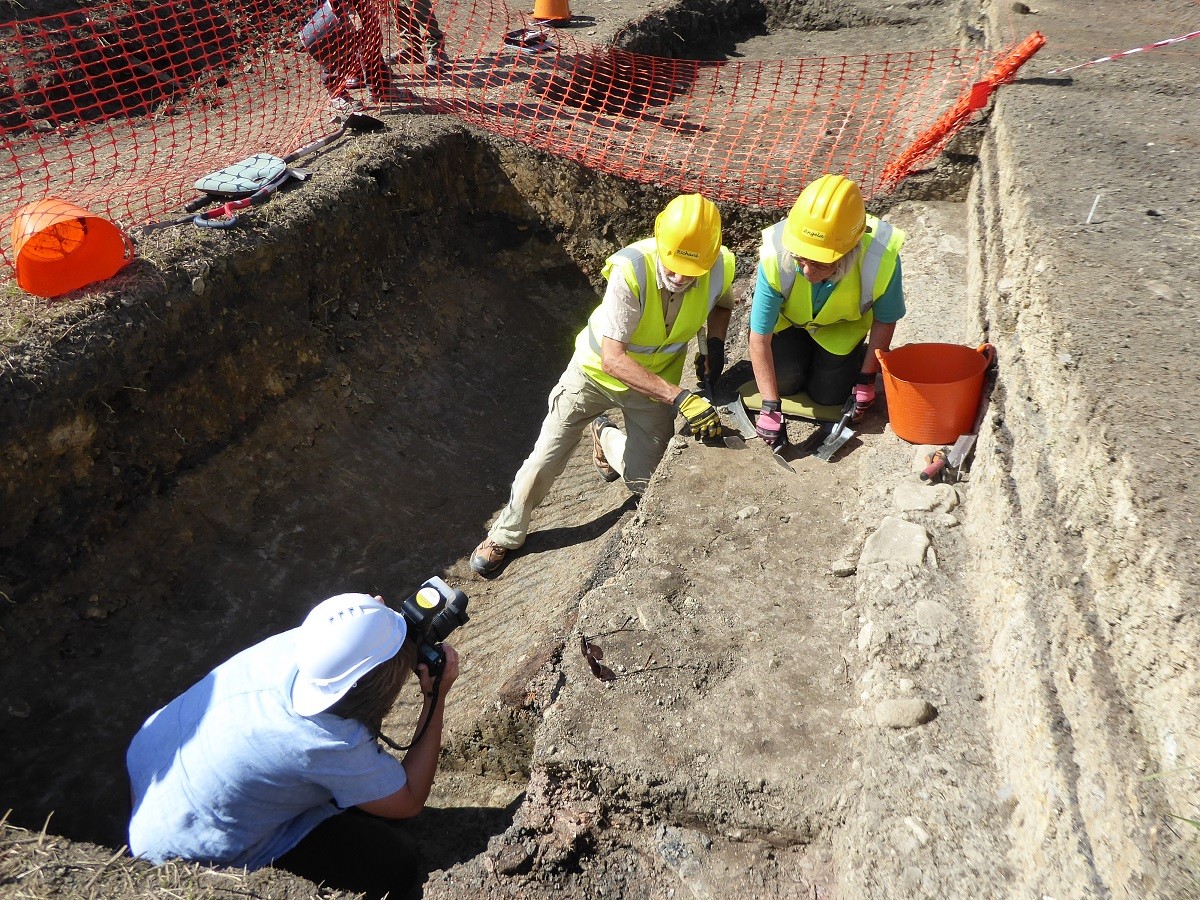
….. Richard and Angela …..
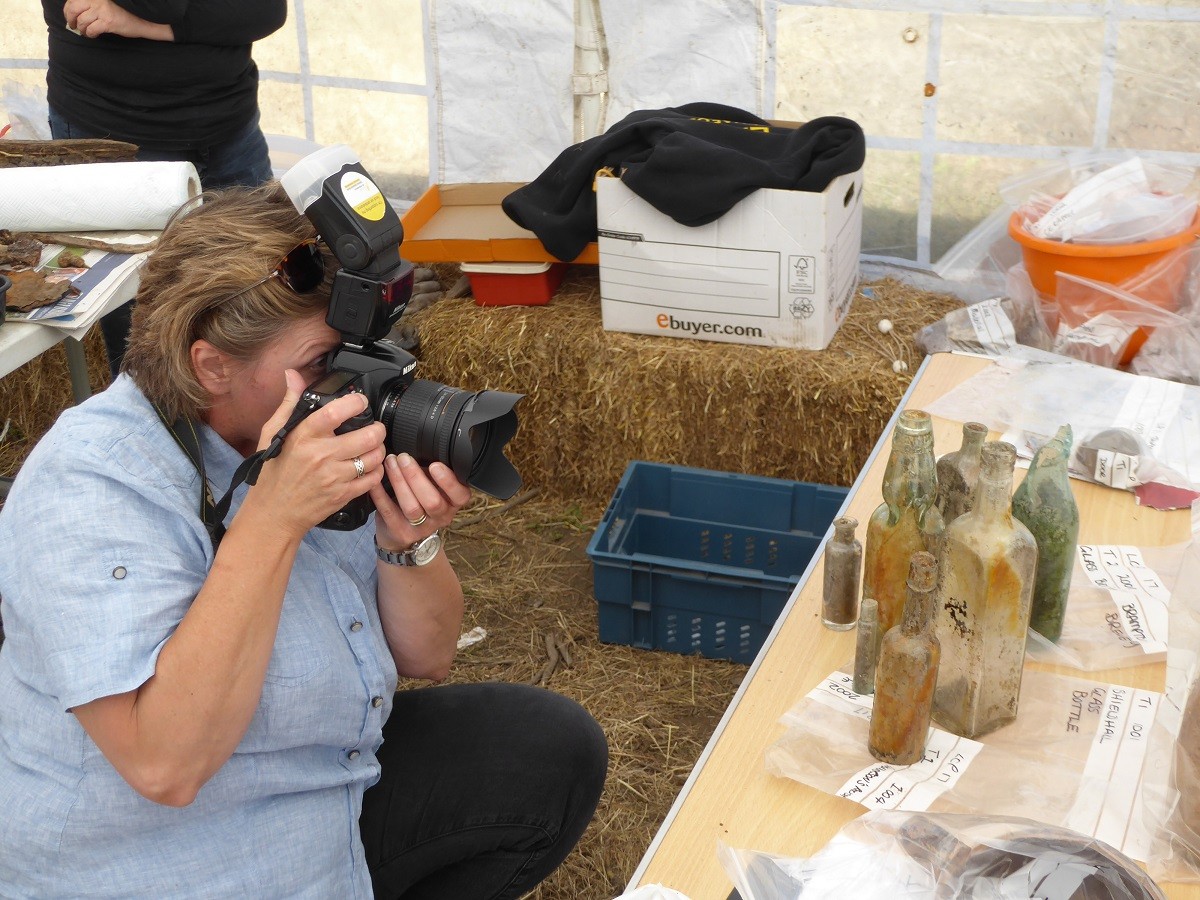
….. and some of the bottles that had been found.
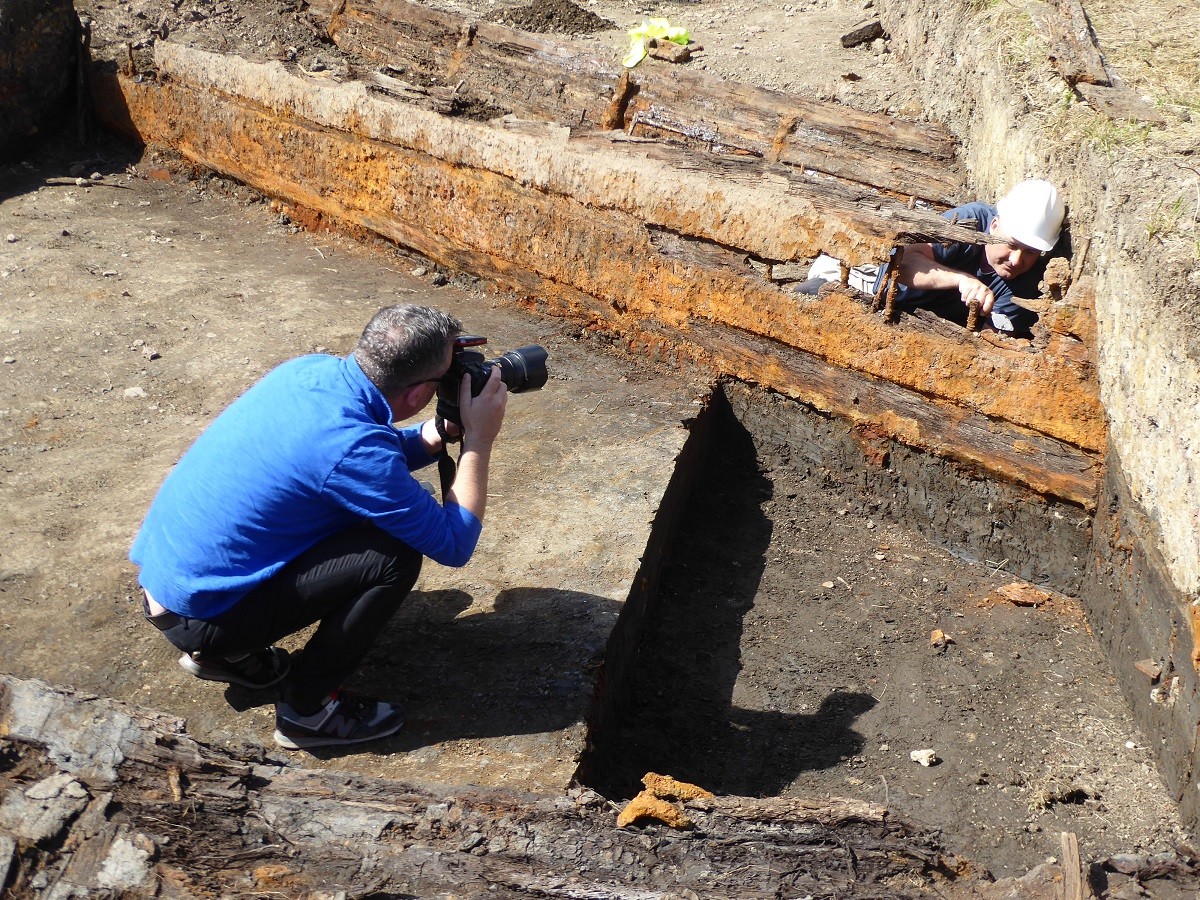
The next photographer was from the Yorkshire Post.
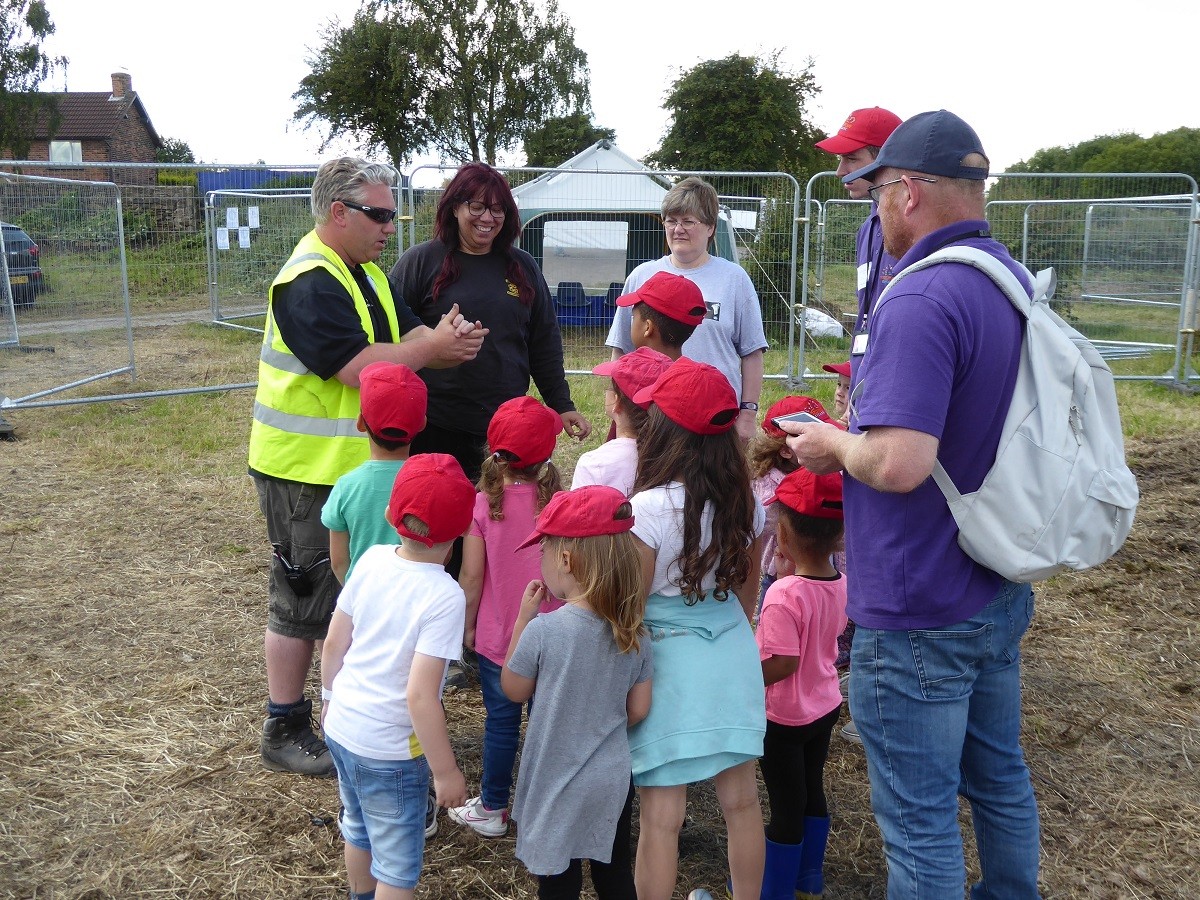
In the afternoon we were joined by some children from a local playgroup.
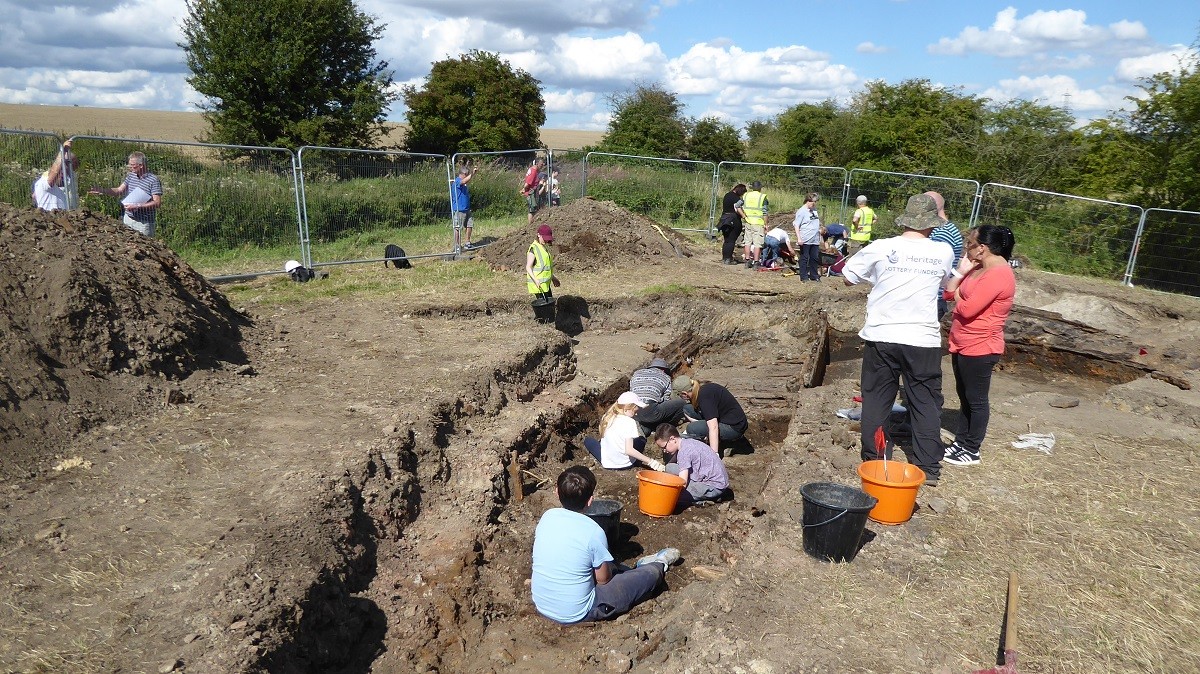
The serious work of digging continued on the maintenance boat …..
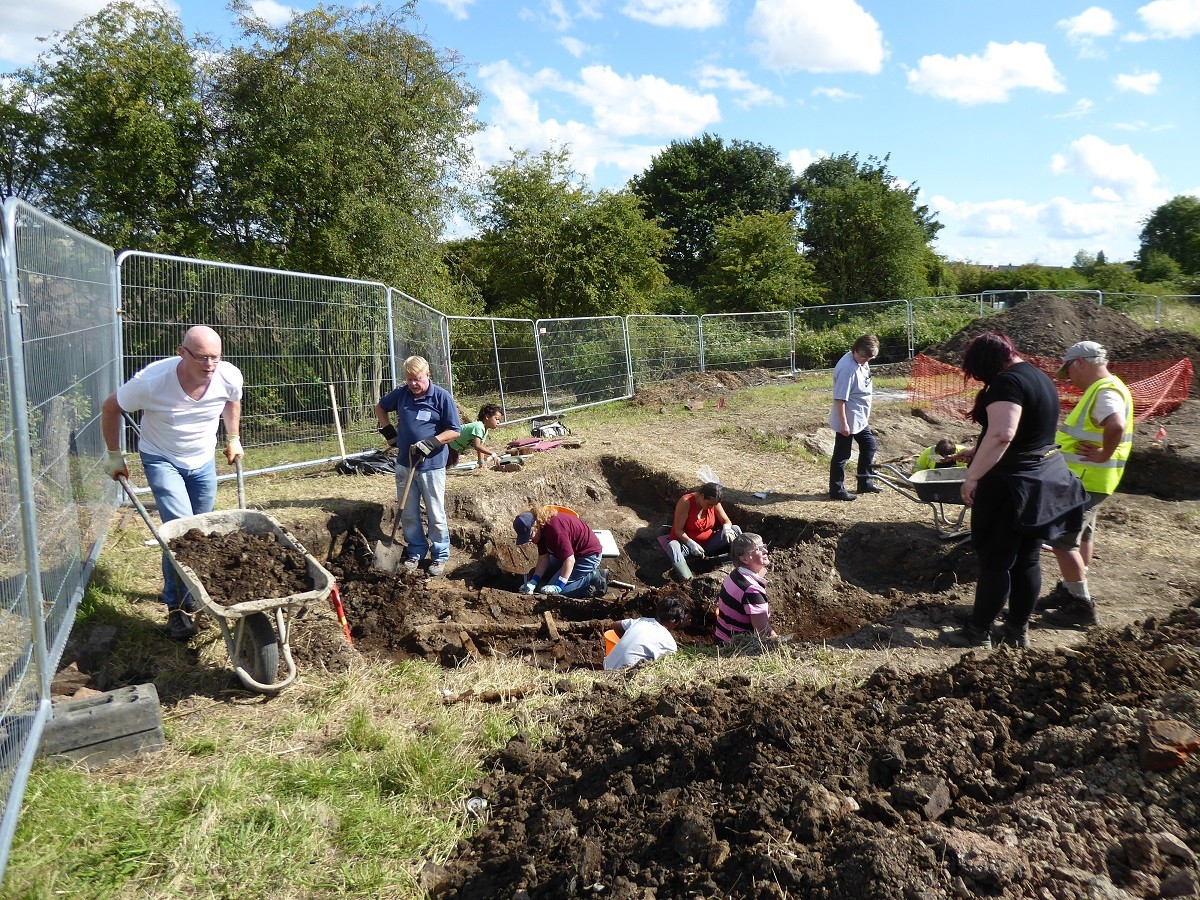
….. Trench 3 …..
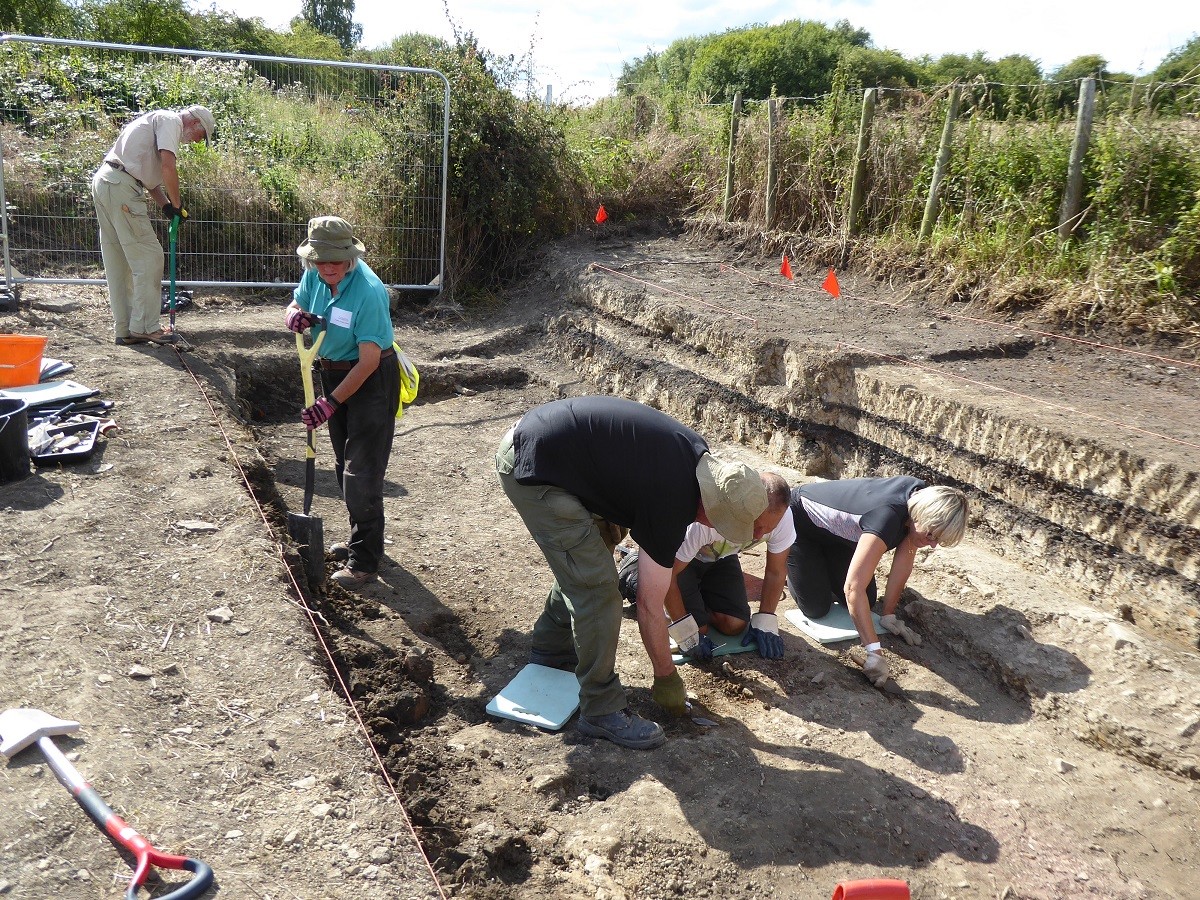
….. and in Trench 2, which was being tidied up for recording.
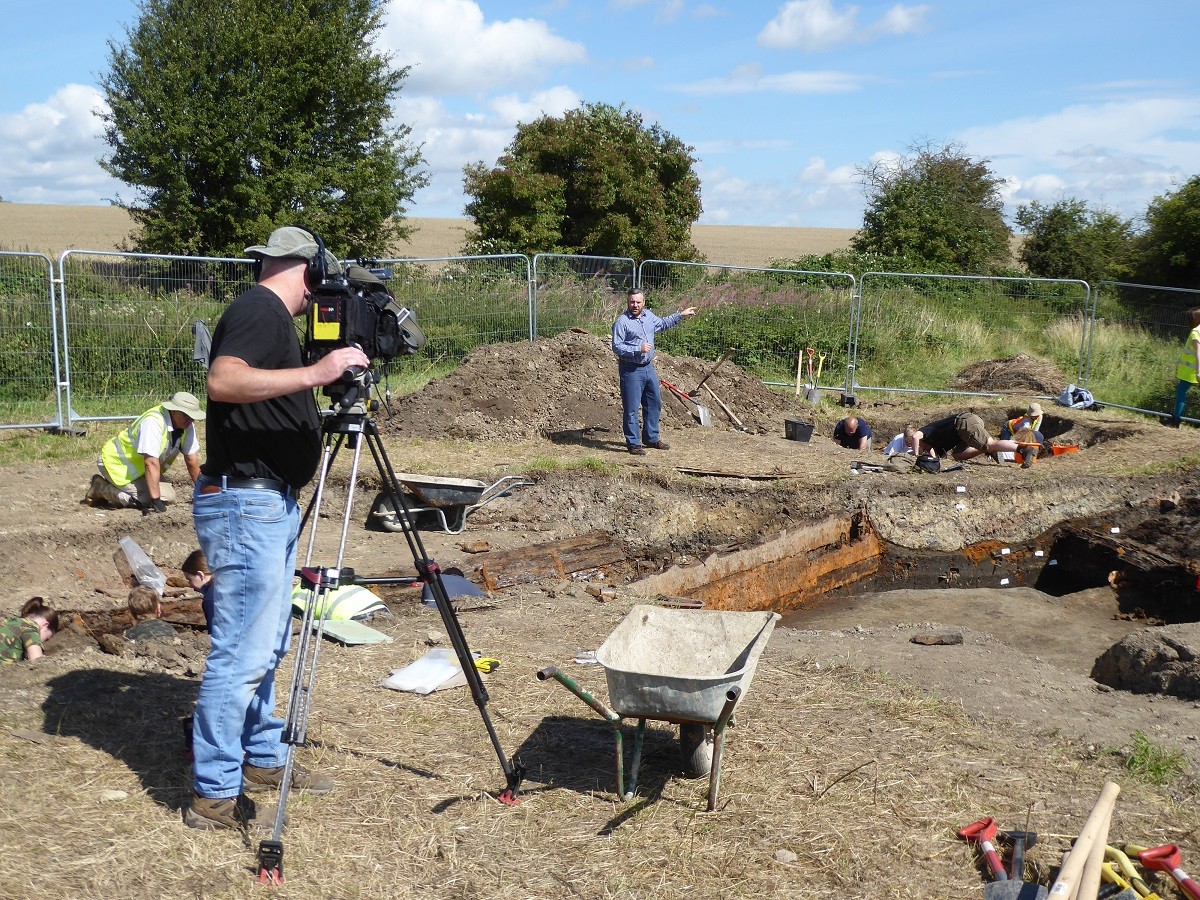
16th August. Tom Ingall from Look North (Yorkshire) came today.
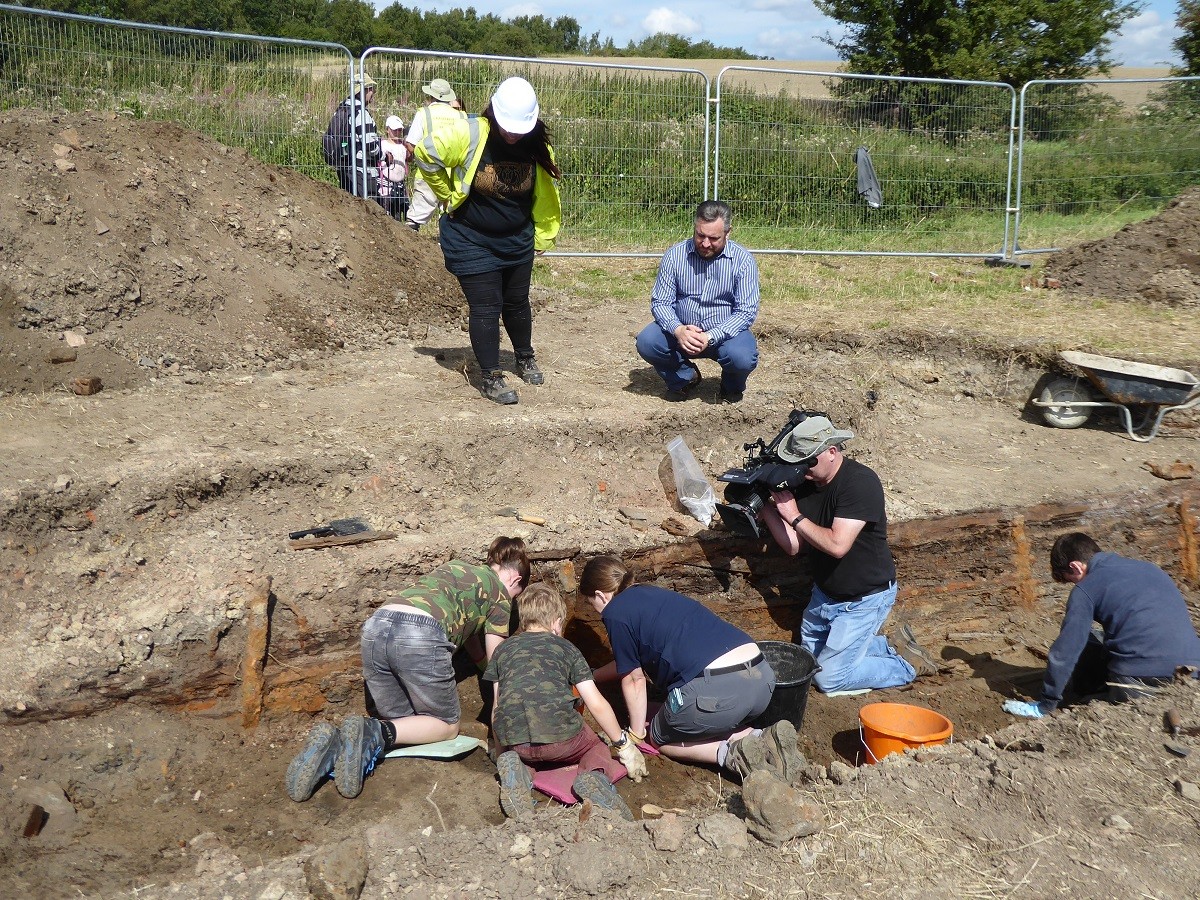
He was here all day with the cameraman Ed, and there was a super piece on Look North in the evening.
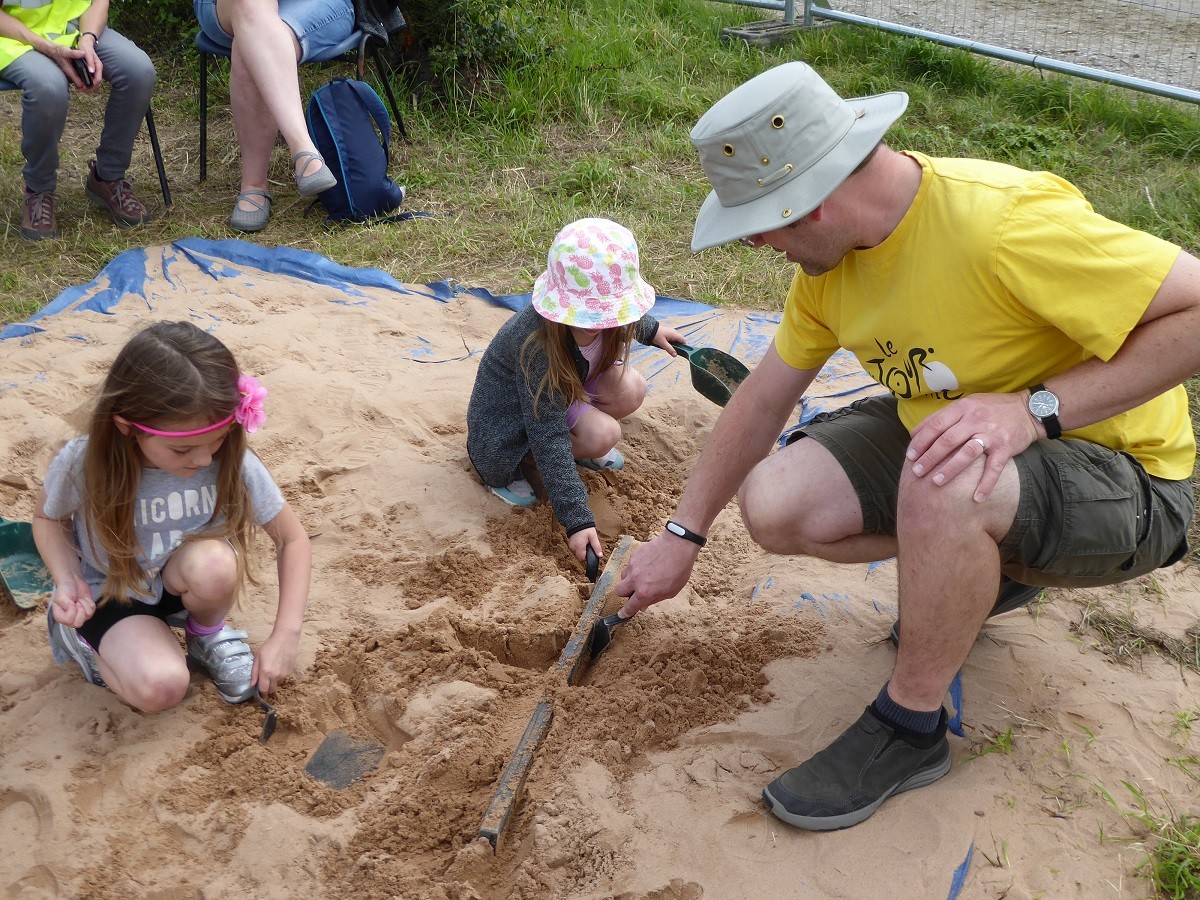
Meanwhile, digging by children of all ages was underway in the sandpit.
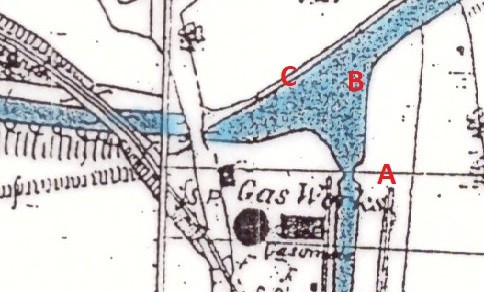
This is an extract from a 1876 map. B shows Trench 1 where the boats were, C denotes Trench 2.
You can see an arm of the canal that went south to serve the Gas Works. This arm only lasted a few years before being filled in. At A you can see that the canal narrows. We believed that these narrows were made of masonry and would have had slots to fit stop planks, used to seal off the canal for maintenance work.
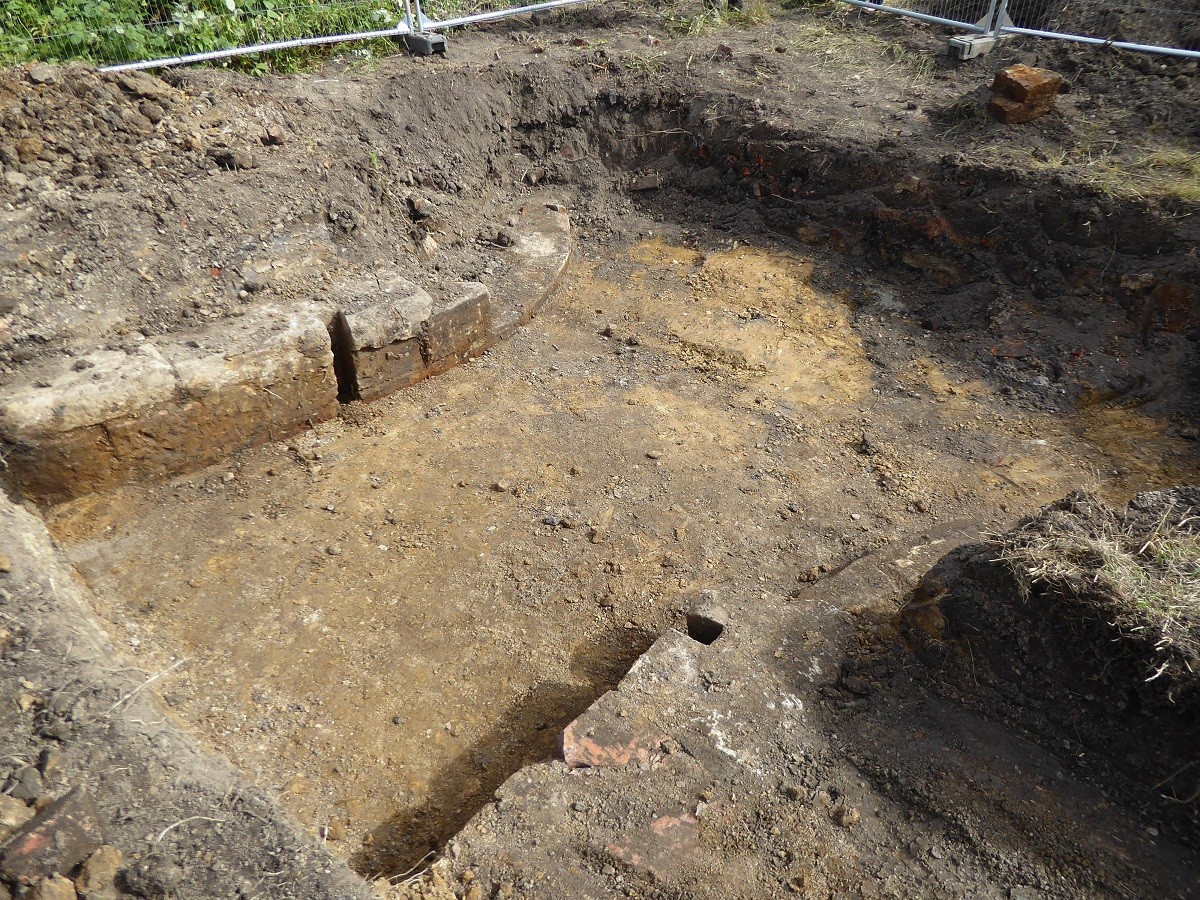
Today, the digger cleared that area and the stop plank slots were found as expected.
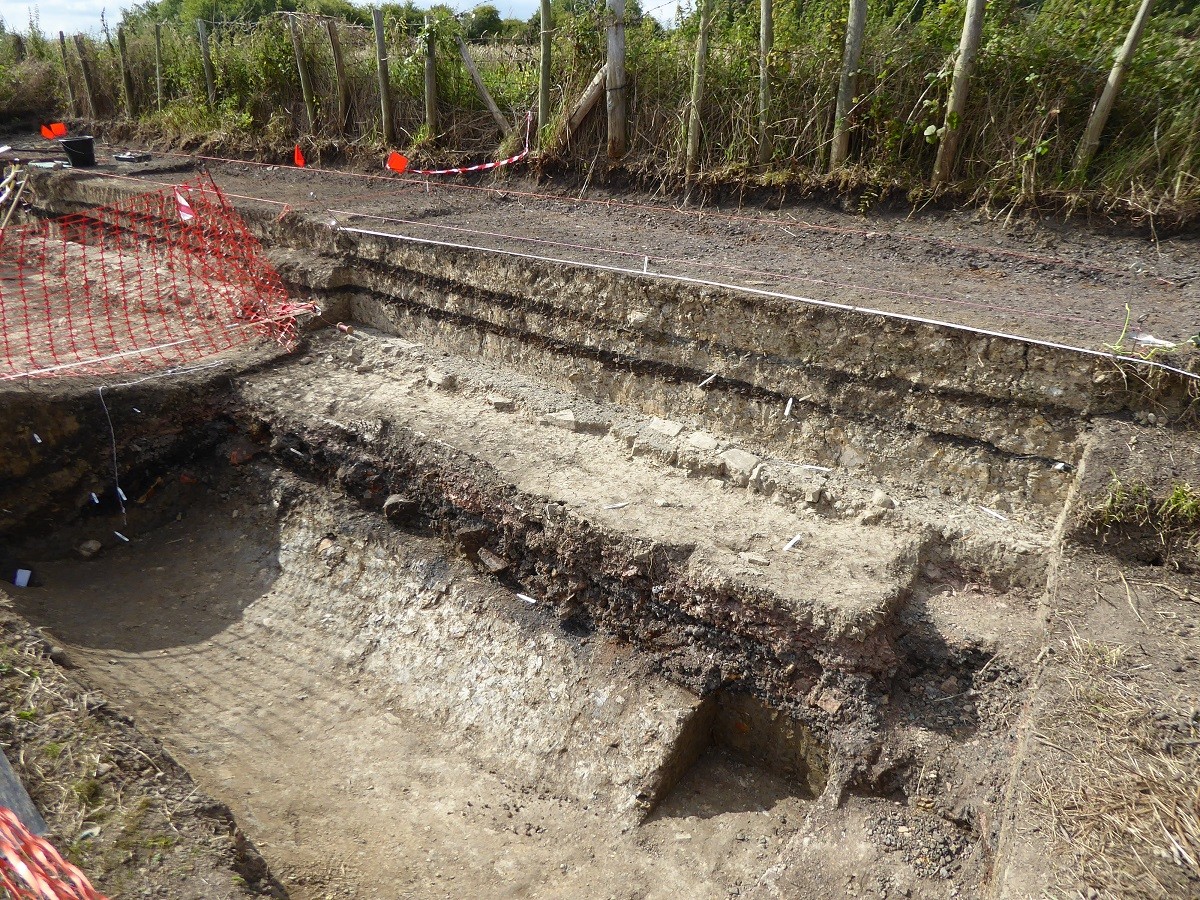
Detailed measurements and drawings were being made at Trench 2. The pink line at the top was a horizontal datum line from which the levels could be taken.
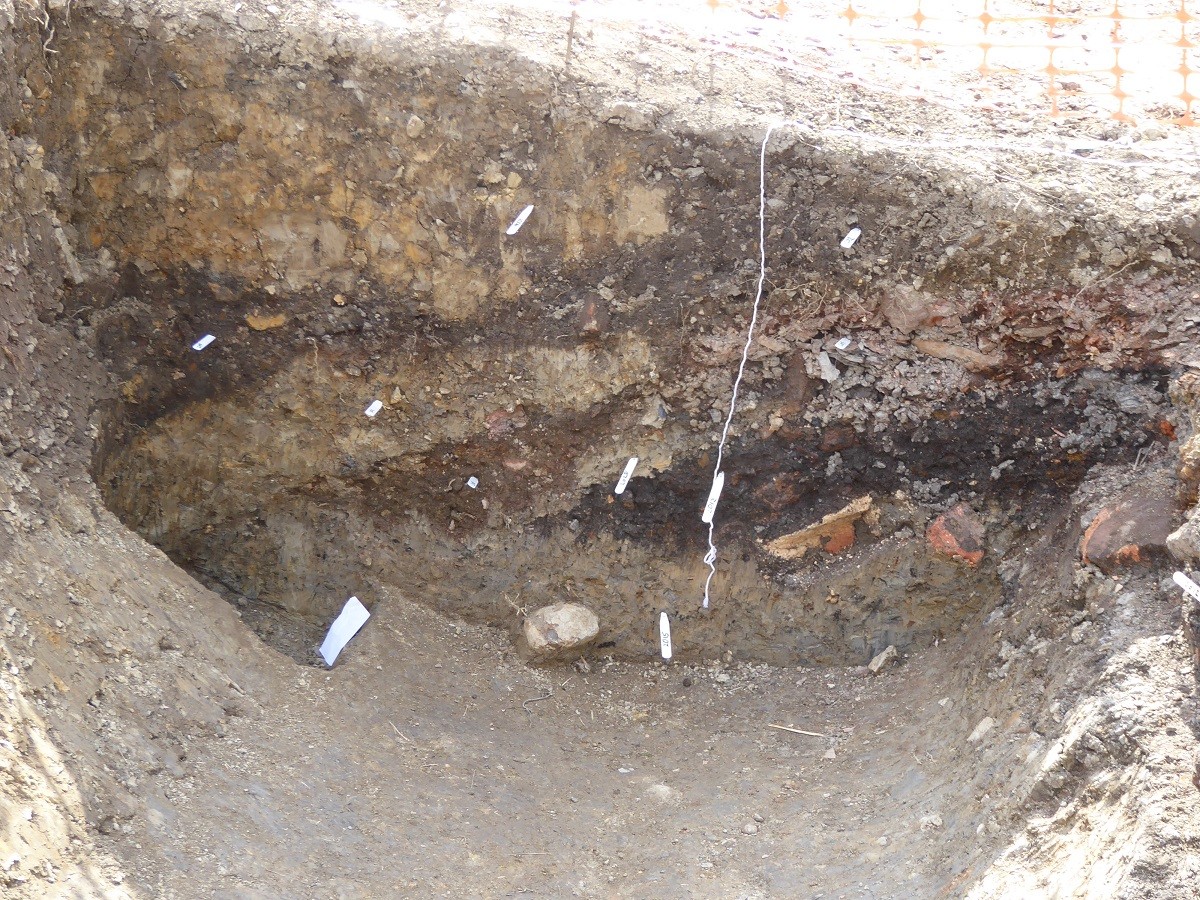
This was the side of the trench on the left of the previous photo. This had been cleaned really neatly so that you could see the strata of infill very clearly.
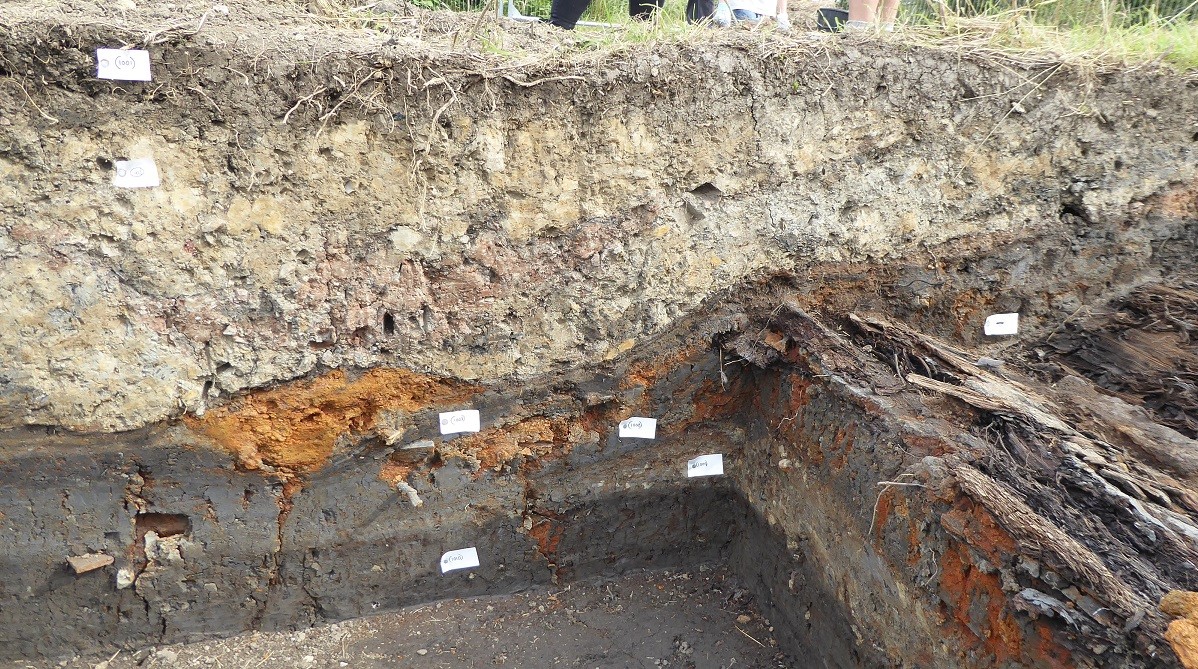
The same was true of this section from Trench 1.
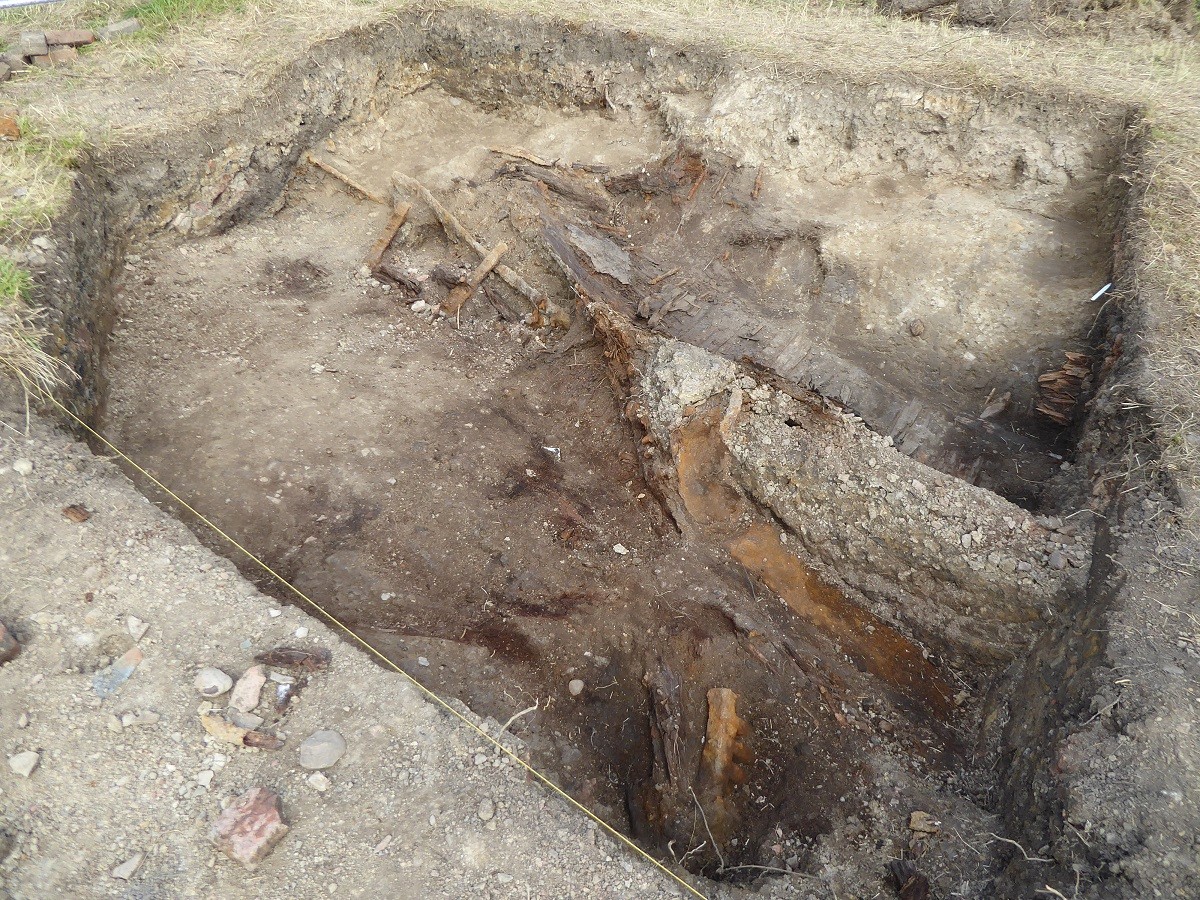
This was Trench 3 where the two boats met. It was still far from clear what was part of which boat. Might there even have been a third boat?
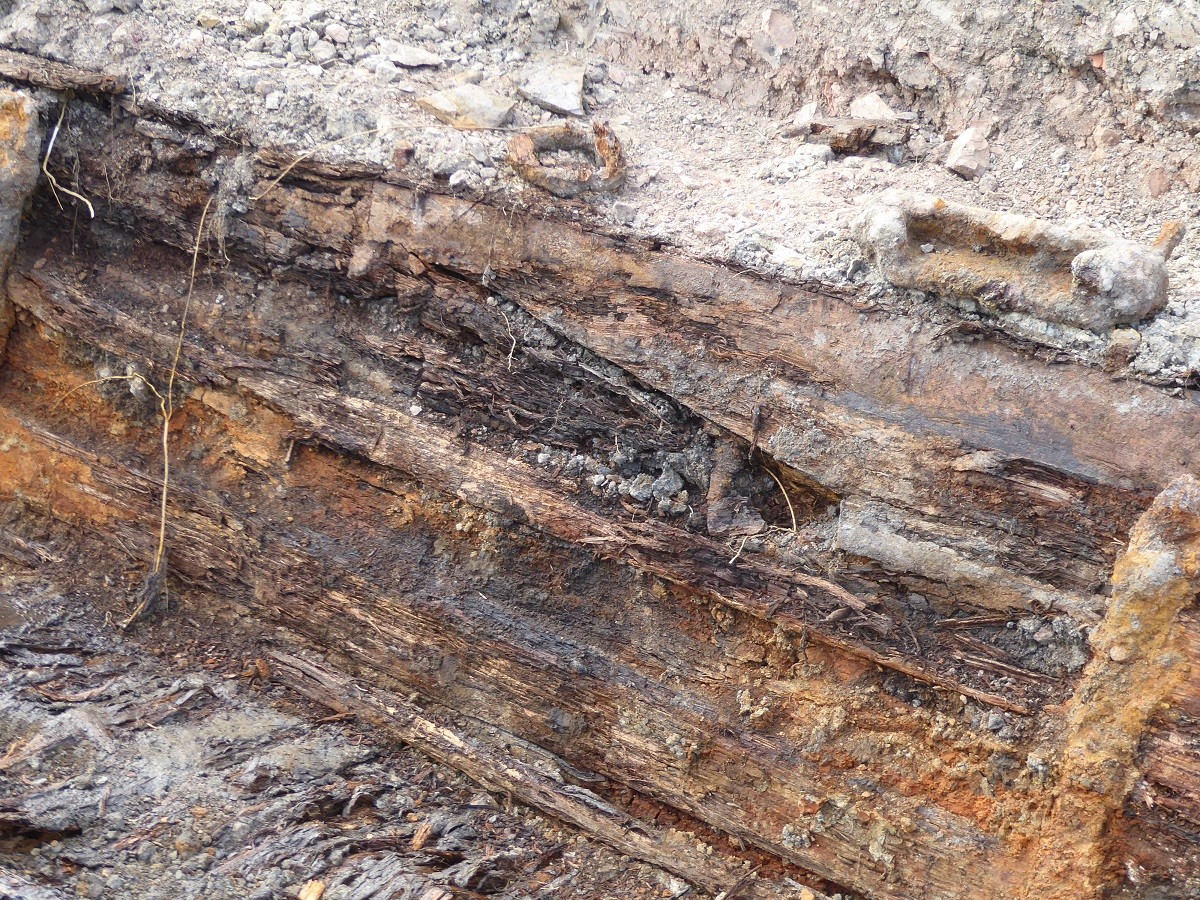
This was a detail from the side of the maintenance boat. Note the zig-zag on one of the timbers. This is a scarf joint.
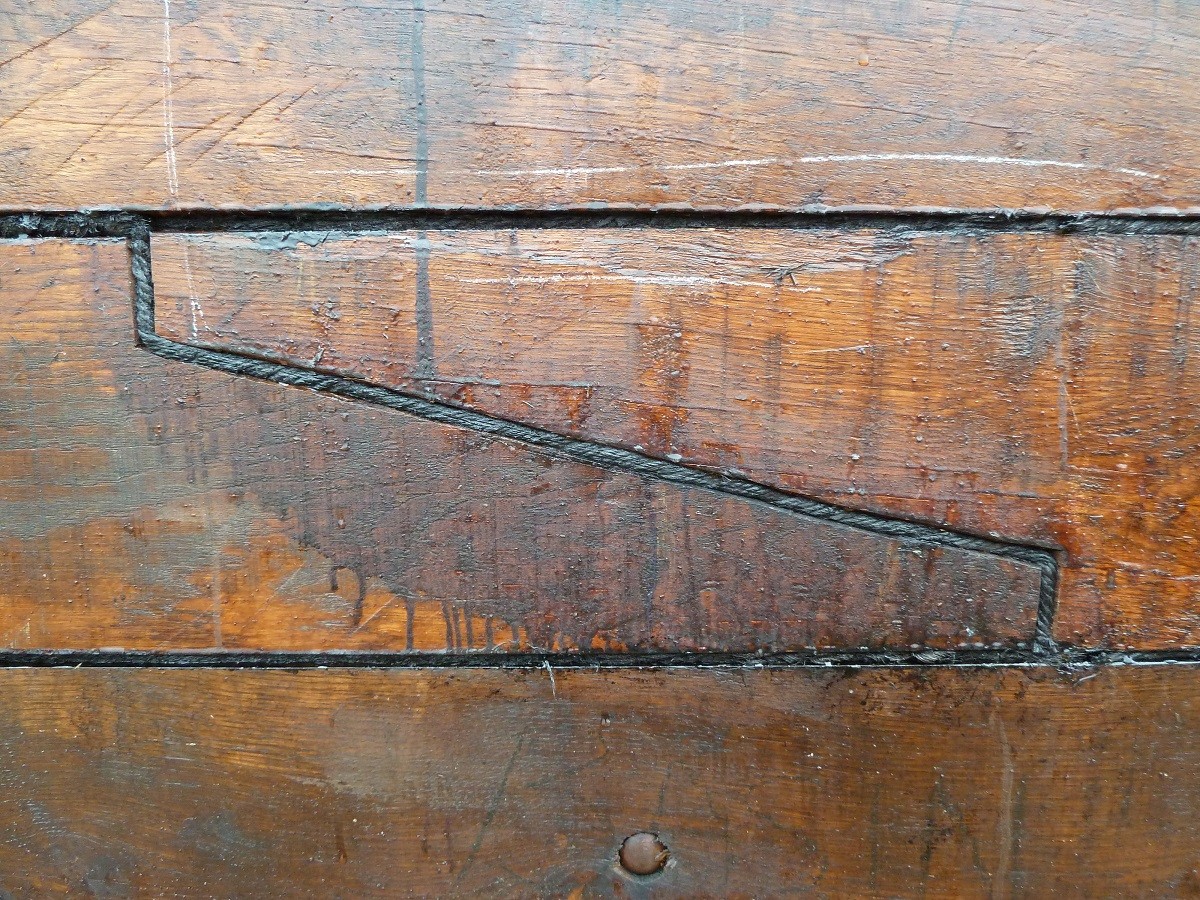
This scarf joint is on our own Cuckoo boat Dawn Rose. Click here for more.
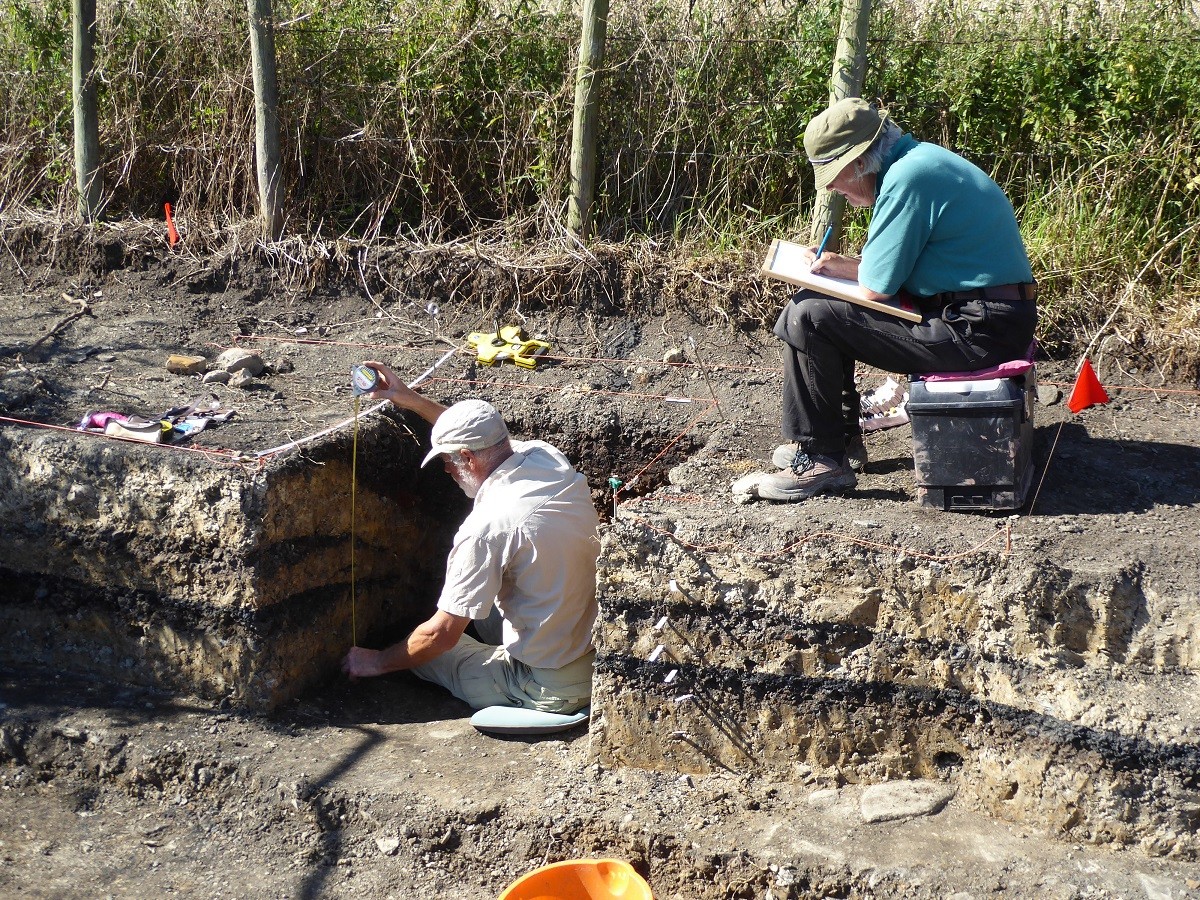
17th August . The process of measuring and recording continued in Trench 2.
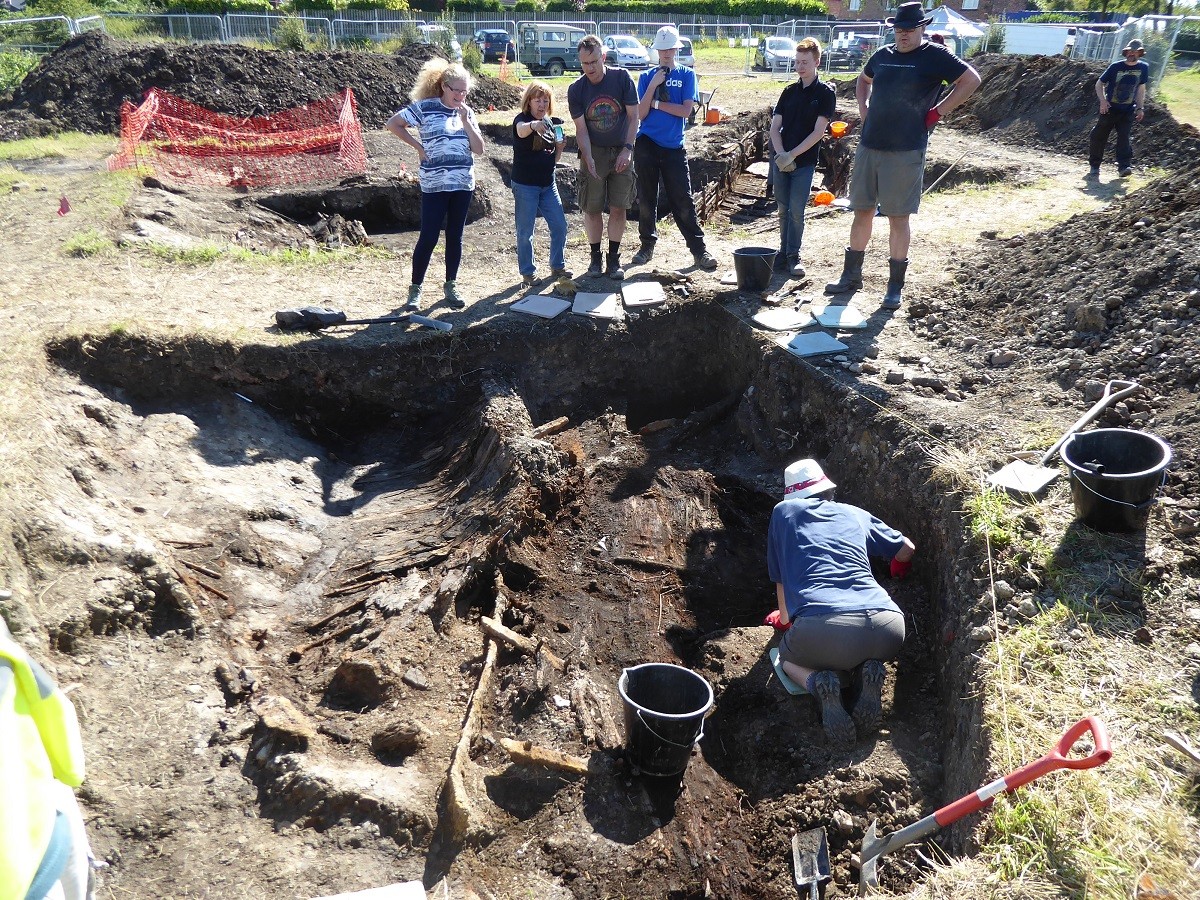
There was much discussion about what was being uncovered in Trench 3.
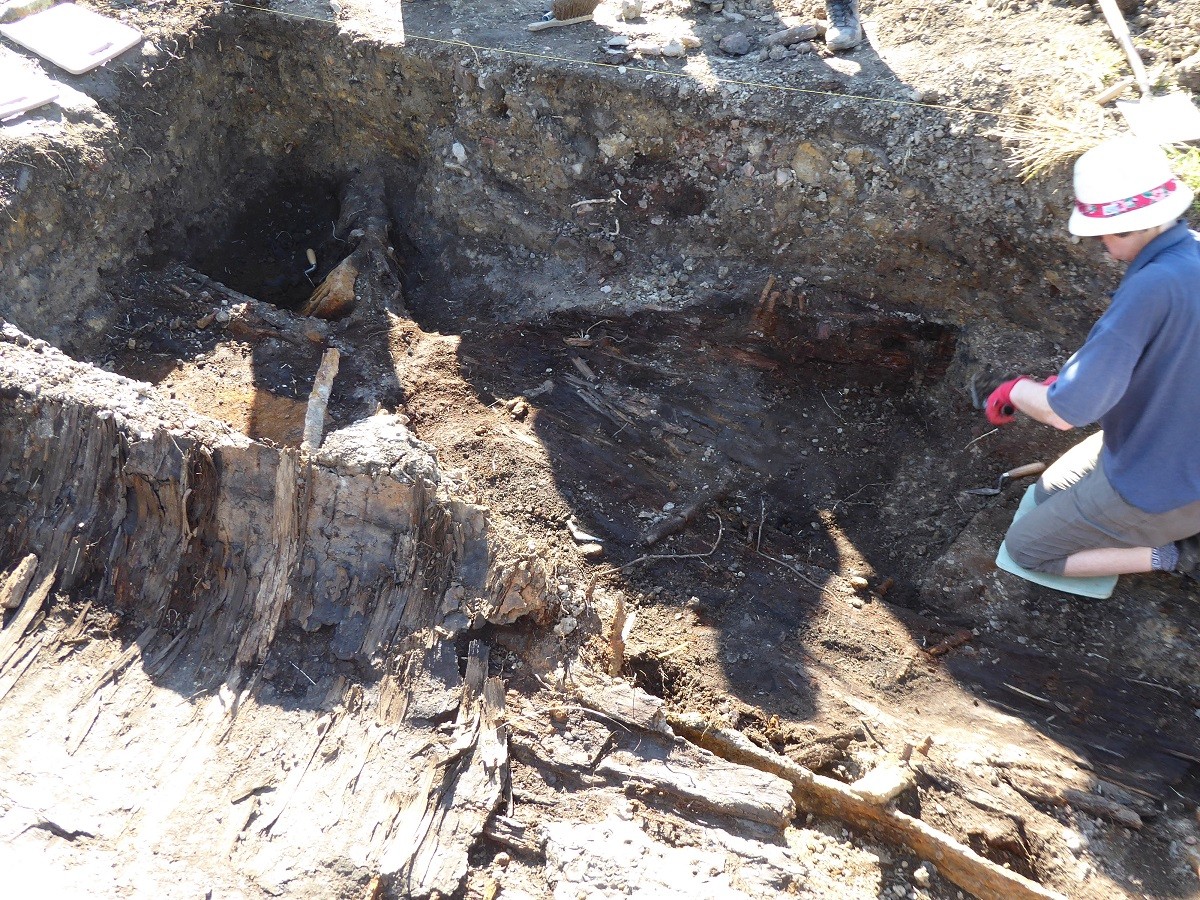
The general consensus was that there were three boats. The Cuckoo was on the left. The bow of the maintenance boat was top left and the wood on the right was from a third boat. Unfortunately there was no time to dig further because we finish tomorrow.
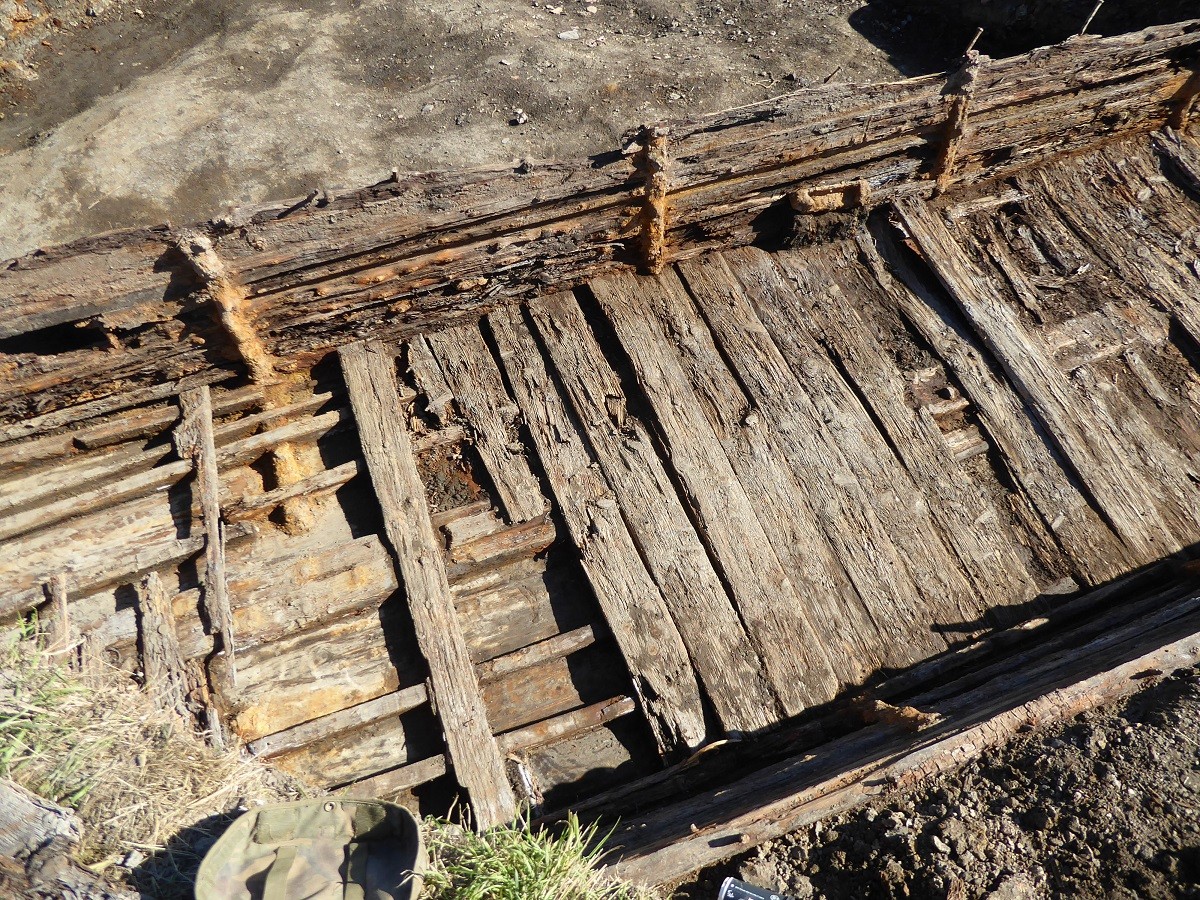
The maintenance boat was being cleared ready for recording.
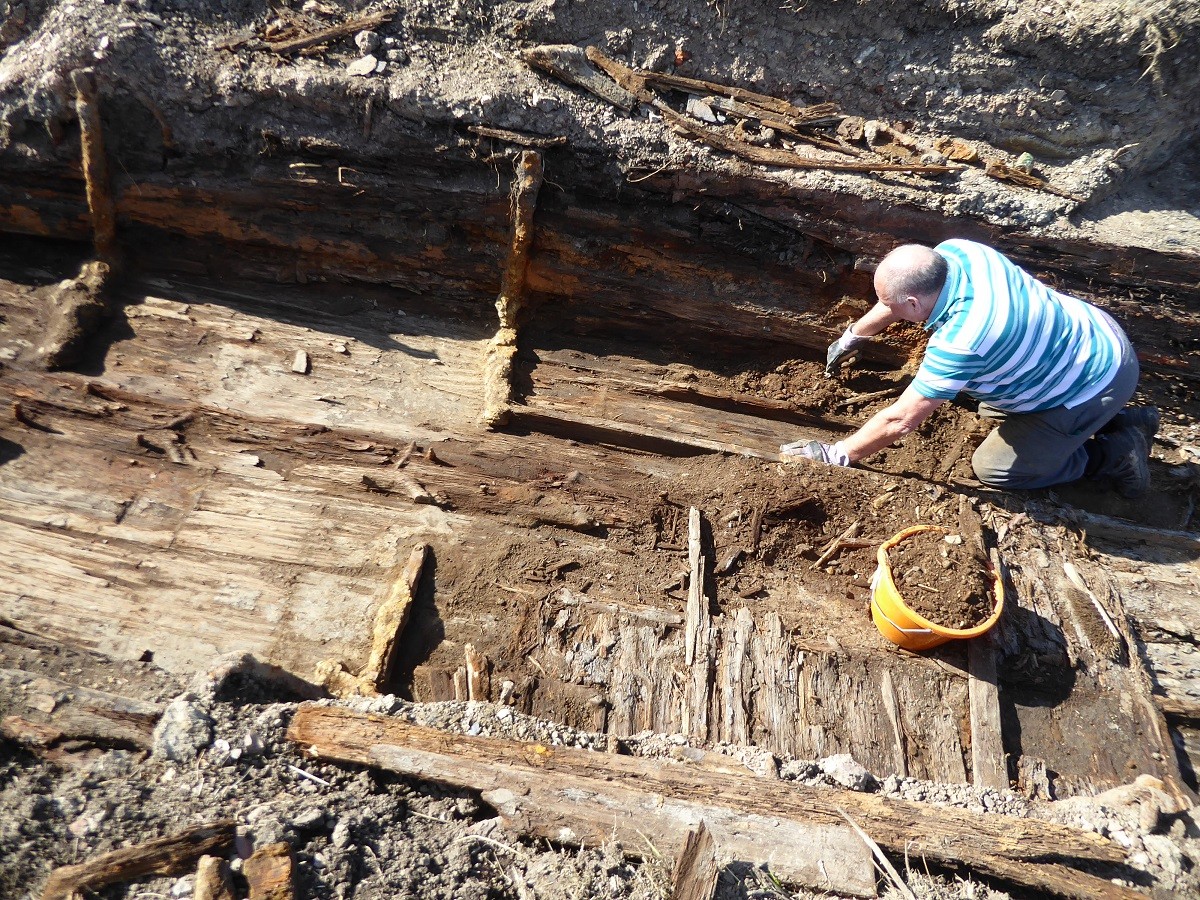
Many of the planks had been lifted, in order to see the bottom timbers.
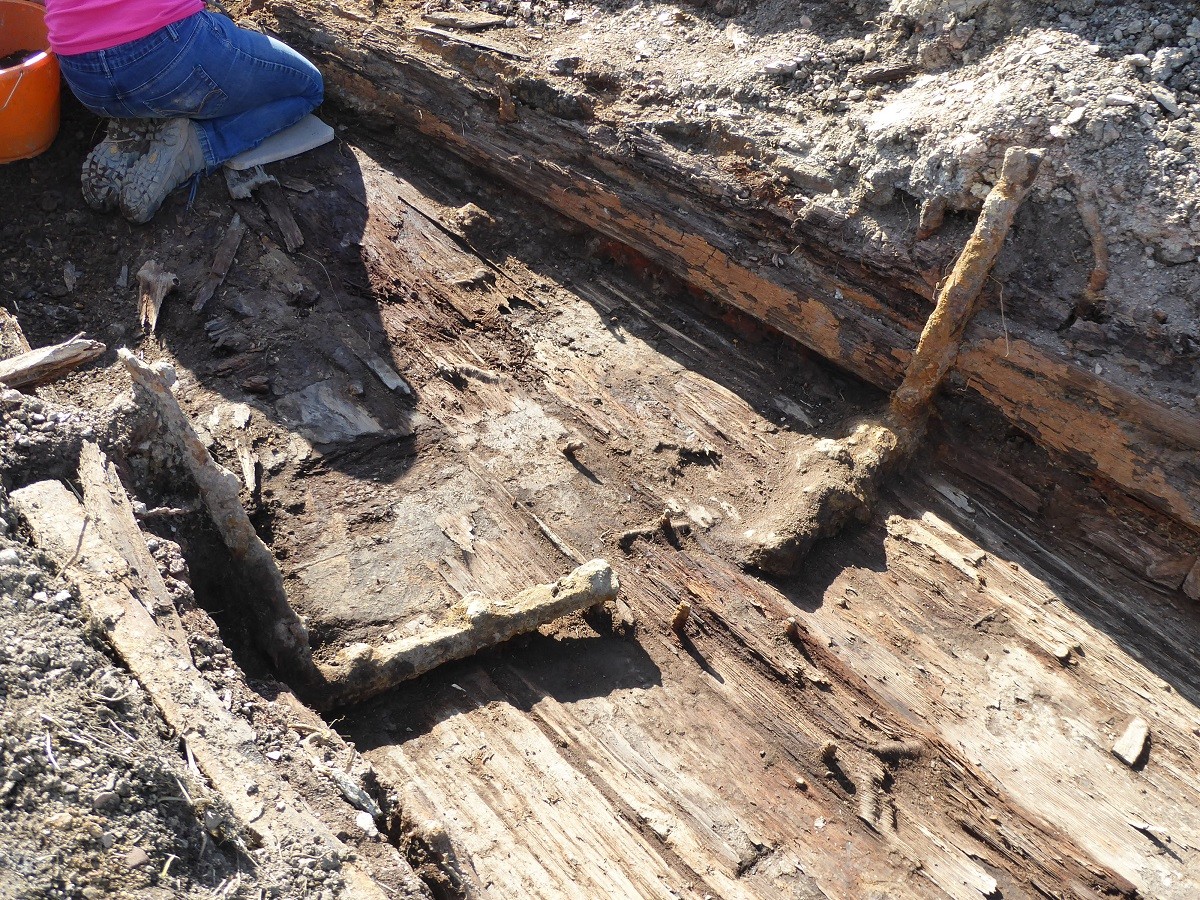
The knees – the L-shaped brackets – had been cleared.
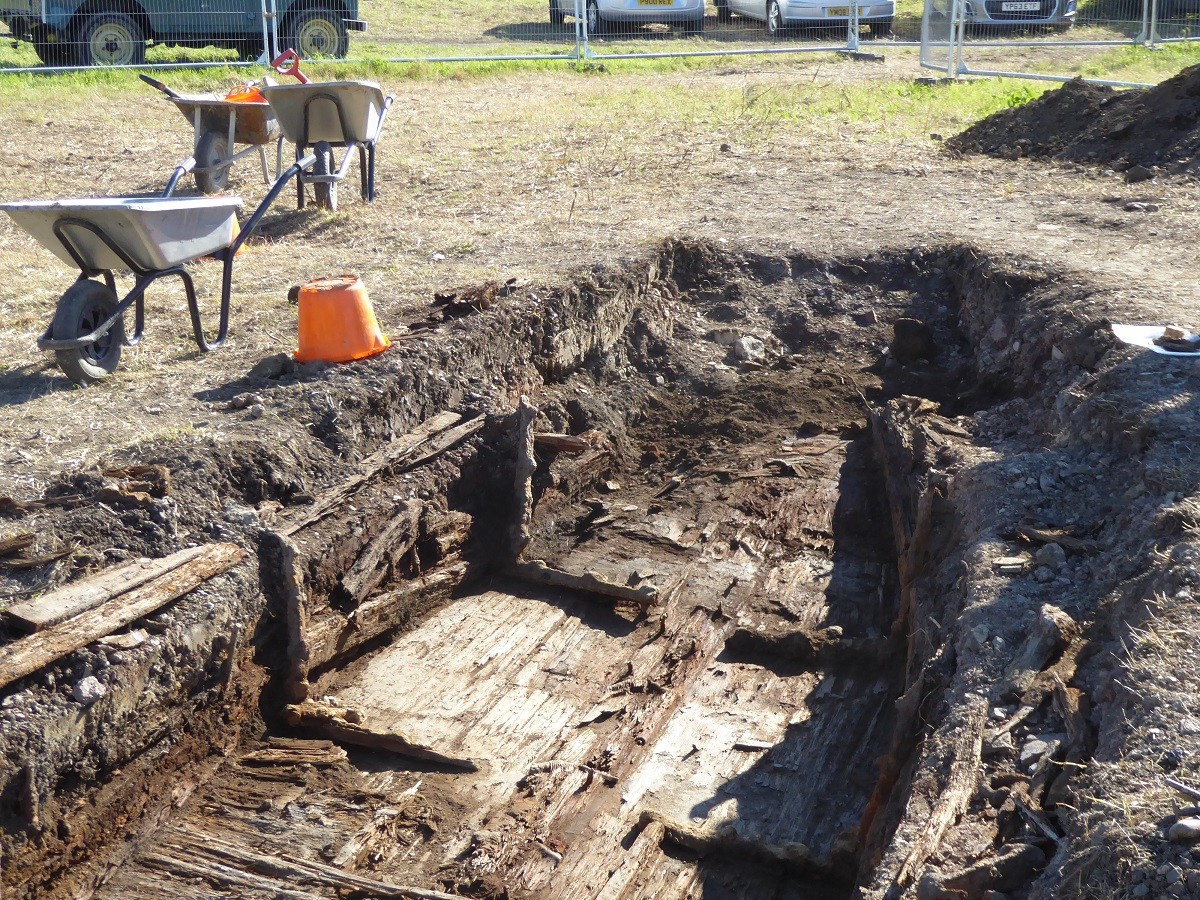
You could see the timbers curving in towards the stern of the boat.
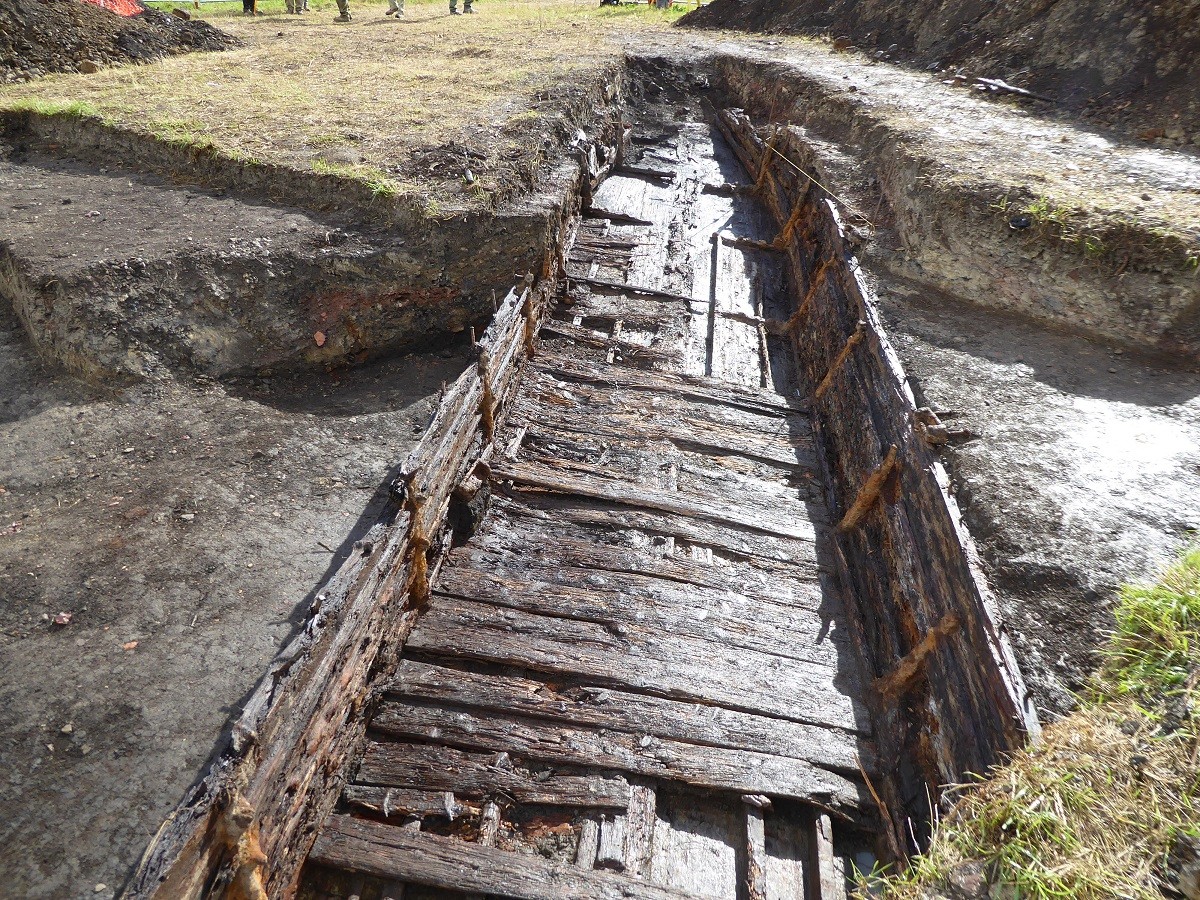
18th August. This was the maintenance boat at the close of play. Finding it so complete was amazing.
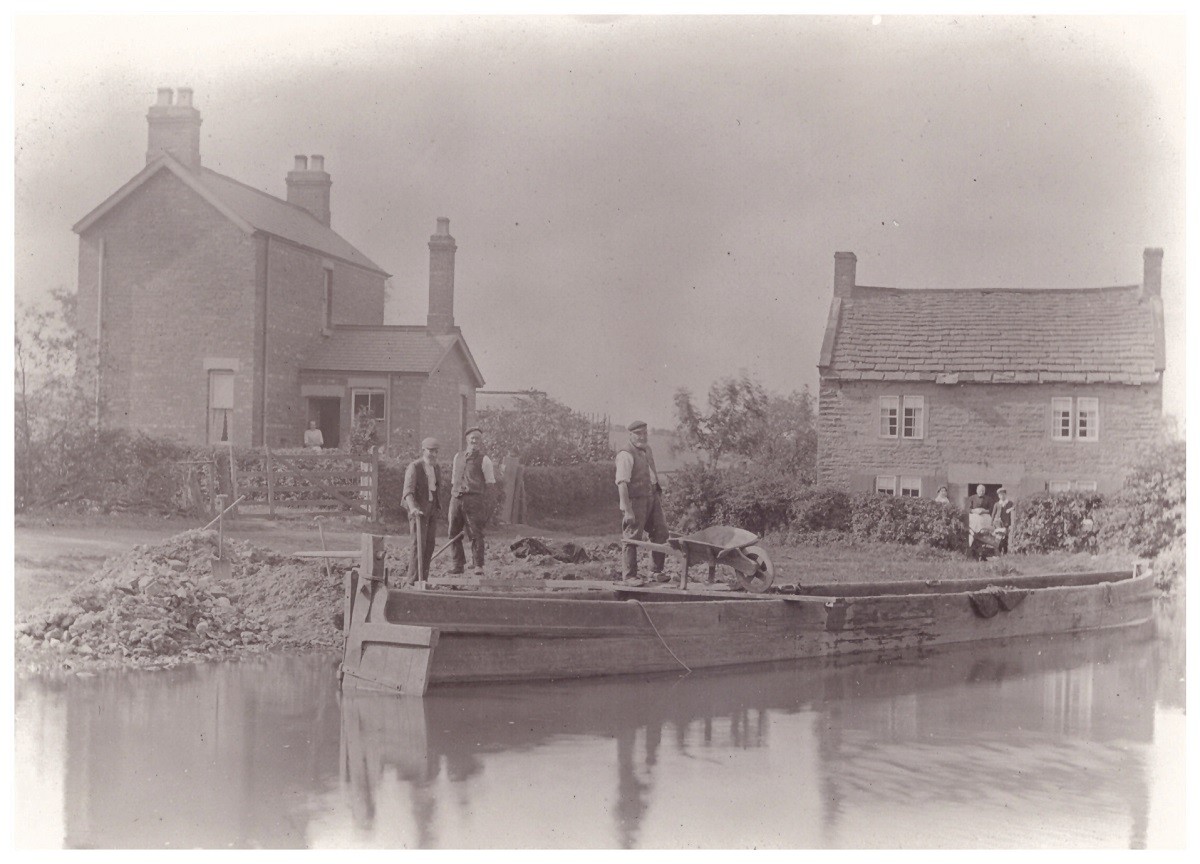
We believed that the boat was very similar to the above. This photo, courtesy Keith Gascoyne, bears the legend “Maintenance barge by the Old Work House, Killamarsh. Mr Kemp, who lived there, and Sam Spencer.” upon its reverse. Could this be the same boat? There would not have been many this size west of the Norwood Tunnel.
The archaeologists had worked out the construction. On the bottom were transverse planks. Then there was a layer of tar. A keelson, a really big thick timber, ran the length of the boat right down the middle, held in place by nails hammered upwards. The L-shaped brackets, called knees, were bolted into place, butting up to the keelson. Thinner planks, like floorboards, ran parallel to the keelson. More tar was put on this layer. Thin lengthways runners then held the floorboard planks. The side timbers were plated with iron.
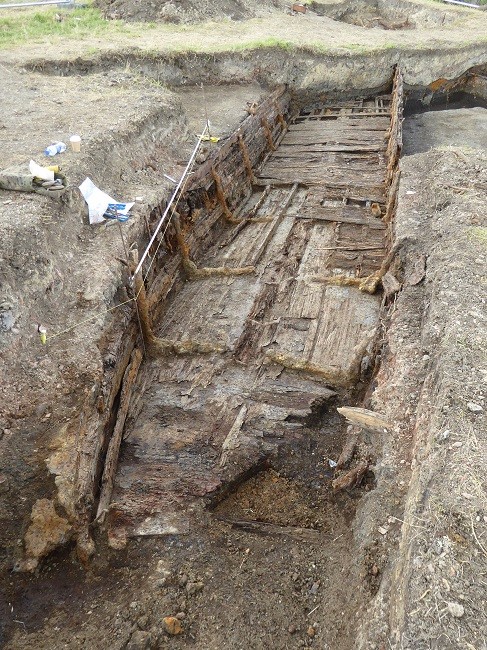
In this view you could see all the layers. The keelson and the runners were very clear running the length of the boat. The bow was at the bottom left. You could see the wood tapering in. The right hand side had been bashed away, presumably by the bulldozer that buried it.
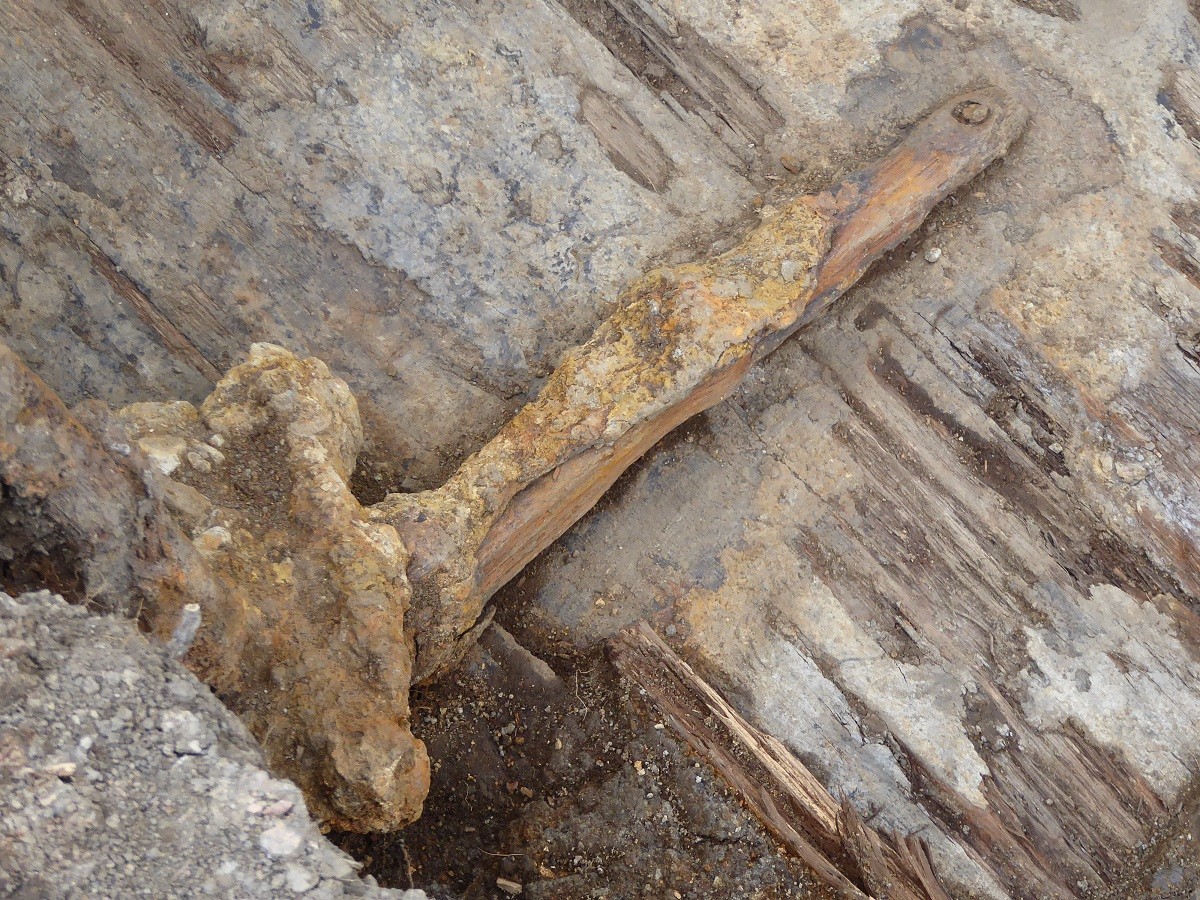
The rust had been knocked off this knee so that you could see the actual metal.
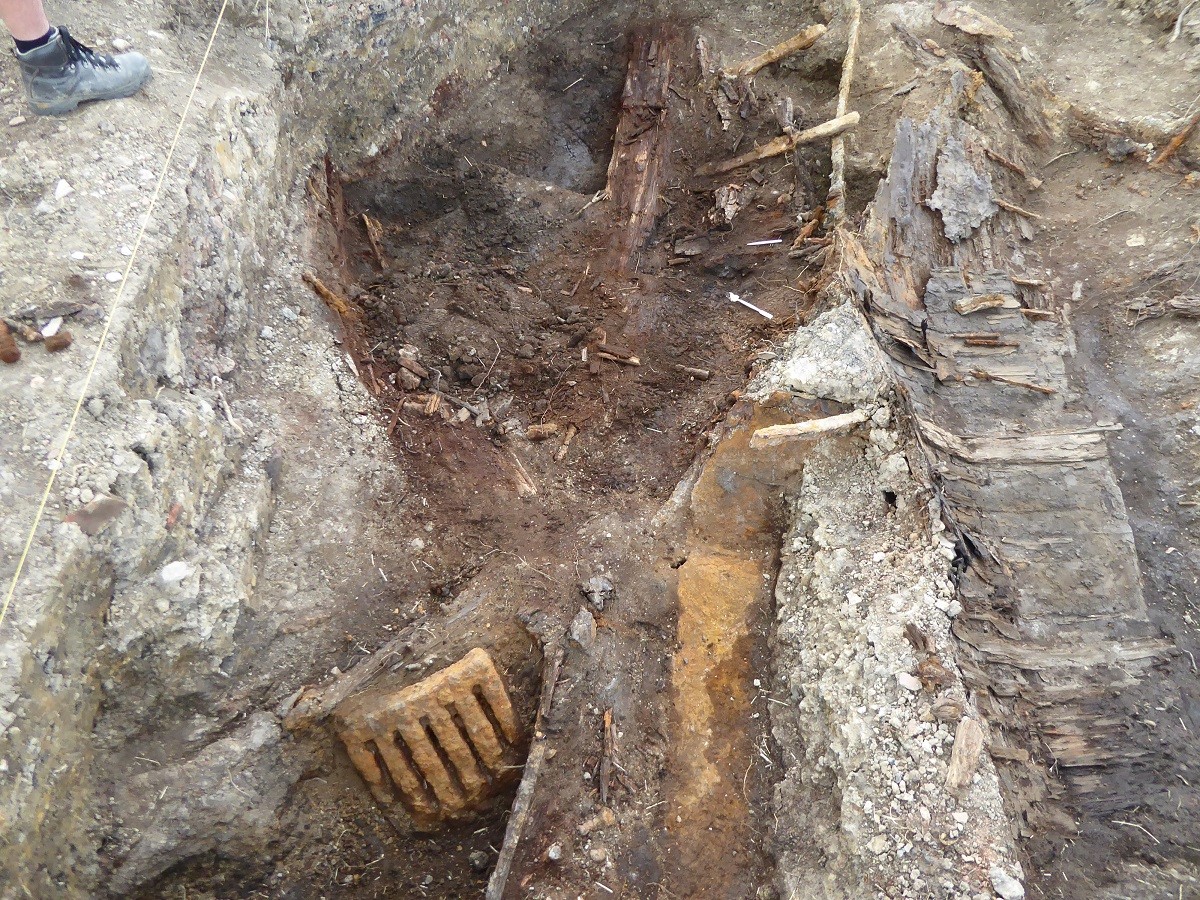
The other end of the maintenance boat was in Trench 3. It was bottom left. The remains of the Cuckoo boat were on the right. You could see the remains of a third boat tapering in at the centre top. Frustratingly there was no more time to investigate this. The dig ended today. Tomorrow (Saturday 19th) will be the Open Day, plus more recording. On Sunday (20th) it will all be filled back in.
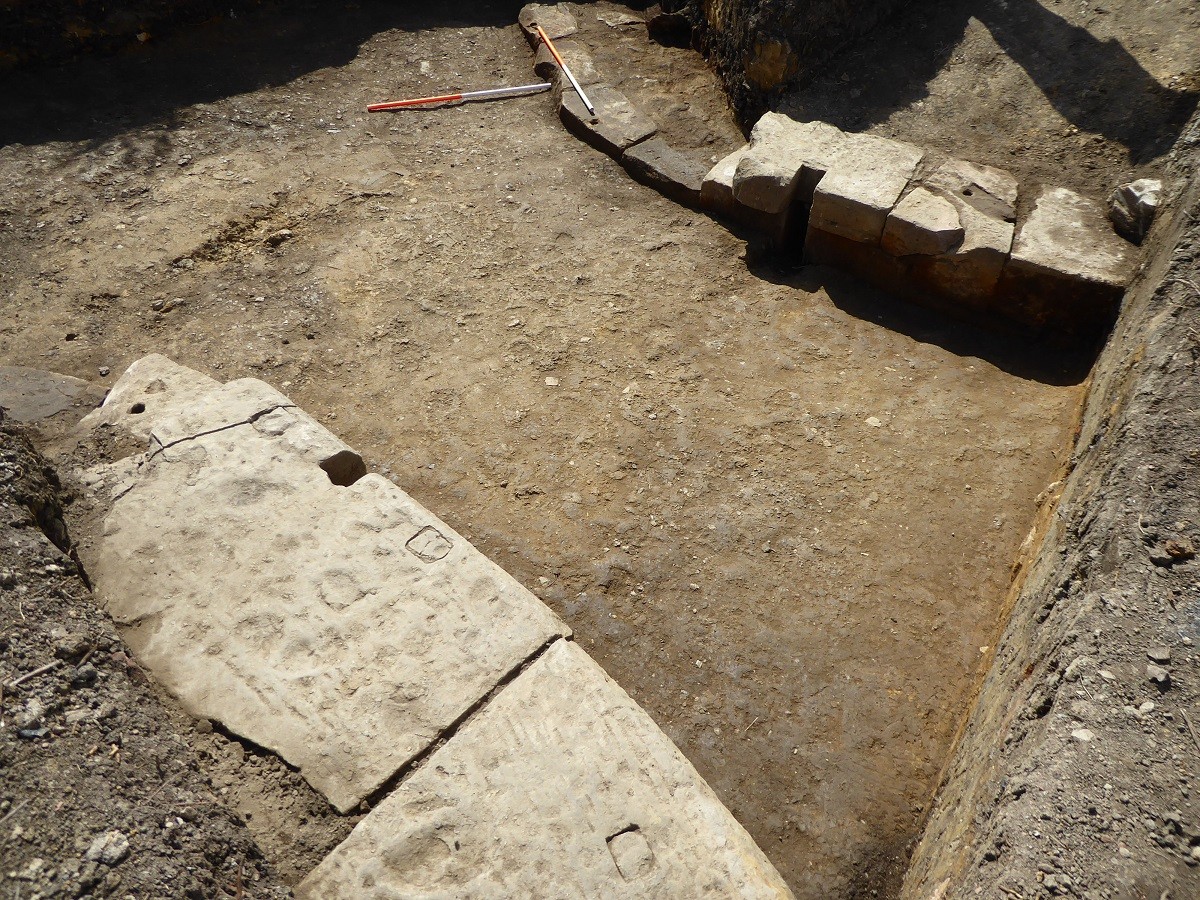
The Gas Works narrows had been cleaned up and were being recorded. Note the holes. Had the stone top right once borne a railway sleeper chair or the seating for a lock gate ground anchor?
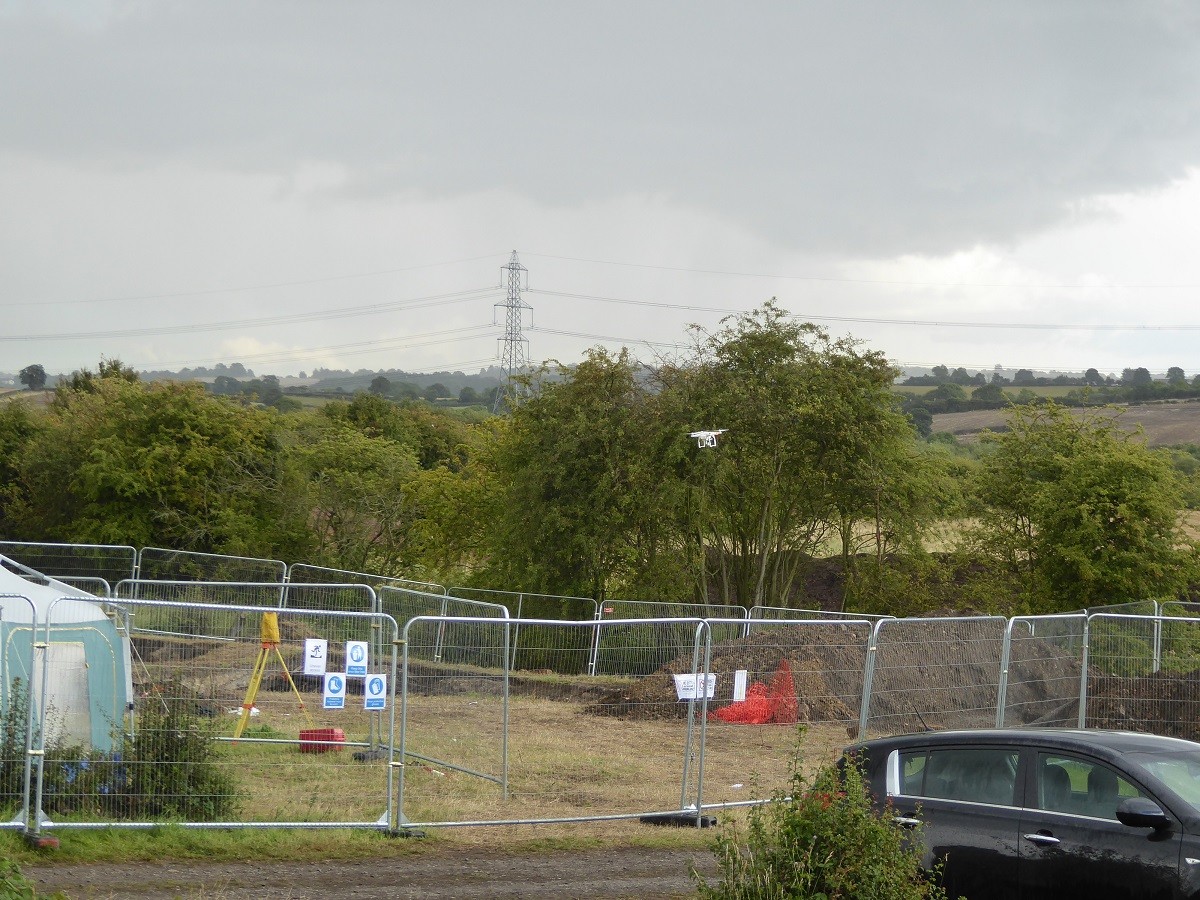
Elmet Archaeological Services called in someone to do an aerial survey using this drone. We hope to be able to show you the resulting photos at some stage.
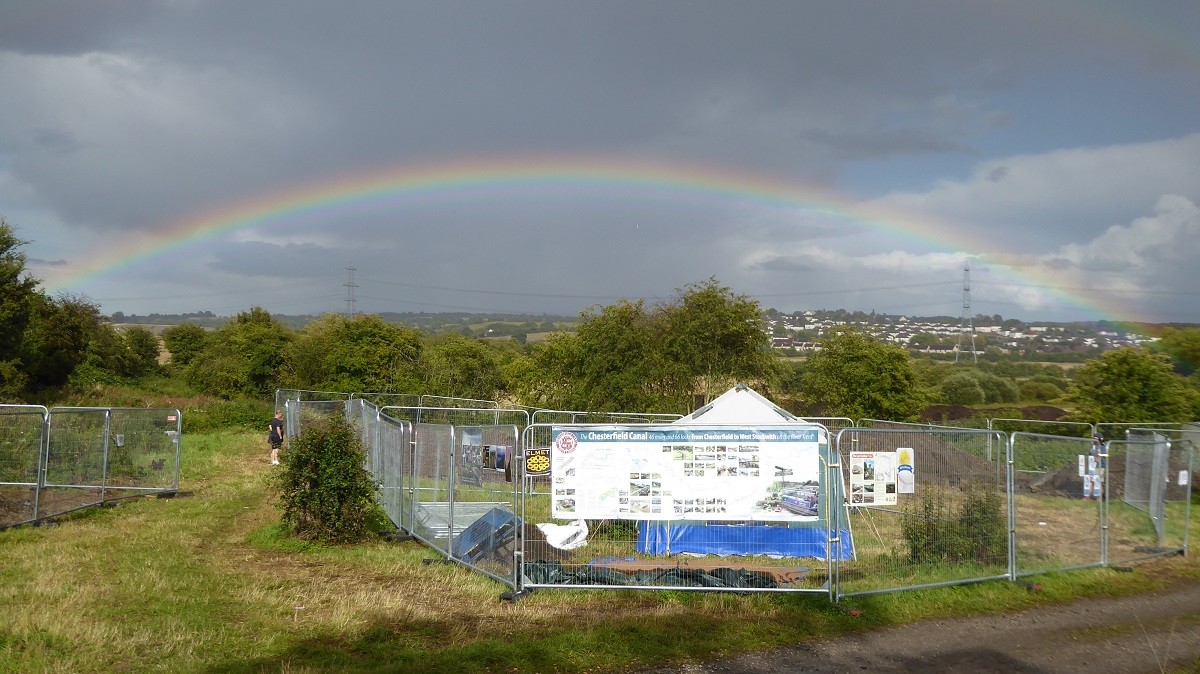
Following a shower, a rainbow appeared.
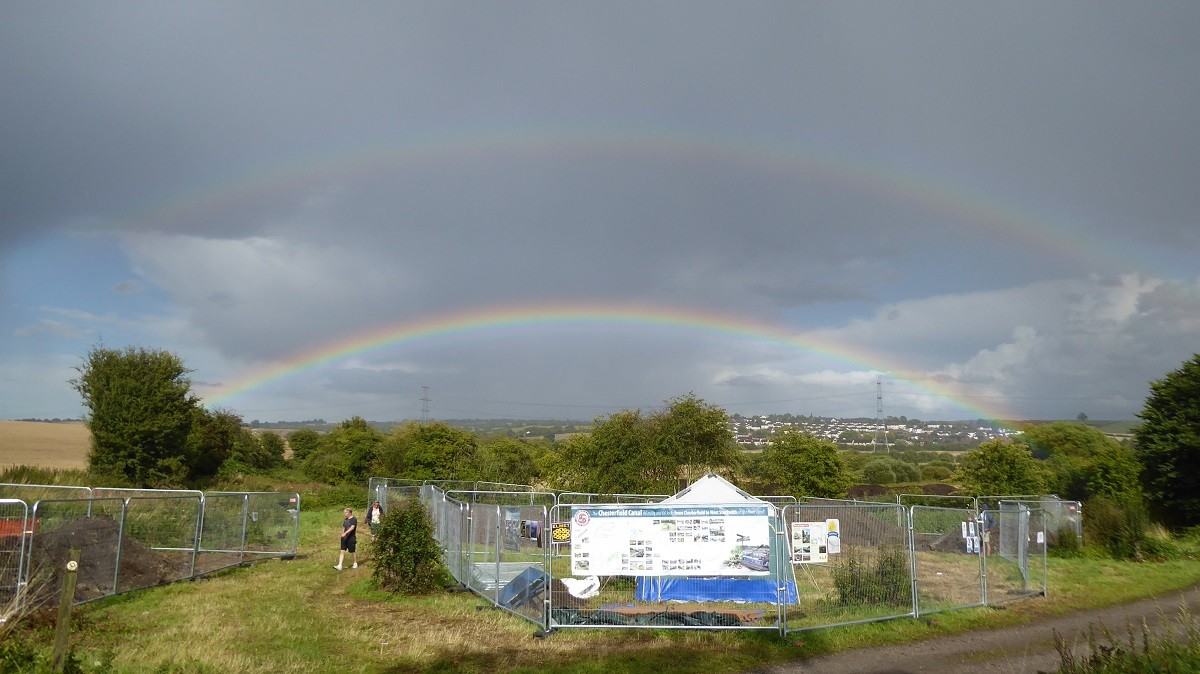
In fact it was a double rainbow.
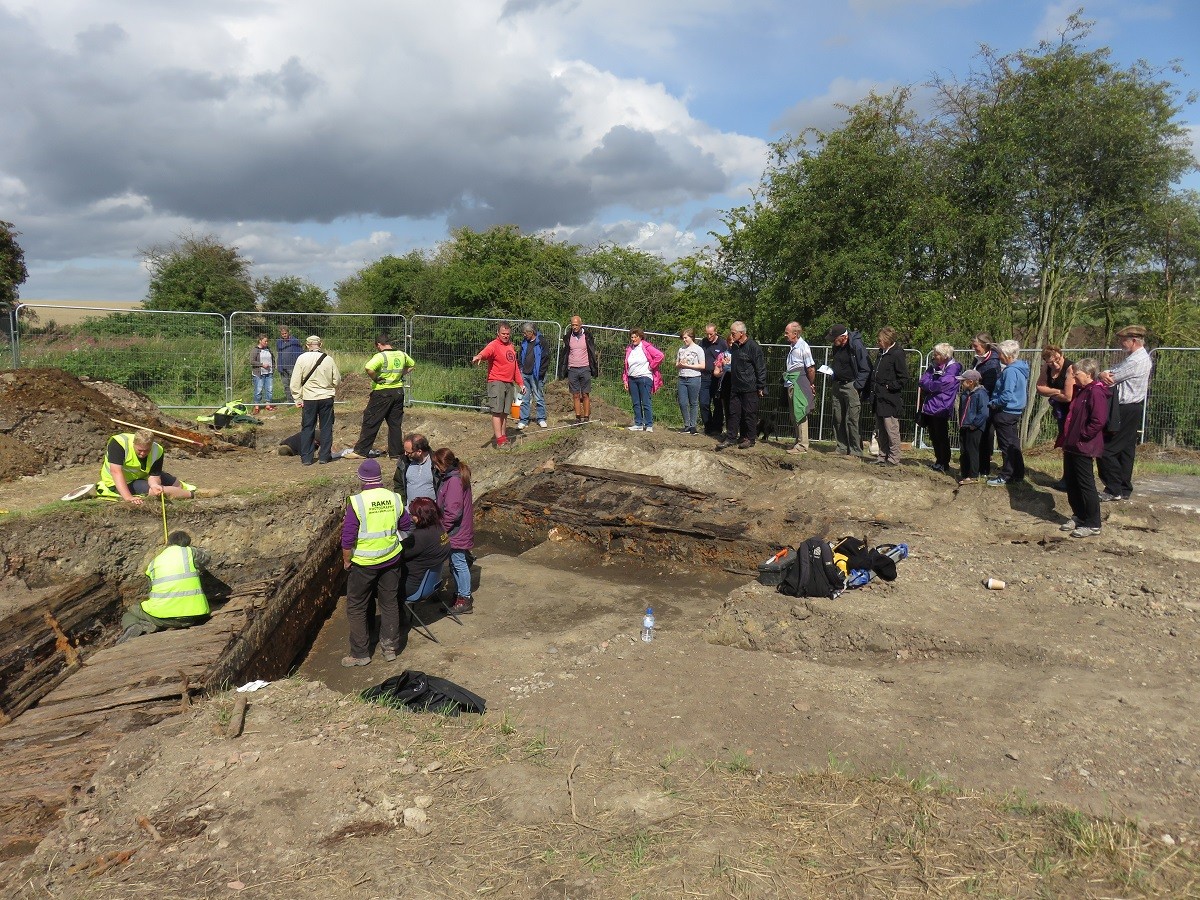
19th August. An amazing day. Hundreds of people came and had guided tours. (Photo by Margaret Edge)
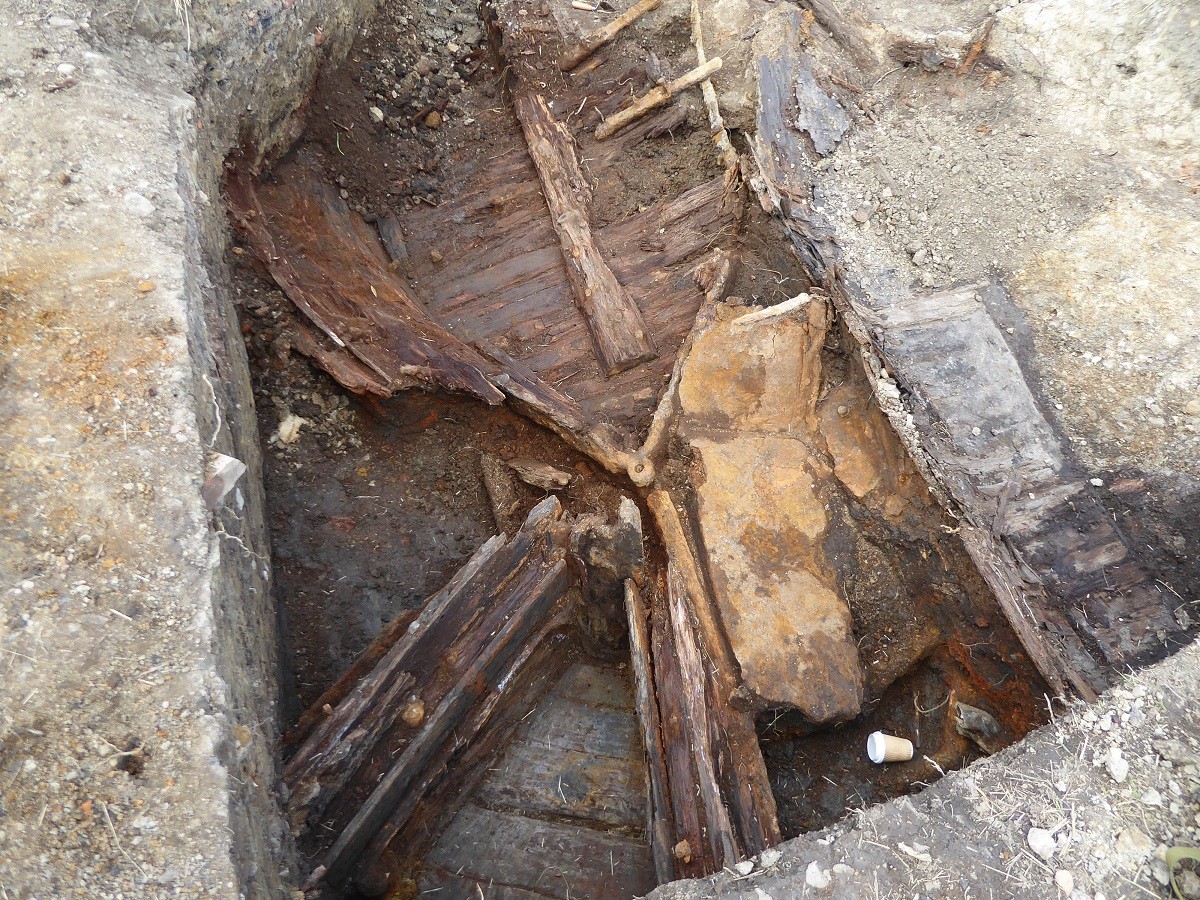
The guys from Elmet Archaeological Services were supposed to be doing some final recording before finishing. Fat chance! Instead they unearthed more of Trench 3. As a result everything was much clearer.
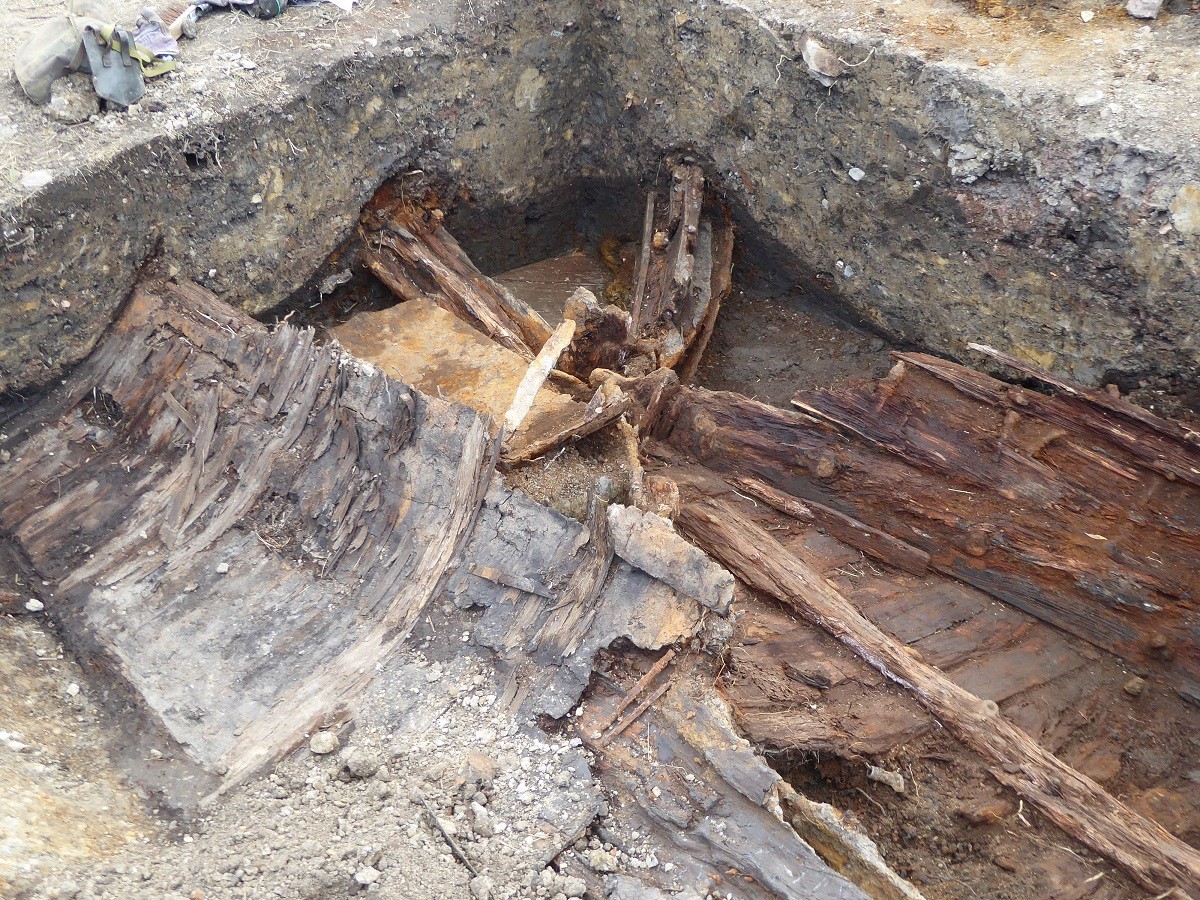
There were definitely three boats – Cuckoo on the right, maintenance boat at the top centre, another maintenance boat bottom right. They had worked out that the first maintenance boat was the first in position, then came the second maintenance boat with the Cuckoo last. You could see that the Cuckoo was on top of the others. This would have meant that it was higher up, which explains why it had rotted more and suffered most from the bulldozing in 1972.
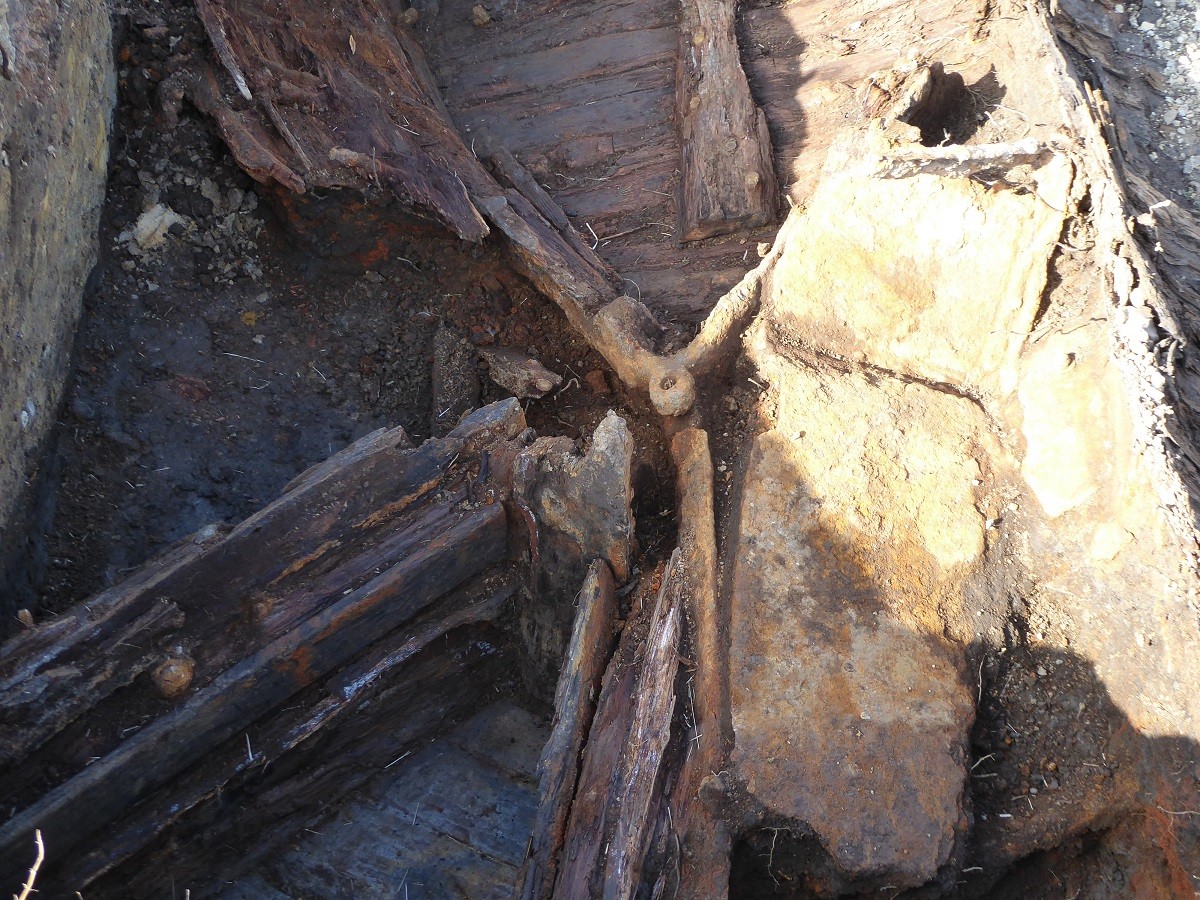
The bow of the maintenance boat was cleared down to floor plank level.
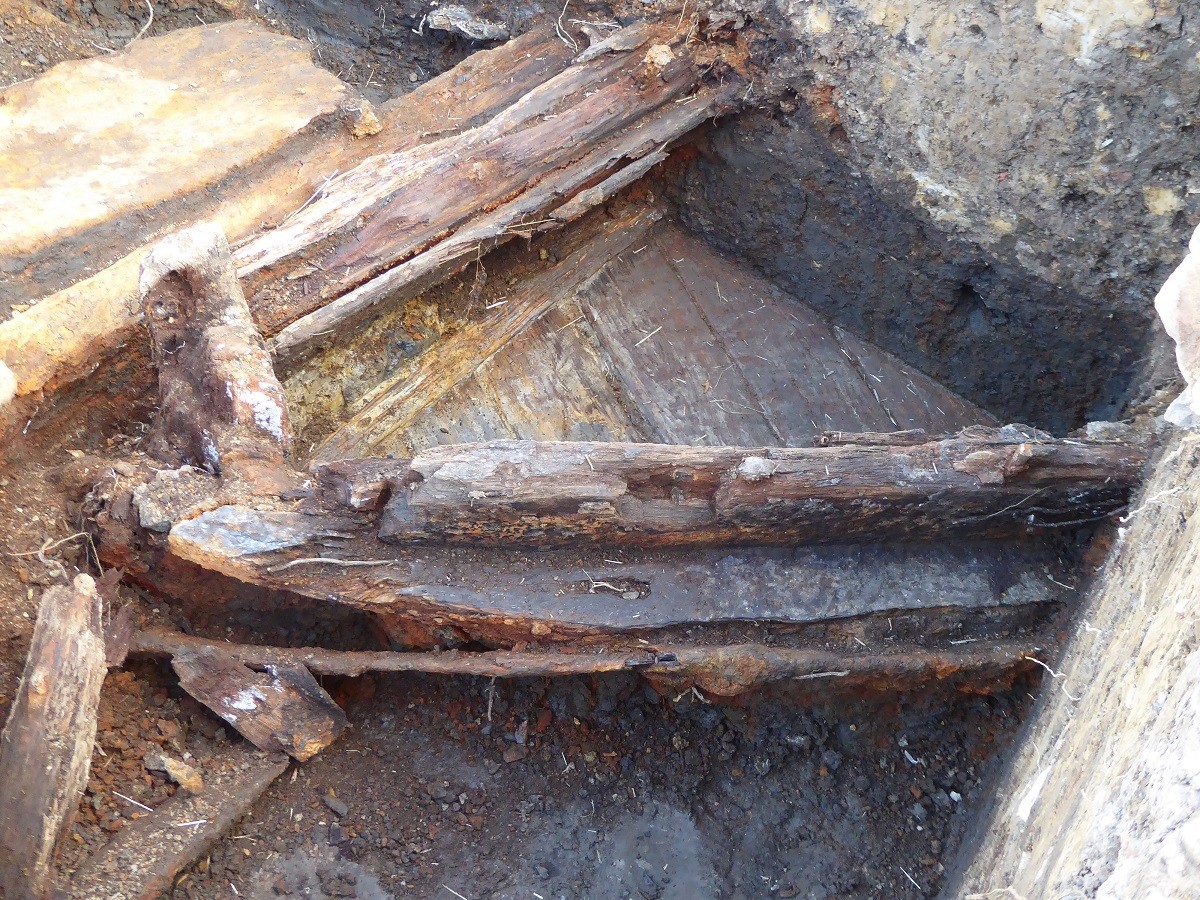
The rubbing strakes – the bits that stick out to protect the rest of the hull – were obvious; they were clad in metal which is peeling off. You could clearly see the rubbing strakes on the old photo above (18th August).
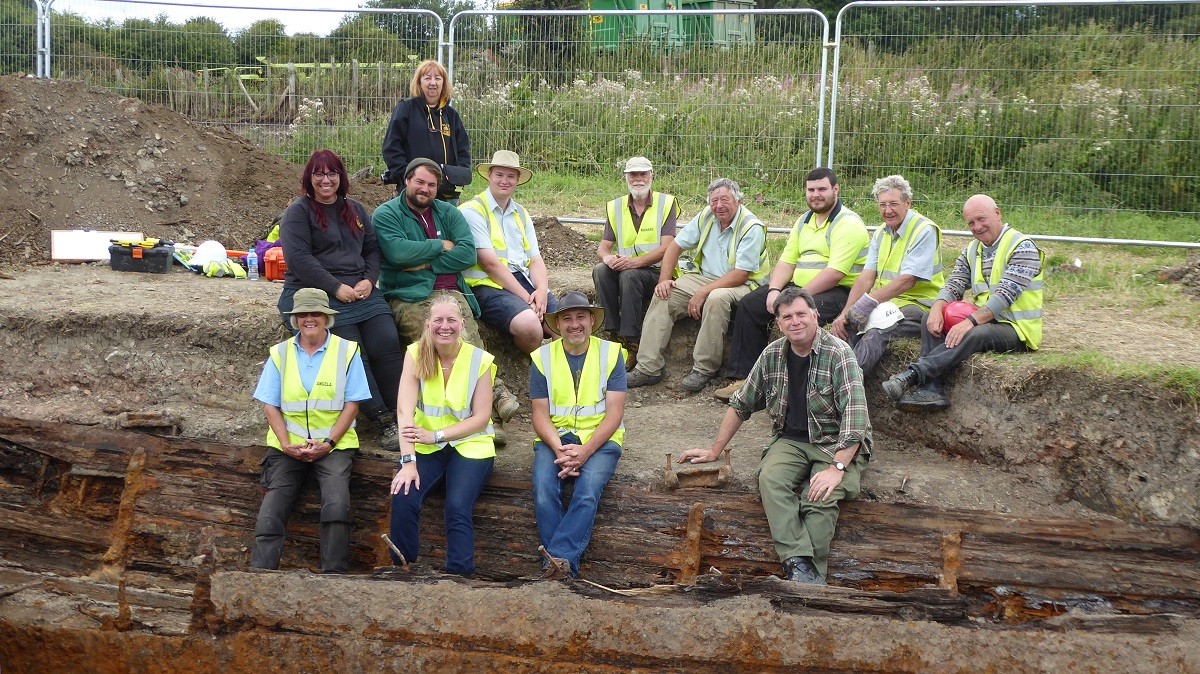
20th August. Our last day. Here are most of the key people who had made this such a memorable event. Missing were Vicky and Mark who masterminded all the bookings and are all round good eggs.
The towpath trench, Trench 2, was infilled.
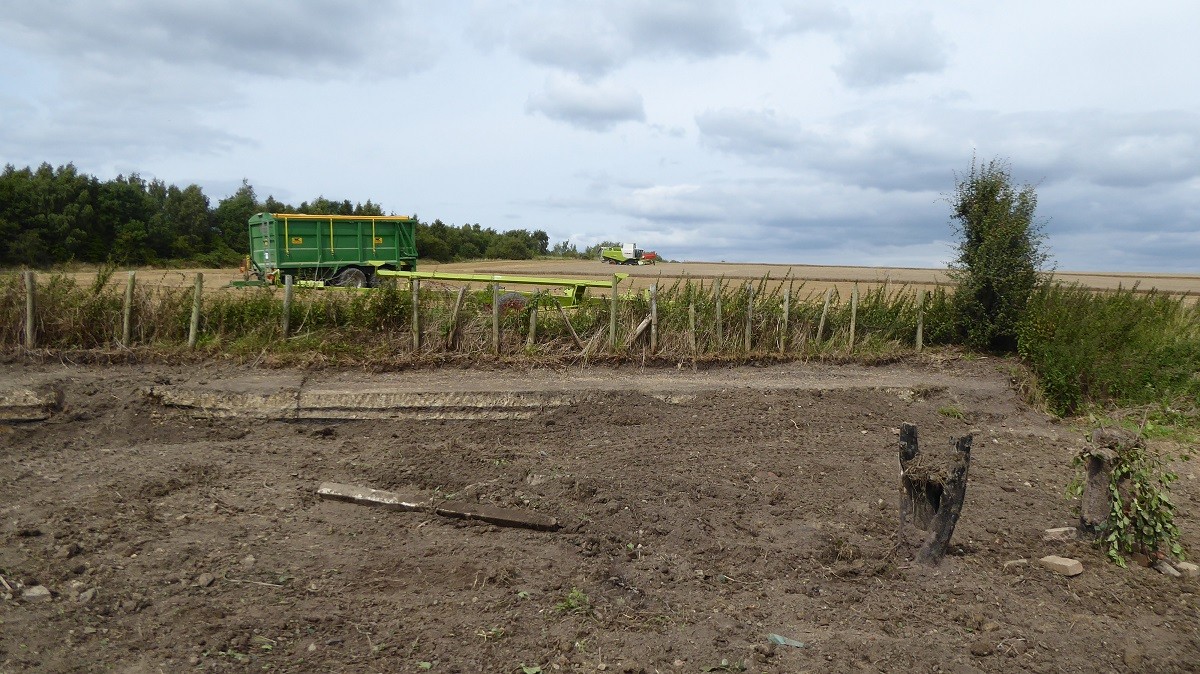
This was all that remained of those textbook sections. Note that Mr Jessop was harvesting.
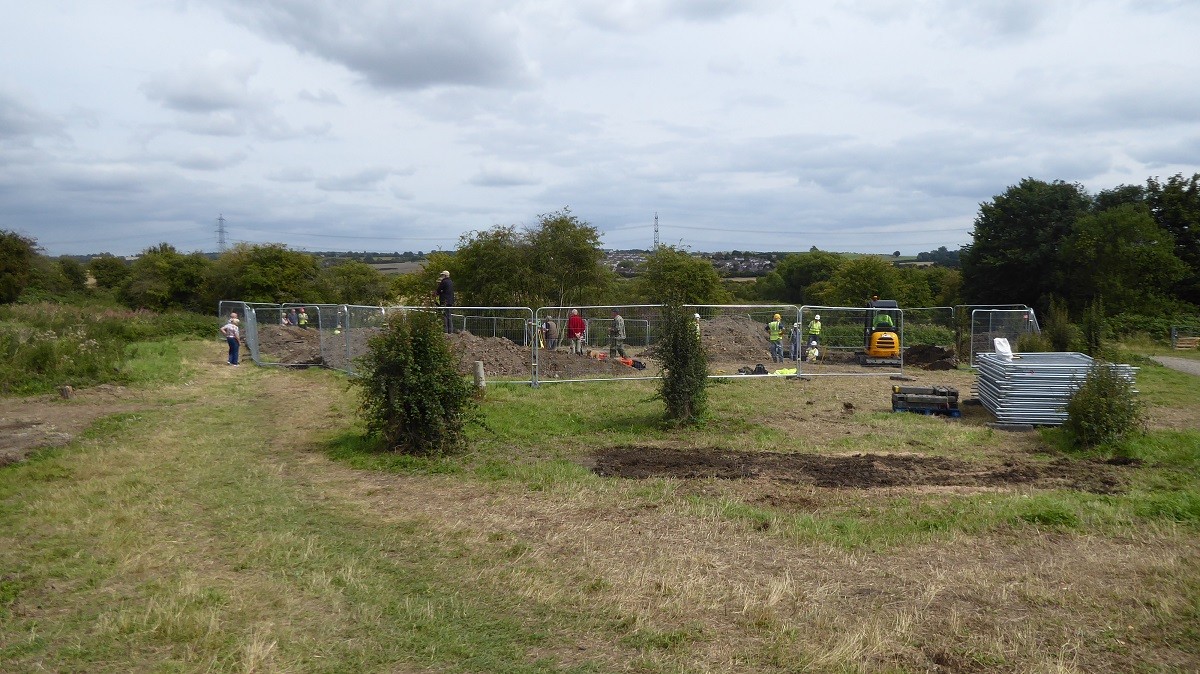
The sandpit and gazebo had gone.
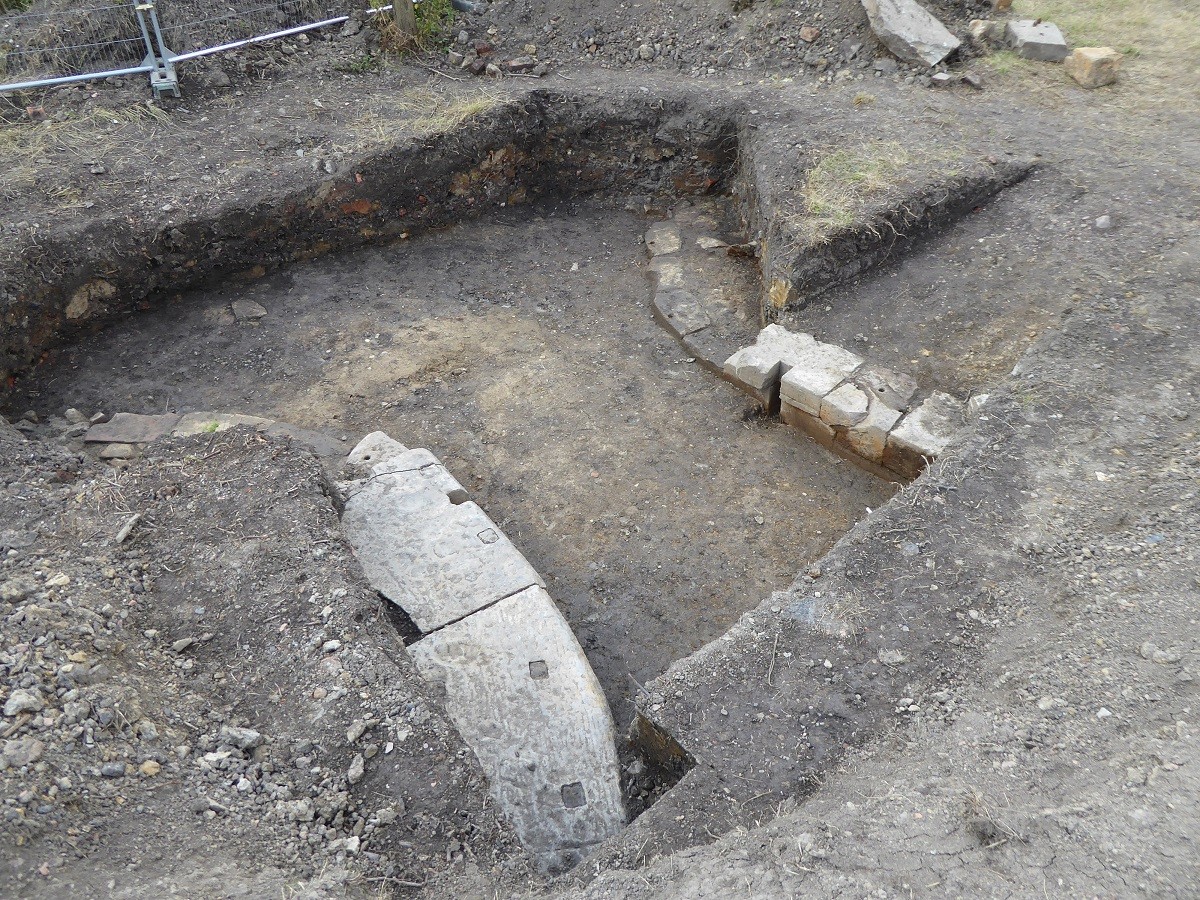
Lots of questions remained unanswered, e.g. at the narrows, were these holes for fixings or for hooks to raise the stones or were they just recycled stones?
We will not find out until the narrows are reopened when the canal is restored.
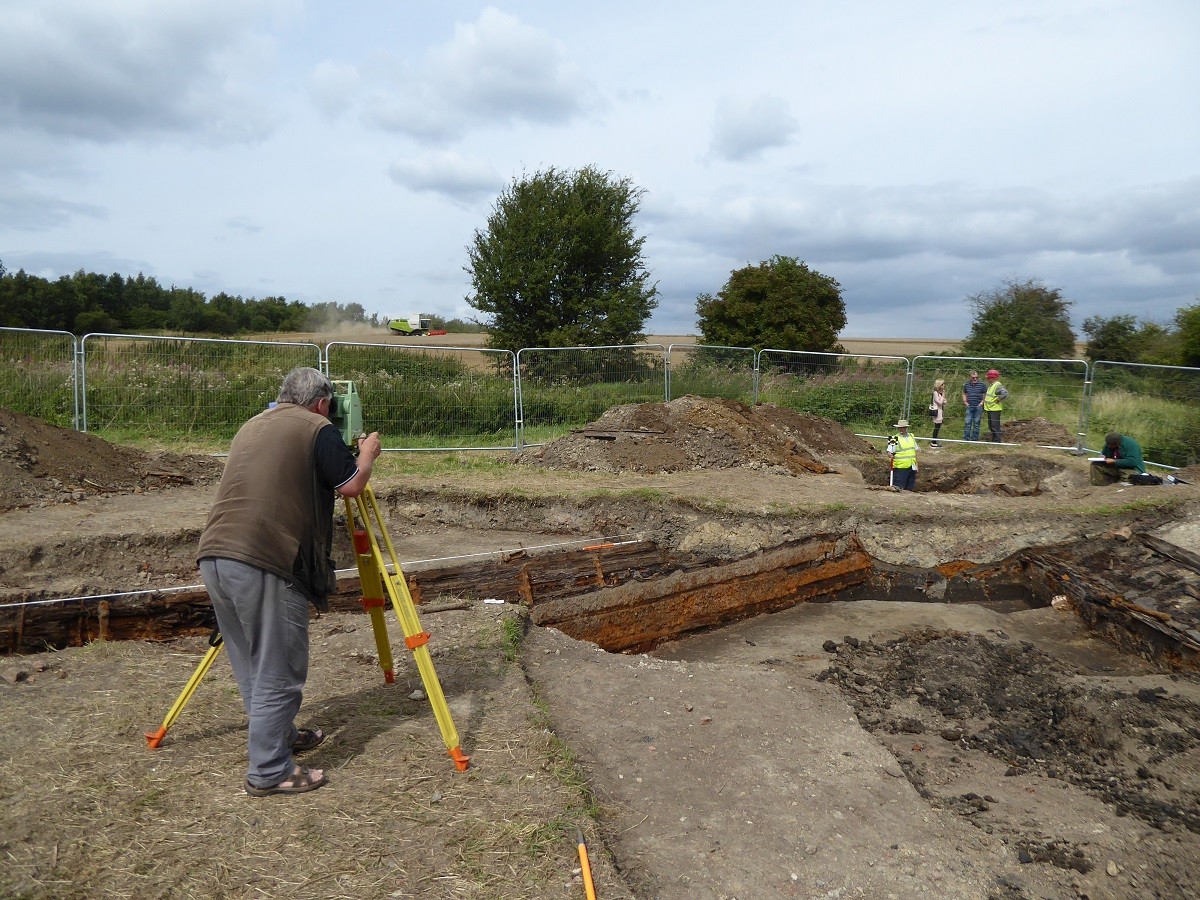
There were still a few readings to be taken.
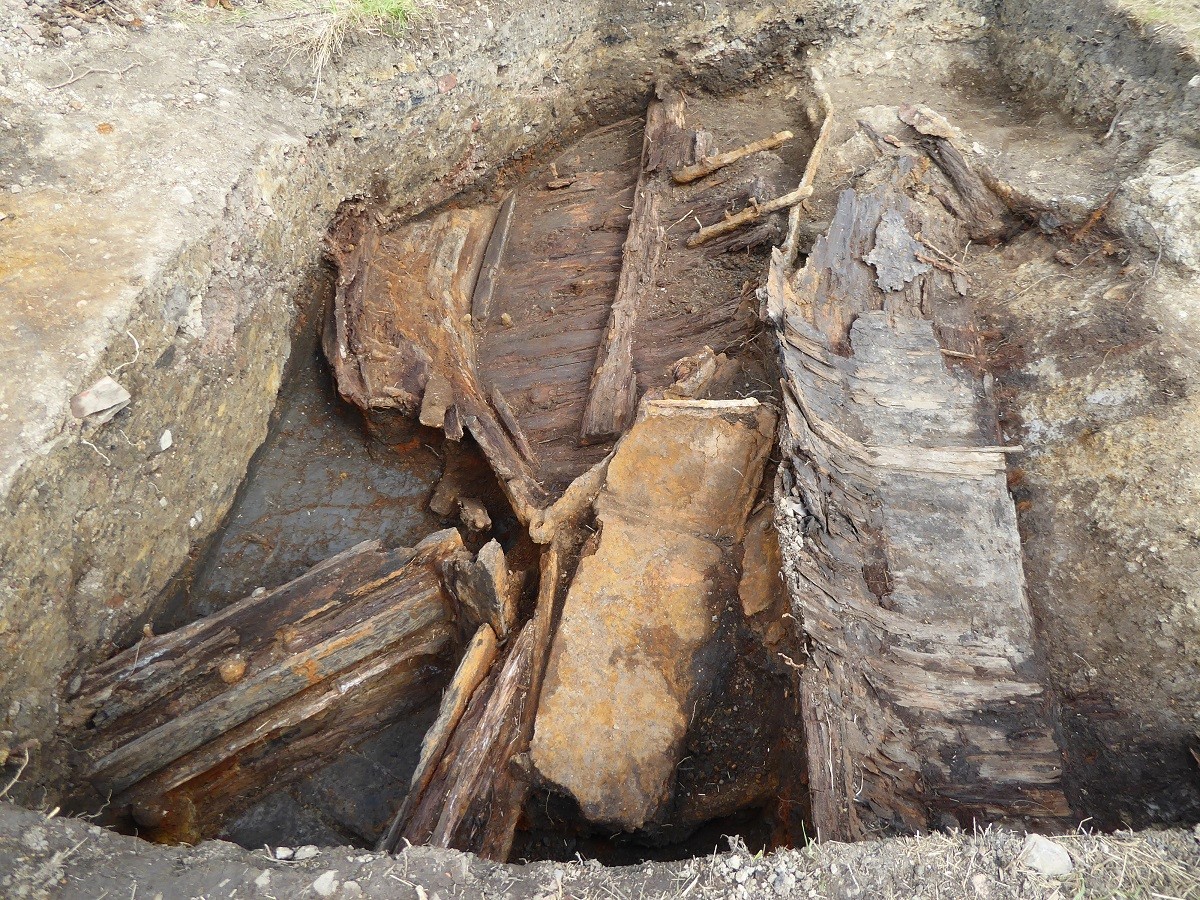
The glories of Trench 3 were being unravelled.
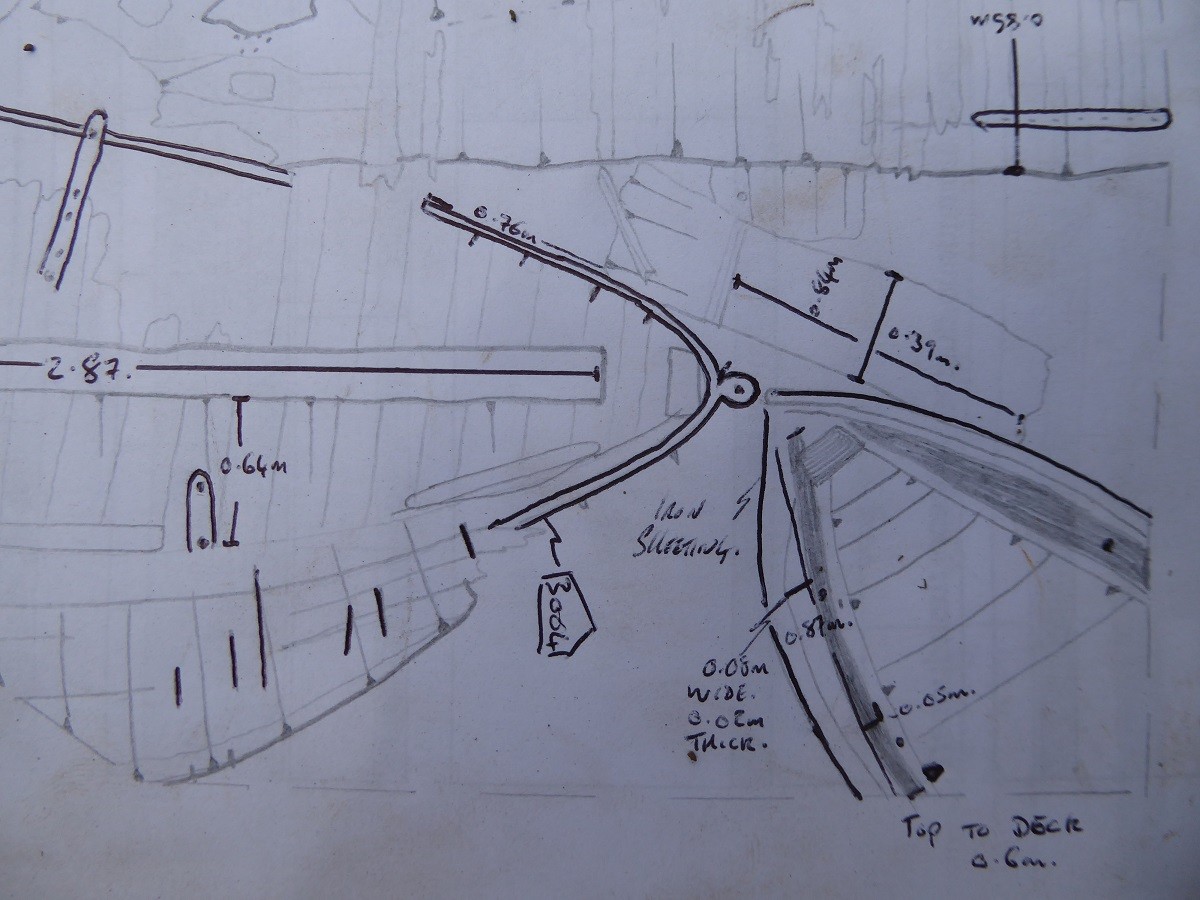
This was Dane’s aide memoire.
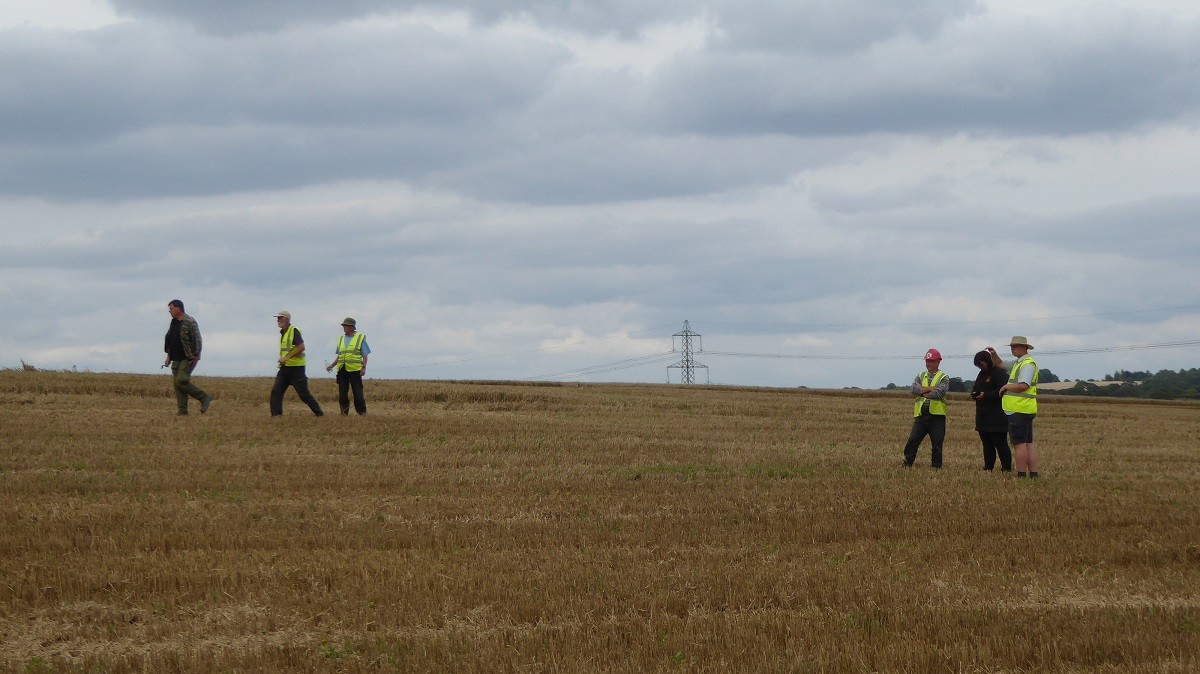
This photo demonstrates that there is archaeology everywhere. Some of the guys from Elmet Archaeological Services had noticed an apparent irregularity in Mr Jessop’s field. As soon as it had been harvested, they asked for permission to go and investigate.
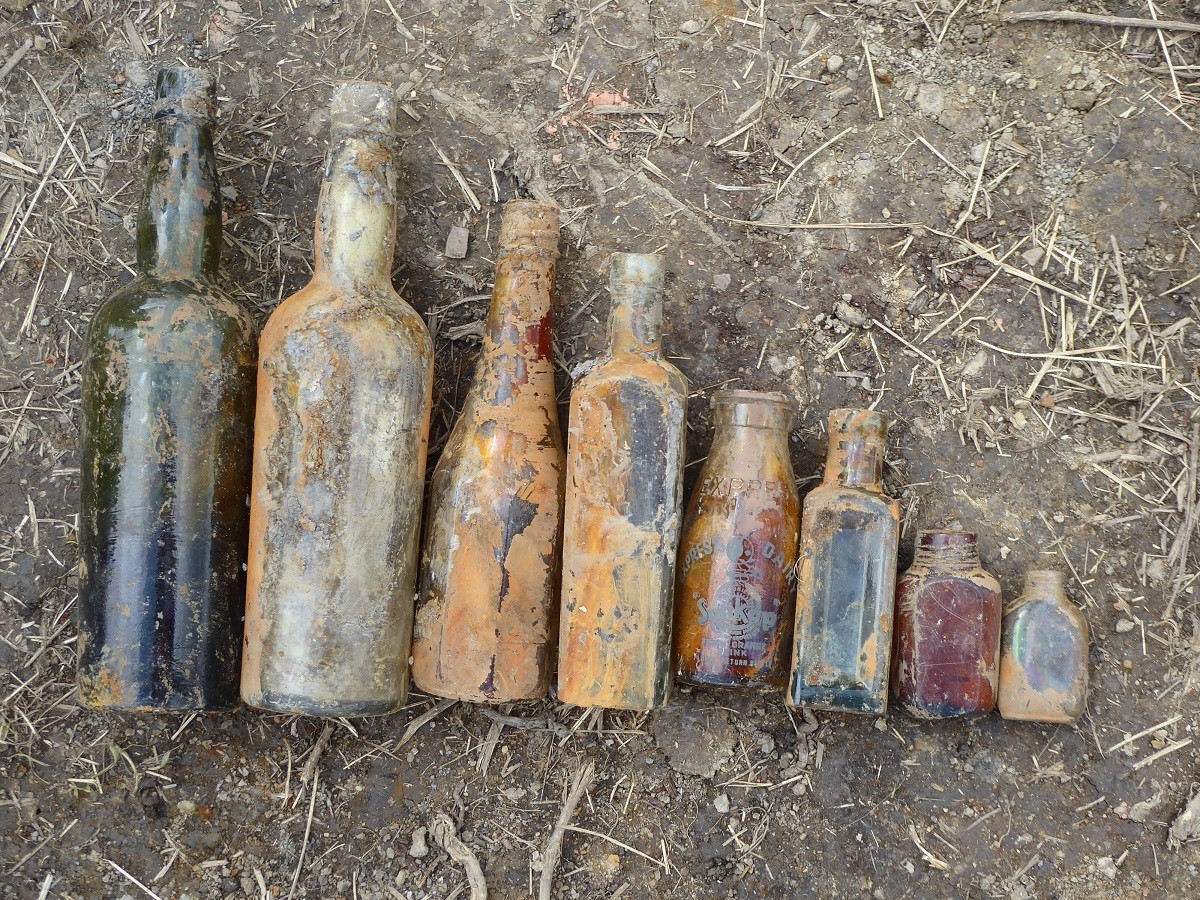
These bottles might not be valuable, but they looked cute.
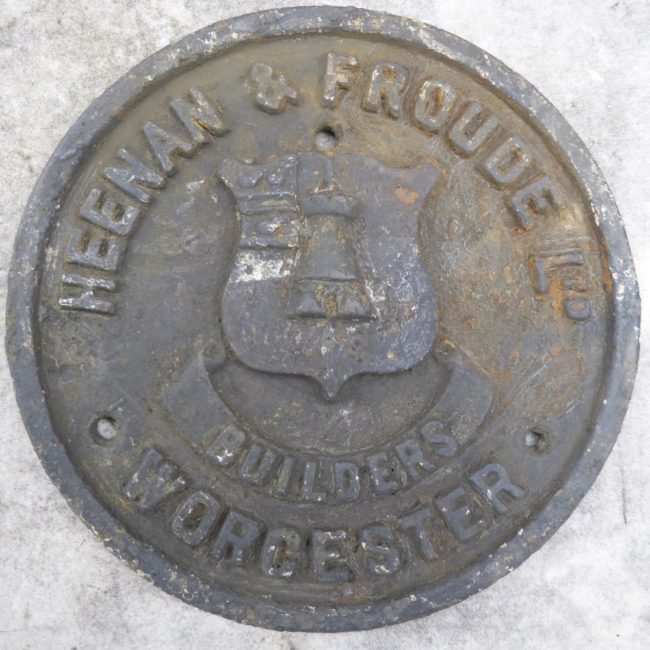
This plaque was dug up from the railway bridge site.
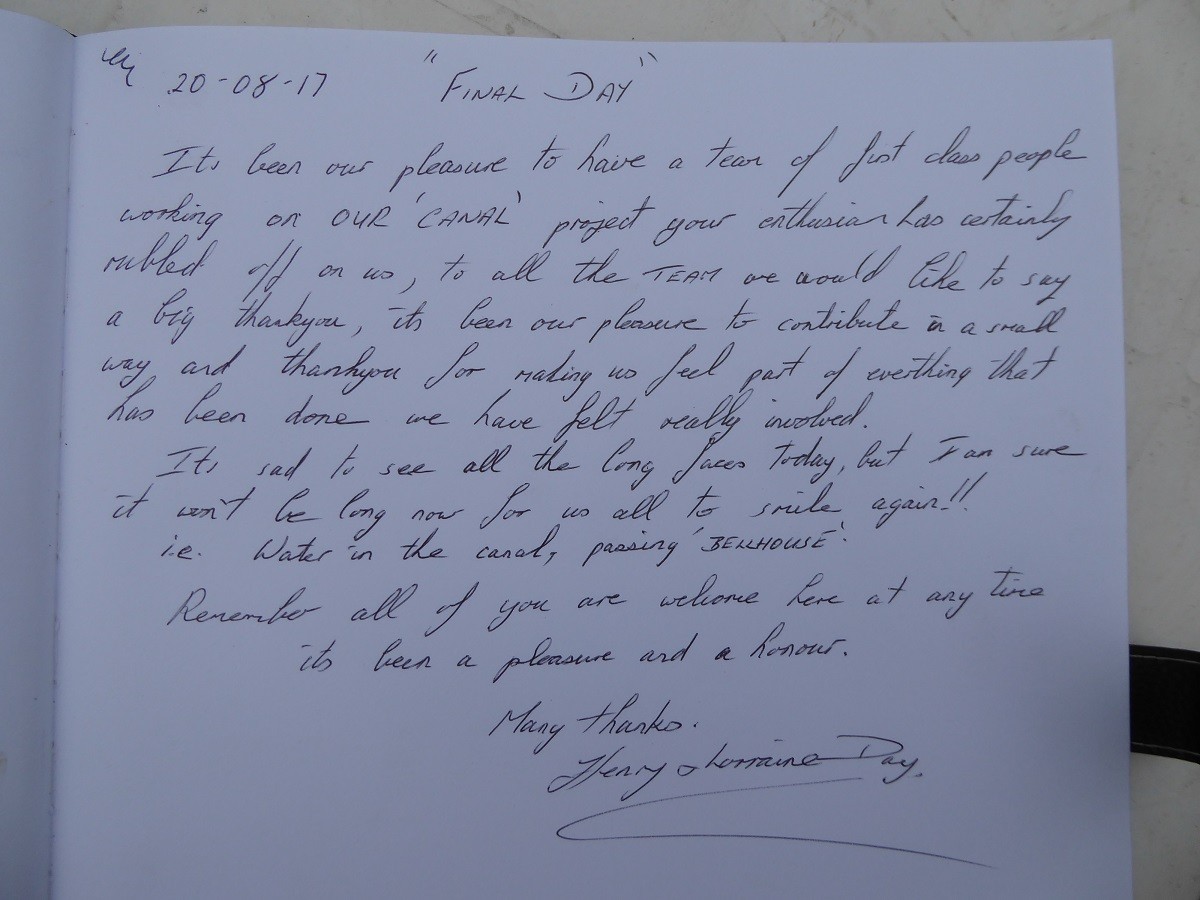
None of this could have happened without the invaluable help of Henry and Lorraine Day who let us use their field and who could not have been more helpful and hospitable. We owe them a great debt of gratitude.
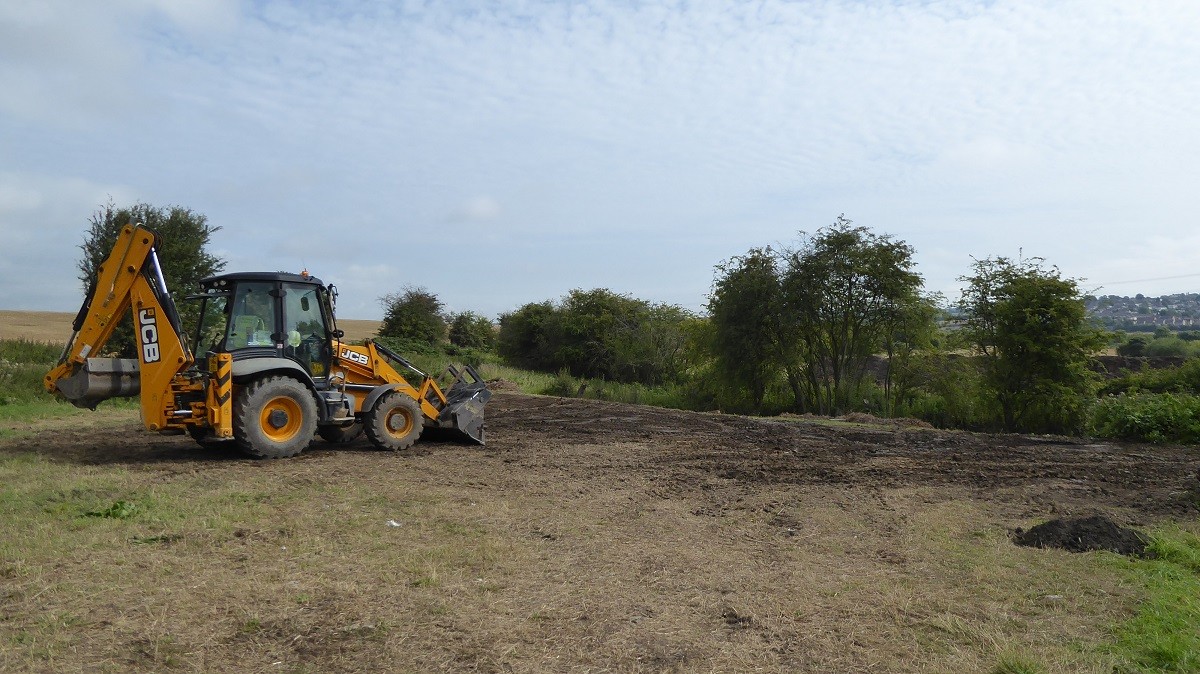
21st August. The last day on site and nothing to see.
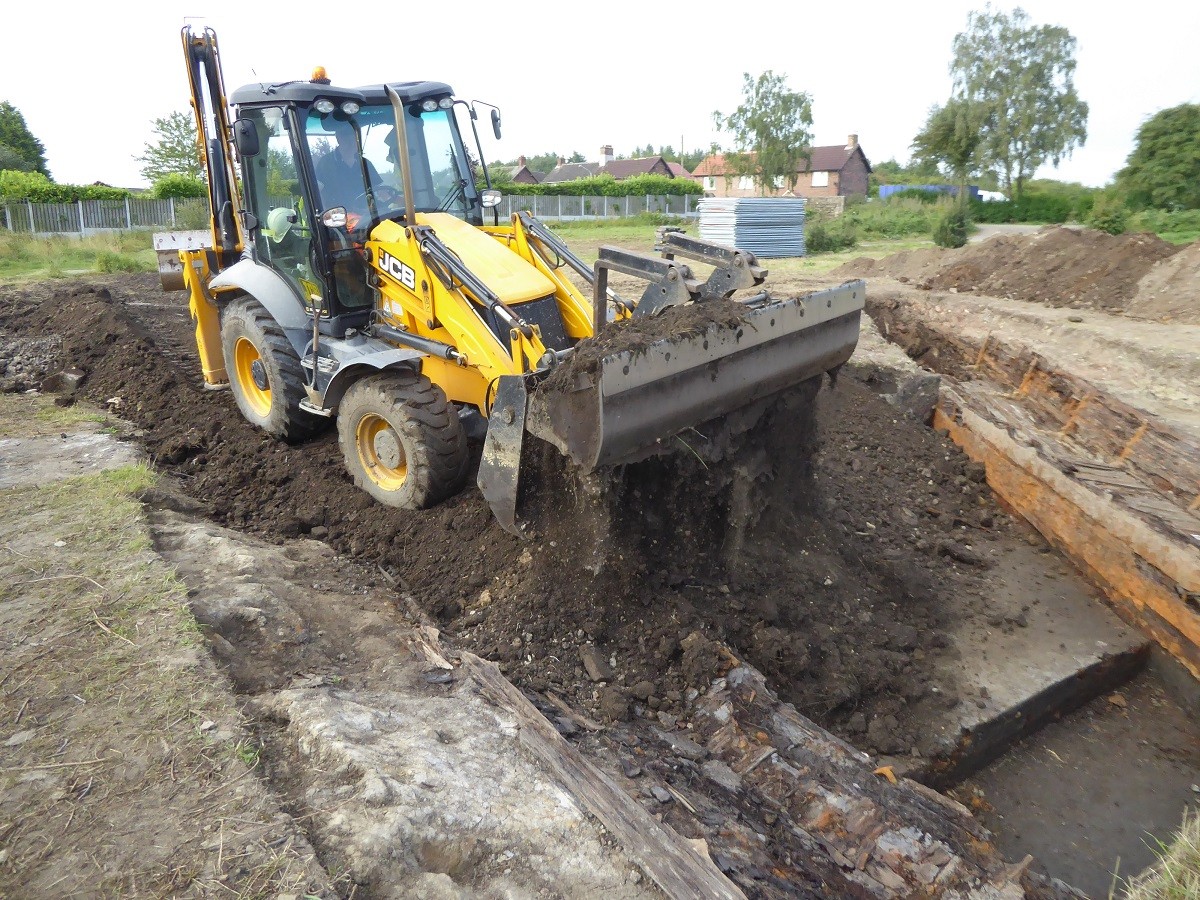
First to be covered was the Cuckoo boat.
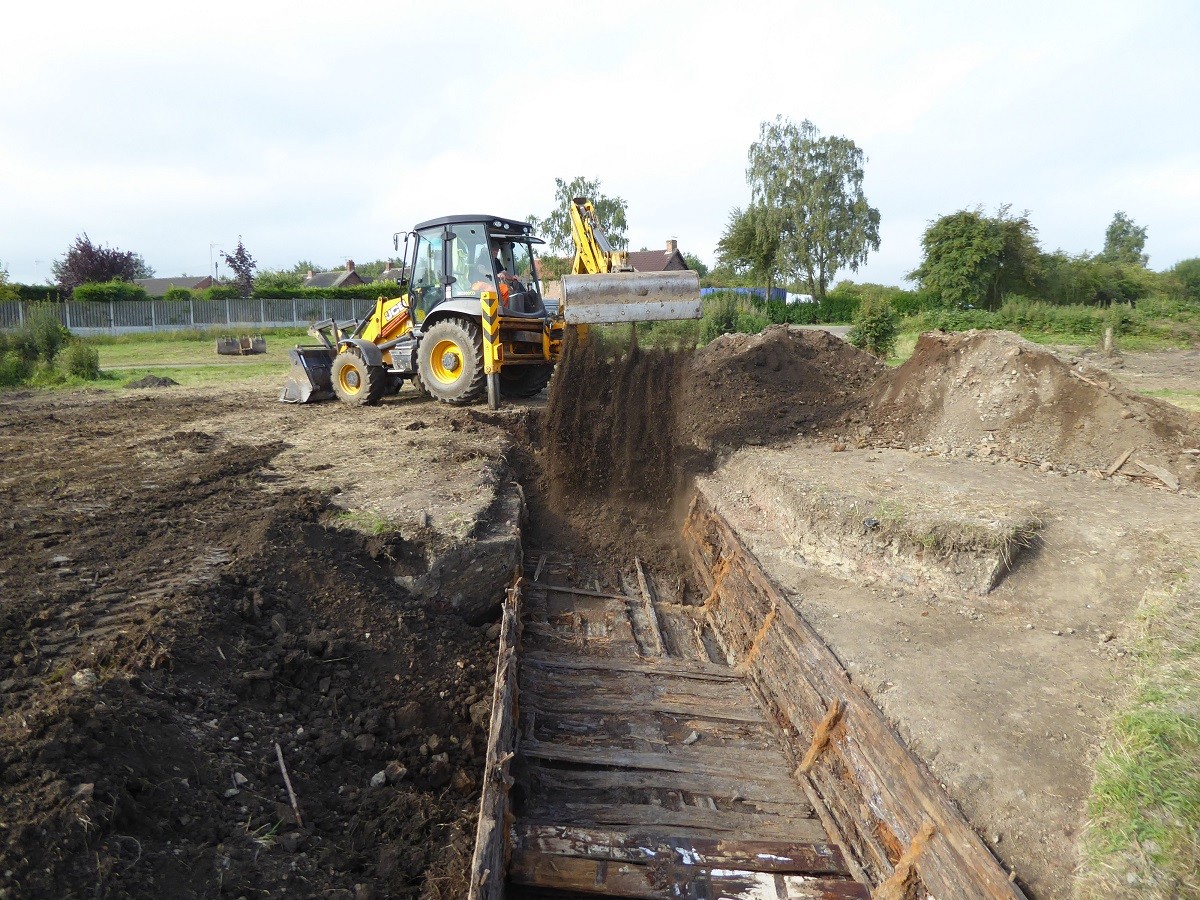
Next came the maintenance boat.
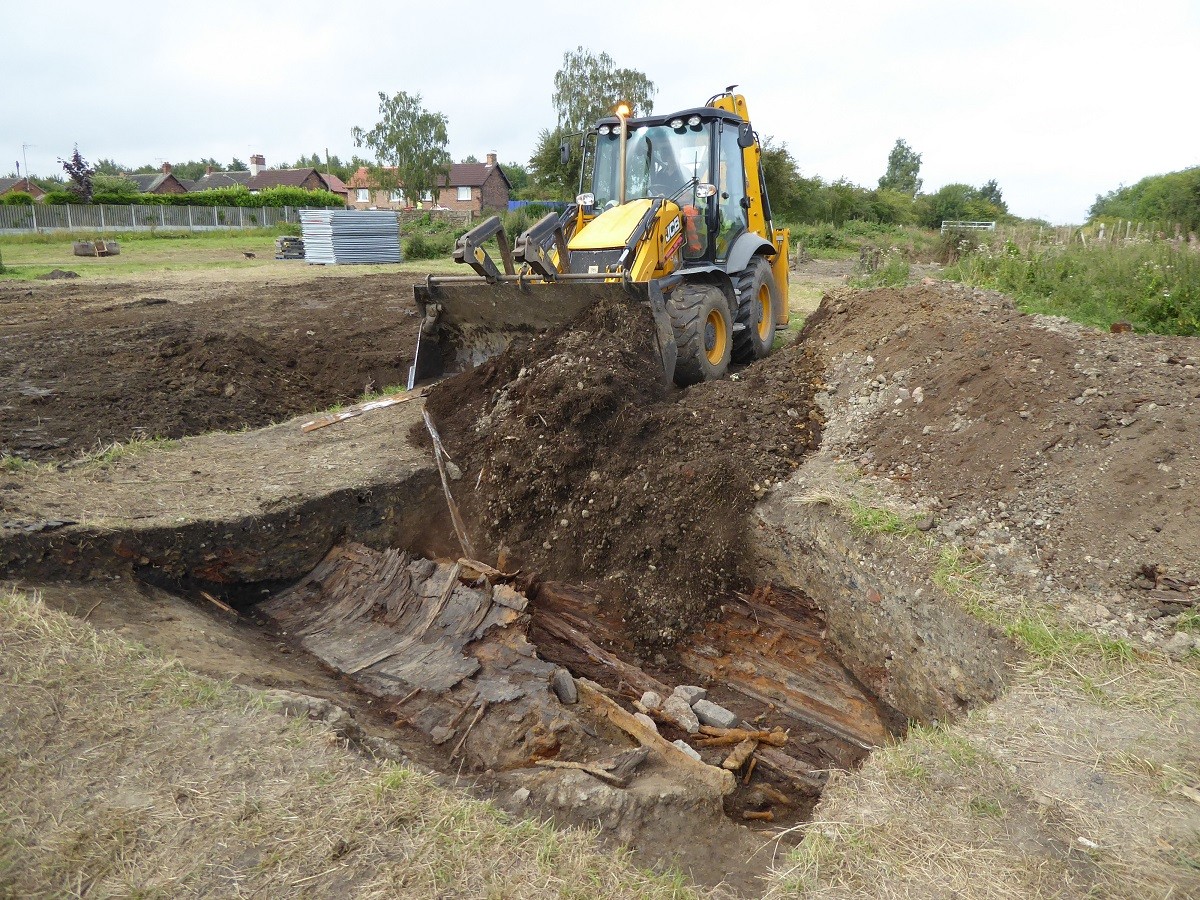
And finally, Trench 3 with the three boats.
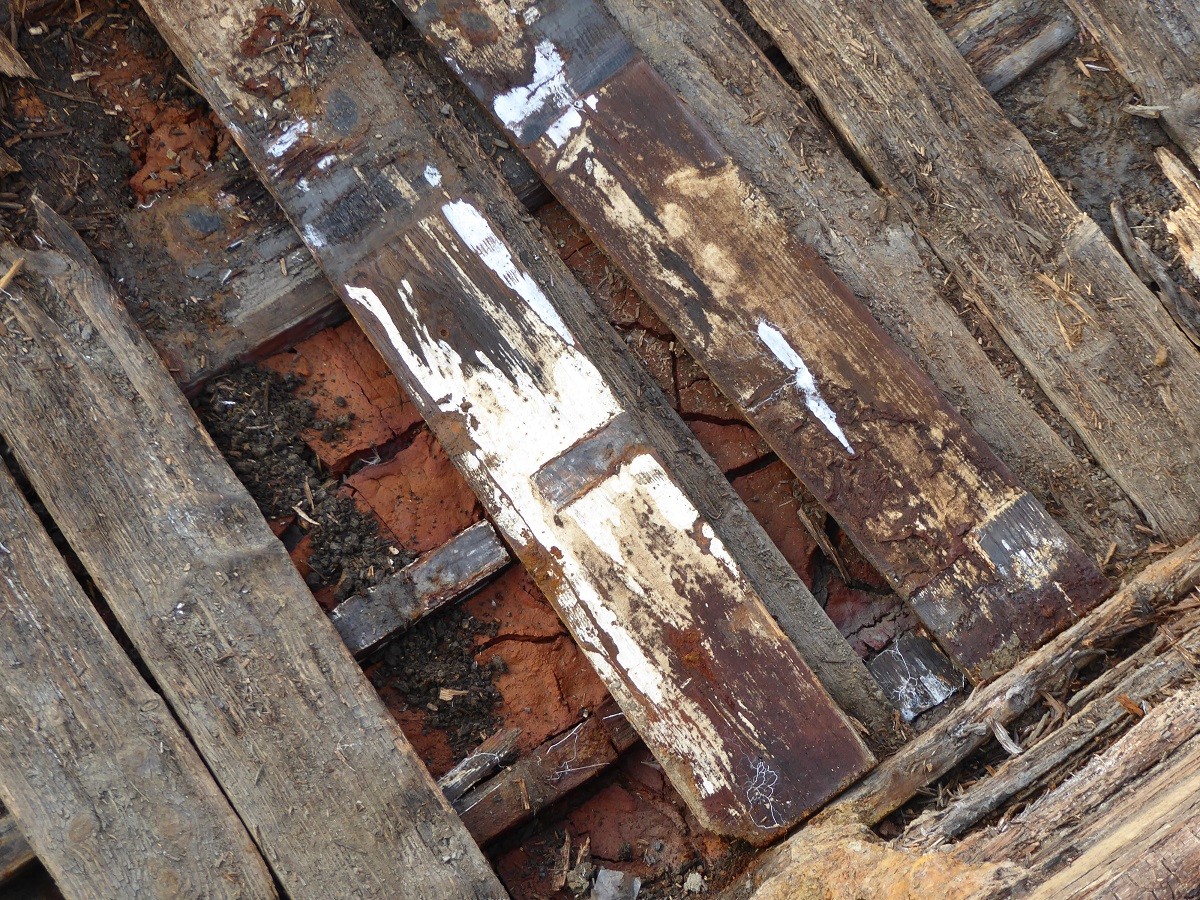
However even today we learnt something.We noticed that the undersides of the deck planks were painted white, so presumably they had been recycled.